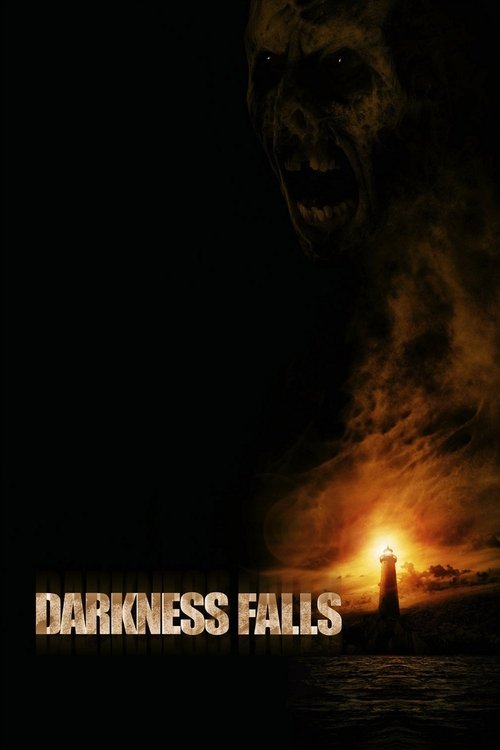
Darkness Falls (2003)
Directed by Jonathan Liebesman
No — Darkness Falls is not woke, scoring 0 out of 100 on our wokeness meter.
Darkness Falls arrived in January of 2003, directed by Jonathan Liebesman in his feature debut, and it concerns a small Maine town, a hanged widow named Matilda Dixon, and the tooth fairy she became.
Consciousness Markers
The cast is overwhelmingly white with no diverse casting choices made for representation purposes; the characters exist as written without any commentary on identity.
There are no LGBTQ+ characters, themes, or subtext anywhere in the film.
While the antagonist Matilda Dixon is a wronged woman, she is a horror villain driven by revenge, not a vehicle for any feminist agenda; the female lead Caitlin functions largely as a damsel in distress.
The film engages with no racial themes or commentary whatsoever.
There is no environmental or climate-related messaging in the film.
The film contains no critique of capitalism, wealth, or class structures.
No body positivity themes are present; the disfigured antagonist is presented as monstrous, the opposite of such messaging.
Kyle's paranoia, anxiety, and institutionalization are framed as trauma from a real supernatural threat, not as a positive neurodivergence narrative.
The witch-hunt backstory is entirely fictional and set in an invented town; it makes no revisionist claims about real historical events.
This is a lean 80-minute jump-scare horror film with no preachy or didactic messaging of any kind.
Why it received this score
Darkness Falls arrived in January of 2003, directed by Jonathan Liebesman in his feature debut, and it concerns a small Maine town, a hanged widow named Matilda Dixon, and the tooth fairy she became. The film runs under eighty minutes. It opened at number one, earned forty-seven million dollars against an eleven million dollar budget, and was dismissed by critics with a unanimity that borders on the liturgical. Rotten Tomatoes settled at ten percent. The Washington Post suggested the writers deserved a noose. This is the climate in which we now conduct our audit.
The audit is brief. Every marker on the ledger reads zero, and not from negligence. The cast is white, the town is white, and nobody in the frame pauses to remark upon it. Matilda is a woman wronged by a mob, yet the film positions her as a monster to be destroyed, which places her closer to the horror tradition than to any contemporary grievance. Kyle, our survivor, is medicated, paranoid, and freshly released from a psychiatric institution, but the film treats his condition as the residue of a real supernatural encounter. It is a symptom, not a statement. There is no economic critique, no ecological warning, no revisionist claim about actual history. The witch hunt here is invented whole, a backstory for a puppet.
What remains is a lean machine for making an audience flinch in the dark. It has no interest in instructing anyone about anything, and that absence of instruction is the film's entire personality. A young boy loses his last tooth, his mother slides gold coins under the pillow, and the cycle closes without a single lesson attached. We can respect the efficiency even as we note the vacancy.
Analysis generated by our Consciousness Algorithm


Synopsis
A vengeful spirit has taken the form of the Tooth Fairy to exact vengeance on the town that lynched her 150 years earlier. Her only opposition is the only child, now grown up, who has survived her before.
Questions about Darkness Falls
Is Darkness Falls woke?
No — Darkness Falls is not woke, scoring 0 out of 100 on our wokeness meter. That earns it a verdict of Ultra Based.
Does Darkness Falls have any woke elements?
No. All 10 markers score zero.
How does Darkness Falls compare to other 2003 movies?
It ranks #131 of the 150 films from 2003 we've scored; their average is 12. The wokest is Mona Lisa Smile (60).
How is the Woke Score calculated?
An AI-assisted process researches the film and its reception, scores it 0–100 on ten markers, then combines those into one 0–100 Woke Score. It measures a specific set of 2020s cultural themes, not film quality.