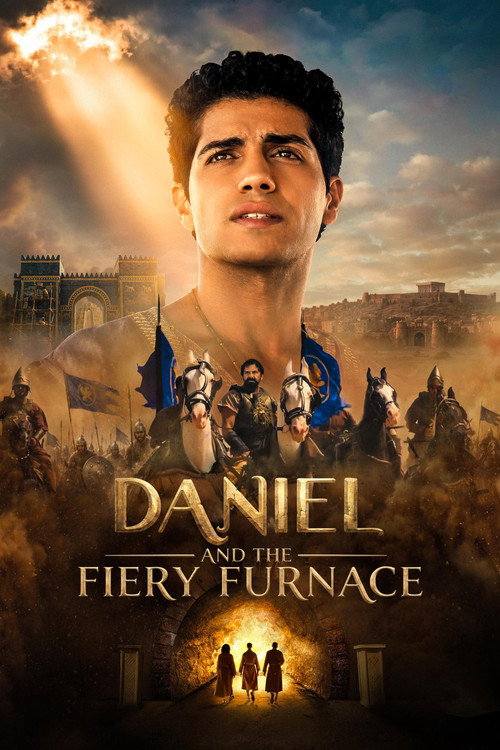
Daniel and the Fiery Furnace (2026)
Directed by Matthew Kooman · $3.1M domestic
No · Based
How we score movies →Consciousness Markers
The film makes a conscious and publicly articulated choice to cast Middle Eastern and South Asian actors as ancient Judeans and Babylonians, framed explicitly in press coverage as a corrective to Hollywood whitewashing. Lead Mena Massoud's own statements about systemic casting barriers for Middle Eastern actors elevate this beyond incidental accuracy into deliberate representation discourse.
Conservative Christian outlets consistently describe the film's core message as religious liberty and resistance to state-mandated idolatry. The film is clearly and unapologetically message-forward, though the sermon is theological rather than progressive, and its lecture energy points in a direction most woke-scorers would find unexpected.
The cultural apparatus around the film is explicitly racially conscious, with press coverage and Massoud's own statements foregrounding the rarity of Middle Eastern leads in Western biblical cinema. The film itself does not appear to sermonize about race, but the intentional framing in promotion registers as a mild score.
A scripted subplot places Daniel as a participant in the construction of Nebuchadnezzar's golden statue, a creative liberty that sparked theological debate about whether the character is shown violating the Second Commandment. This constitutes a mild revisionist reinterpretation of a canonical scriptural narrative.
No LGBTQ+ themes, characters, or subplots are present or suggested. This is a conservative Christian faith production whose spiritual concerns lie elsewhere entirely.
The narrative centers on Daniel and his three male companions. No feminist themes or female-empowerment framing are evidenced in the film or its surrounding discourse.
Set in ancient Babylon. No climate themes are present or plausible.
The antagonist force is a king demanding idol worship, not a corporation or economic system. No anti-capitalist framing is evidenced.
No body positivity themes are present or referenced in any available material.
No neurodivergence themes or characters are evidenced.
Synopsis
During the Jewish exile to Babylon, Daniel and his friends face trials as Babylon's armies conquer Jerusalem. Under King Nebuchadnezzar, they gain royal favor but make enemies. Their faith is tested at the fiery furnace.
Why it received this score
A crowdfunded biblical epic shot partly in India, powered by generative AI, and starring an Egyptian-Canadian actor best known for playing Aladdin: the production notes for *Daniel and the Fiery Furnace* read like a pitch meeting that got away from someone. Director Matthew Kooman has adapted chapters one through three of the Book of Daniel with evident sincerity and a $1.2 million budget that the AI-generated Babylon occasionally makes very visible. The film's casting philosophy is its most discussed feature, deploying Middle Eastern and South Asian actors as ancient Judeans and Babylonians, which is both historically defensible and, in the current climate of representation discourse, impossible to present without a certain amount of cultural commentary attaching itself uninvited.
The film's social consciousness, such as it is, arrives from an unexpected compass heading. Conservative Christian media embraced it warmly, and the reason is straightforward: the story is about refusing a government decree to worship a false idol, which maps neatly onto a certain strand of contemporary religious liberty rhetoric. This is lecture energy, to be sure, but the lecture is being delivered from a pulpit rather than a progressive studies seminar, which places it in a curious taxonomic position. Lead actor Mena Massoud, who serves also as executive producer, has spoken publicly about the systemic scarcity of leading roles for Middle Eastern actors in Western cinema, and his investment in this project carries that context. The film does not itself appear to deliver speeches on the subject. The context simply follows him.
The most theologically contentious creative liberty, a subplot in which Daniel assists in the structural creation of the very golden statue his friends will later refuse to worship, generated debate among scriptural commentators about whether the filmmakers inadvertently wrote their protagonist into a Second Commandment violation. This is the kind of problem that arises when you take creative liberties with source material that has been in continuous theological circulation for roughly two and a half millennia. The fiery furnace, rendered with AI assistance of disputed quality, awaits at the end. The film's deepest conviction is that standing firm against state coercion is a virtue. On that point, at least, the ancient text and the modern filmmakers are in complete agreement.
Analysis generated by our Consciousness Algorithm