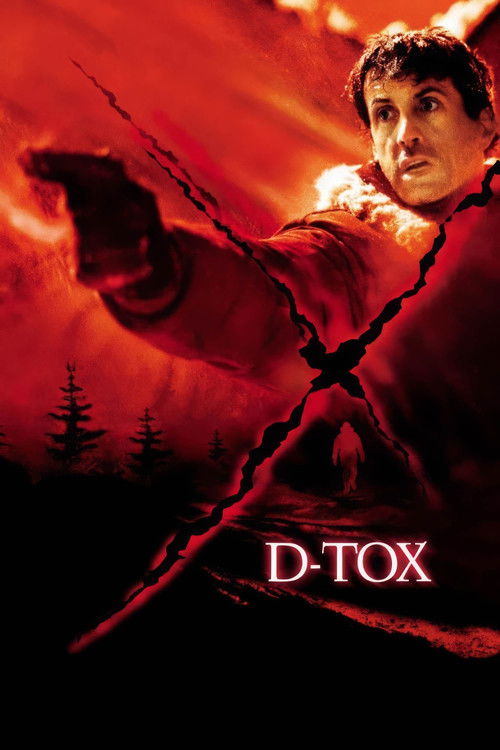
D-Tox (2002)
Directed by Jim Gillespie
No — D-Tox is not woke, scoring 4 out of 100 on our wokeness meter.
D-Tox arrived in 2002 having already died several deaths.
Consciousness Markers
Jenny Munroe serves as a compassionate ally to the protagonist, but the film does not challenge patriarchal structures or feature a strong feminist agenda.
The cast is predominantly white, and the focus remains on law enforcement figures, offering little in the way of progressive representation.
The film critiques the failure of the law enforcement system and the rehab facility, but does not engage with anti-capitalist themes.
No evidence of LGBTQ+ themes or characters in the provided plot summary or cast list.
The film focuses on personal demons and institutional paranoia rather than engaging with racial issues or systemic racism.
The snowstorm is a plot device for isolation, not a commentary on global climate change or environmental degradation.
There is no focus on body image or the promotion of body positivity within the narrative.
No characters are explicitly portrayed as neurodivergent.
The film is a fictional crime thriller and does not attempt to revise any established historical narratives.
The film is a suspenseful thriller and does not rely on didactic monologues or heavy social commentary delivered in a lecture format.
Why it received this score
D-Tox arrived in 2002 having already died several deaths. Shot in 1999, test-screened into oblivion, shelved, re-cut, given a new ending and a new title (Eye See You), then handed to a distributor that had inherited someone else's mistake. Sylvester Stallone plays an FBI agent who drinks his way through a personal tragedy and checks into a Wyoming rehab clinic for damaged cops, where a blizzard seals the doors and a killer begins working through the guest list. Jim Gillespie directs with the grim efficiency of a man finishing a contract.
On the matter of social consciousness, the film is a time capsule from a less self-aware moment. The cast is overwhelmingly white and overwhelmingly employed in law enforcement, and the few Black actors in the ensemble (Charles S. Dutton, Jeffrey Wright, Courtney B. Vance) are simply cops among cops, their presence noted by nobody and requiring no explanation. Polly Walker's Jenny Munroe offers warmth and a steady hand on a firearm, but she exists to be protected and to help the hero heal. There is no engagement with racial grievance, no environmental subtext in the snowstorm, no inquiry into body image, neurodivergence, or the historical record. The clinic's failure and the FBI's failure register as plot mechanics, not as a critique of systems. Nobody lectures. Nobody has a thesis.
The film's energies are spent elsewhere: on an axe, a CB radio, and a snow machine repurposed as an execution device. That is its own kind of purity. Seventeen percent on Rotten Tomatoes suggests audiences found the purity unpersuasive. So it goes.
Analysis generated by our Consciousness Algorithm
Part of


Synopsis
A disgraced FBI agent with a drinking problem joins nine other troubled law enforcement officers at an isolated detox clinic in the wilds of Wyoming. But the therapeutic sanctuary becomes a nightmarish hellhole when a major snowstorm cuts off the clinic from the outside world and enables a killer on the inside to get busy.
Questions about D-Tox
Is D-Tox woke?
No — D-Tox is not woke, scoring 4 out of 100 on our wokeness meter. That earns it a verdict of Ultra Based.
Does D-Tox have any woke elements?
Very few. None of the 10 markers reaches 30, the level where a marker counts as present; the highest is Feminist Agenda at 10.
How does D-Tox compare to other 2002 movies?
It ranks #108 of the 150 films from 2002 we've scored; their average is 12. The wokest is Far from Heaven (78).
How is the Woke Score calculated?
An AI-assisted process researches the film and its reception, scores it 0–100 on ten markers, then combines those into one 0–100 Woke Score. It measures a specific set of 2020s cultural themes, not film quality.