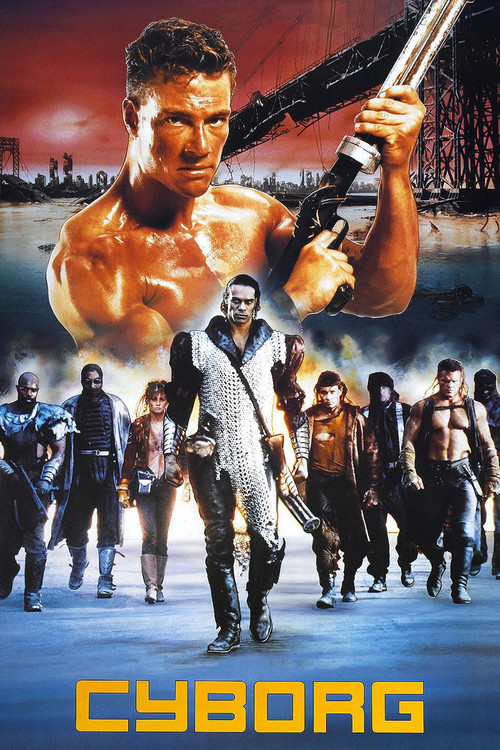
Cyborg (1989)
Directed by Albert Pyun
No — Cyborg is not woke, scoring 0 out of 100 on our wokeness meter.
Cyborg arrives from 1989 with the grim efficiency of a Cannon Films accounting decision.
Consciousness Markers
The cast is predominantly white, with minority actors appearing only as background pirates or incidental characters. There is no deliberate modern representation casting agenda.
The film contains no LGBTQ+ characters, themes, or subtext. Romance and motivation are strictly heterosexual.
Female characters such as Nady and Pearl have some agency, but the film is a male-driven revenge action story and does not advance a feminist agenda. Nady is ultimately fridged to motivate the hero.
Race is not a thematic concern in the film. Non-white characters appear only as unnamed pirates or background figures without commentary on racial injustice.
The post-apocalyptic setting is caused by a plague, not climate change. There is no environmentalist message or climate crusade.
Fender's desire to monopolize the cure is generic villainy, not a modern eat-the-rich critique. The film does not engage with anti-capitalist themes.
The film features conventional action-movie physiques and does not promote body positivity or diverse body representation.
There are no neurodivergent characters or themes. Mental health and neurodiversity are not part of the narrative.
The film is a fictional post-apocalyptic action story and does not revise or reinterpret historical events.
The film is a straightforward martial-arts revenge thriller with no preachy or didactic messaging. It does not lecture the audience on social issues.
Why it received this score
Cyborg arrives from 1989 with the grim efficiency of a Cannon Films accounting decision. Albert Pyun wrote the thing in a weekend after the studio's He-Man and Spider-Man projects collapsed, and the film carries that salvage-yard quality in every frame. Jean-Claude Van Damme plays Gibson Rickenbacker, a mercenary who wants revenge and little else, wandering a plague-ravaged America in search of the man who killed his lover. The plague is the disaster here, not the climate, and nobody in the cast pauses to interrogate the social order that produced it. The villains are pirates. The hero is a man with a mullet and excellent quadriceps.
The film does feature women with knives and opinions. Deborah Richter's Nady tracks Gibson through the wastelands, proposes sex, is declined, and later dies on Fender's blade so that our hero might feel something. This is not a feminist text. It is a fridging with good bone structure. Dayle Haddon's Pearl, a cyborg courier carrying plague data to Atlanta, makes calculated decisions and refuses rescue, but her function is to be escorted. The cast is white, the romances are heterosexual, the bodies are sculpted for combat, and the enemy's scheme involves monopolizing a cure, which reads as generic villainy and not an economic critique.
There is no sermon here, no lecture, no moment where a character turns to the camera and explains what we should think about the environment, capital, or identity. It is a martial arts revenge picture shot in twenty-three days for under half a million dollars, and it knows exactly what it is. The sequels would drift further into obscurity. The critical reception was hostile. And yet the film endures as a lean, mean artifact of late-eighties genre commerce, entirely innocent of the cultural preoccupations that would arrive three decades later. We assign it nothing. The taxonomy is silent.
Analysis generated by our Consciousness Algorithm


Synopsis
A martial artist hunts a killer in a plague-infested urban dump of the future.
Questions about Cyborg
Is Cyborg woke?
No — Cyborg is not woke, scoring 0 out of 100 on our wokeness meter. That earns it a verdict of Ultra Based.
Does Cyborg have any woke elements?
No. All 10 markers score zero.
How does Cyborg compare to other 1989 movies?
It ranks #62 of the 68 films from 1989 we've scored; their average is 10. The wokest is Do the Right Thing (72).
How is the Woke Score calculated?
An AI-assisted process researches the film and its reception, scores it 0–100 on ten markers, then combines those into one 0–100 Woke Score. It measures a specific set of 2020s cultural themes, not film quality.