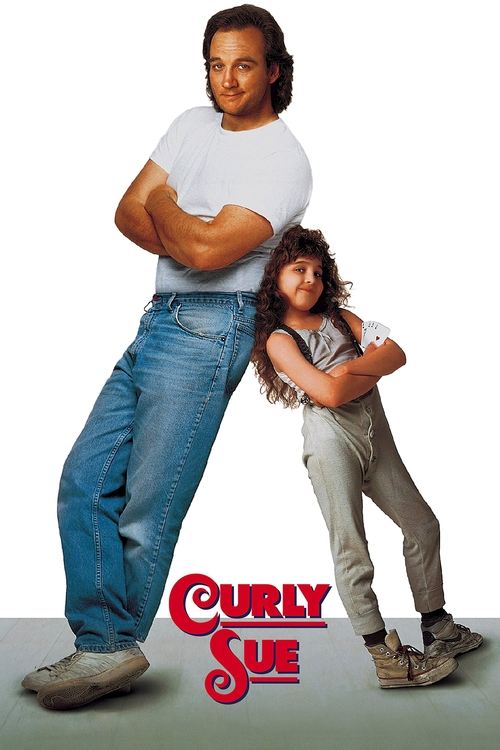
Curly Sue (1991)
Directed by John Hughes
No — Curly Sue is not woke, scoring 8 out of 100 on our wokeness meter.
John Hughes closed out his directing career with a Depression-era fable relocated to 1991 Chicago, in which a homeless con man and his seven-year-old ward deceive a wealthy divorce attorney into housing them.
Consciousness Markers
Grey Ellison is a successful, independent divorce lawyer, but her arc resolves into traditional marriage and motherhood, so the feminist content is incidental rather than a driving agenda.
The rich-vs-poor dynamic and the sneering yuppie boyfriend Walker gesture at class critique, but the film ultimately reconciles wealth and poverty sentimentally rather than indicting capital.
The film is sentimental and moralizing about homelessness and helping the poor, but its preachiness is of the warm-hearted 1991 variety rather than modern issue-driven lecturing.
The cast is overwhelmingly white, with only Branscombe Richmond in a minor supporting role as Albert; no meaningful diverse casting or commentary.
No LGBTQ+ characters, themes, or subtext whatsoever.
The film's class themes are entirely raceless; no engagement with racial identity or injustice.
No environmental or climate themes present.
No body-positivity themes or body-diverse representation.
No neurodivergent characters or themes.
No historical revisionism; the film is a contemporary fable.
Why it received this score
John Hughes closed out his directing career with a Depression-era fable relocated to 1991 Chicago, in which a homeless con man and his seven-year-old ward deceive a wealthy divorce attorney into housing them. The film runs on the assumption that poverty is best dramatized through the healing of the affluent. Bill and Curly Sue scam only for meals, which the screenplay treats as proof of moral standing. Walker, the sneering yuppie boyfriend, exists to be wrong about everything. The sentiment is applied with a trowel.
For a woman who earns her living dismantling marriages, Grey Ellison spends the back half of the picture being steered toward one. Her independence gets established and then promptly domesticated, which keeps the gender politics incidental instead of animating. The class material gestures at a critique of wealth and then dissolves into adoption papers and a wedding, capital forgiven by the closing credits. The film's divisions are economic, never racial; the cast is white throughout and no racial question is raised or acknowledged. Nothing here for the body-positivity ledger, nothing for neurodivergence, nothing environmental, nothing historical to revise. The preachiness is genuine but archaic: a warm, tearful insistence that we help the poor, delivered without a single statistic or slogan.
Critics at the time were split with unusual violence, Ebert finding heart where Siskel found grease. Both were describing the same object. Curly Sue is a machine for producing feeling, and it works on the audience least inclined to resist. As a document of social consciousness it is nearly blank, a relic of an era when the poor could be pitied without being theorized.
Analysis generated by our Consciousness Algorithm
Part of


Synopsis
Bill is a penniless drifter who scams strangers out of just enough money to feed himself and his partner in crime, an orphan girl known as Curly Sue. Bill and Curly Sue target Grey, a yuppie lawyer, but their con takes an unexpected turn when the successful woman begins to like the ramshackle duo. But there's one problem—Grey's jealous, conniving boyfriend, Walker.
Questions about Curly Sue
Is Curly Sue woke?
No — Curly Sue is not woke, scoring 8 out of 100 on our wokeness meter. That earns it a verdict of Ultra Based.
Does Curly Sue have any woke elements?
Very few. None of the 10 markers reaches 30, the level where a marker counts as present; the highest is Eat the Rich at 15.
How does Curly Sue compare to other 1991 movies?
It ranks #33 of the 68 films from 1991 we've scored; their average is 14. The wokest is Paris Is Burning (77).
How is the Woke Score calculated?
An AI-assisted process researches the film and its reception, scores it 0–100 on ten markers, then combines those into one 0–100 Woke Score. It measures a specific set of 2020s cultural themes, not film quality.