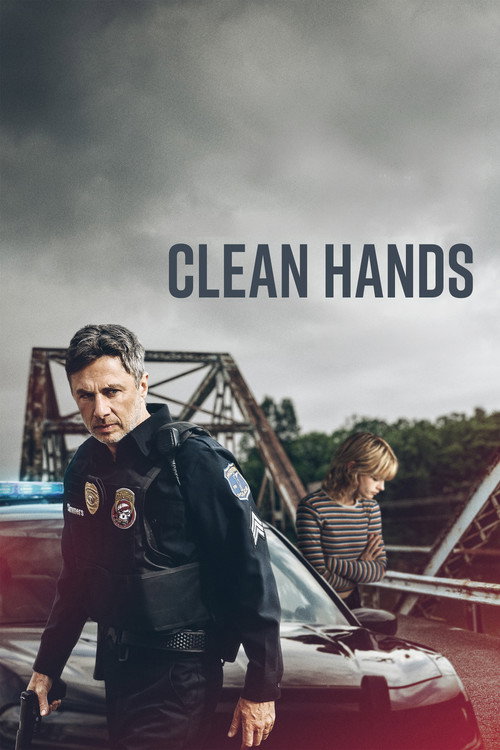
Clean Hands (2026)
Directed by Jake Allyn
No — Clean Hands is not especially woke, scoring 28 out of 100 on our wokeness meter.
Clean Hands arrives at the Tribeca Film Festival wearing the poster design of a police procedural and the soul of a policy brief, a combination that critics found either refreshingly subversive or simply confusing, depending on how much they enjoy being misled by marketing materials.
Consciousness Markers
The production ran a formal employment initiative hiring women in active recovery from Brooke's House across crew and on-screen roles. This is deliberate, structured representation tied to community impact, which qualifies as an intentional casting philosophy even if the motivation is authenticity rather than demographic optics.
The director partnered with advocacy organizations like Shatterproof for promotional screenings explicitly designed to advance opioid policy reform. Critics noted the film functions as a structural critique of carceral enforcement. The sermonizing impulse is present and organized, though reviews suggest the emotional grounding keeps it from tipping into full pulpit mode.
The film systematically dismantles the War on Drugs as a governing philosophy, reframing decades of punitive law enforcement as counterproductive and harmful. This is a genuine revisionist argument about recent American policy, delivered through a true story.
An all-women recovery facility is the production's civic partner and moral anchor, and the daughter's arc carries the film's emotional weight. The focus on women in recovery is substantive but incidental to the story's core argument rather than a foregrounded feminist thesis.
The film identifies systemic barriers including insurance obstacles and inadequate treatment access as structural failures enabling the opioid crisis. This constitutes a mild critique of the healthcare-industrial complex, though it stops well short of class warfare.
Addiction is framed throughout with empathy and an explicit destigmatization agenda, which shares rhetorical DNA with neurodivergence advocacy. The film does not, however, formally medicalize or neurodivergence-code addiction, keeping this score modest.
No LGBTQ+ themes, characters, or subtext are present in the film or its surrounding materials.
No racial justice framing, commentary on racial disparities in drug enforcement, or racially conscious casting agenda is evident in the film or its press materials.
Climate themes are entirely absent. This is a film about opioids in Hagerstown, Maryland, not the planet.
No body positivity themes or messaging are present in any form.
Why it received this score
Clean Hands arrives at the Tribeca Film Festival wearing the poster design of a police procedural and the soul of a policy brief, a combination that critics found either refreshingly subversive or simply confusing, depending on how much they enjoy being misled by marketing materials. Director Jake Allyn, working from the real story of Kevin Simmers, a Hagerstown narcotics officer who lost his daughter Brooke to a heroin overdose and subsequently founded an all-women recovery facility, has made a film that is less interested in crime than in the systems that manufacture it. Zach Braff, speaking to press with the measured sincerity of a man who has genuinely been moved by something, described the story as feeling like a fairy tale. It is, at minimum, a fairy tale with a body count.
The film's progressive sensibilities are not so much worn on its sleeve as stitched into its production infrastructure. The decision to hire women in active recovery from Brooke's House as crew members and on-screen performers, and to pledge one-third of net profits back to the facility, represents a level of civic integration that most films achieve only in their press releases. The critique of punitive drug enforcement, insurance barriers, and carceral inadequacy is present and organized, arriving with the promotional support of advocacy organizations and the rhetorical confidence of a film that knows exactly what argument it is making. That argument is not wrong. It is, however, delivered with the brisk purposefulness of a pamphlet.
What keeps Clean Hands from achieving maximum lecture velocity is, by all accounts, its emotional tether to actual grief. The father-daughter dynamic at the film's center is a true story, which has a way of complicating the tidiness that advocacy messaging prefers. Esther McGregor, speaking about destigmatizing addiction, noted that the solution is not as simple as putting people behind bars. She is correct. The film agrees with her, at length, with supporting documentation.
Analysis generated by our Consciousness Algorithm


Synopsis
Based on a true story, a veteran narcotics officer turned recovery advocate and his daughter, who struggles with addiction, confront the American drug crisis from opposing sides of the law while navigating their complicated family bond.
Questions about Clean Hands
Is Clean Hands woke?
No — Clean Hands is not especially woke, scoring 28 out of 100 on our wokeness meter. That earns it a verdict of Based.
Does Clean Hands have any woke elements?
2 of the 10 markers register at 30 or above, led by Representation Casting (38) and Lecture Energy (35). On Representation Casting: The production ran a formal employment initiative hiring women in active recovery from Brooke's House across crew and on-screen roles.
How does Clean Hands compare to other 2026 movies?
It ranks #243 of the 800 films from 2026 we've scored; their average is 23. The wokest is Between Us (89).
How is the Woke Score calculated?
An AI-assisted process researches the film and its reception, scores it 0–100 on ten markers, then combines those into one 0–100 Woke Score. It measures a specific set of 2020s cultural themes, not film quality.