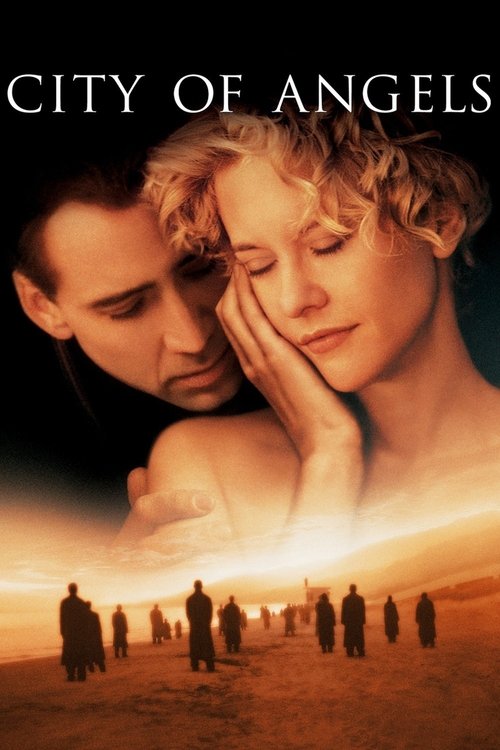
City of Angels (1998)
Directed by Brad Silberling
No — City of Angels is not woke, scoring 9 out of 100 on our wokeness meter.
City of Angels arrives from 1998 as a loose remake of Wim Wenders's Wings of Desire, relocated from a divided Berlin to a Los Angeles that the screenwriter insisted was metaphorically representative of America.
Consciousness Markers
A 1998 studio romance with a predominantly white lead cast; Andre Braugher appears in a supporting role as the angel Cassiel, but this is natural ensemble casting rather than a deliberate diversity statement.
Meg Ryan's Maggie is a competent, strong-willed heart surgeon, giving her a measure of professional agency, but the film is a conventional romance in which she exists largely as the object of the angel's transcendent longing.
The film muses on faith, mortality, and the value of physical human experience, but it dramatizes these ideas through romance rather than delivering them as a sermon.
No LGBTQ+ characters, themes, or subtext of any kind.
The film gestures at angels moving among LA's 'different ethnic cultures,' but race is never a theme, subject, or point of commentary.
No environmental or climate content whatsoever.
No economic critique; the film's concerns are spiritual and romantic, not material.
No body-positivity themes or messaging.
No neurodivergence representation or themes.
A loose remake of Wings of Desire, but it revises a fictional narrative rather than reinterpreting historical events.
Why it received this score
City of Angels arrives from 1998 as a loose remake of Wim Wenders's Wings of Desire, relocated from a divided Berlin to a Los Angeles that the screenwriter insisted was metaphorically representative of America. Nicolas Cage plays Seth, an angel who watches over the dying and falls for Meg Ryan's heart surgeon, Maggie. The film's celestial bureaucracy is staffed by mostly white faces, with Andre Braugher appearing as the fellow angel Cassiel. His presence is ensemble casting of the ordinary kind, an actor doing a job, not a diversity initiative. Nothing about the role announces itself as a statement, and the film does not ask it to.
Maggie has a scalpel and a career, which grants her a measure of professional agency unusual for the era's romances. She is also, functionally, the prize. Seth trades immortality for her, and the narrative arranges itself around his longing. That is the shape of the genre, and the film does not interrogate it. The screenplay does gesture toward the idea of angels moving among the city's different ethnic cultures, though this remains a line of dialogue and never becomes a subject. Race is scenery here, not theme. The same holds for matters of identity and desire: there is no LGBTQ presence, no subtext, no hint.
The film does carry ideas. It muses on faith, mortality, and the worth of physical experience, and it does so by having Seth feel rain and pain and love. The thinking is dramatized, never preached, which keeps the sermonizing to a minimum. Beyond that, the ledger is bare. No environmental concern, no economic critique, no attention to body image, no neurodivergent characters. The revision of history is not on the table either; the film revises a previous film, not the past. The rest is a glossy romance about an angel who wants to be human, and the culture it reflects is the culture of 1998, which had other things on its mind.
In closing, this is a competent studio weepie that understands the assignment of its genre and declines every invitation to editorialize. We file it under romance, mortality, and the reliable commercial appeal of a man who gives up everything for a woman who is about to be hit by a logging truck. The angels watch. The audience weeps. The categories remain undisturbed.
{"thematic_tags": ["remake", "box_office_number_one"]}
Analysis generated by our Consciousness Algorithm
Part of


Synopsis
When a guardian angel – who invisibly watches over the citizens of Los Angeles – becomes captivated by a strong-willed heart surgeon, he ponders trading in his pure, otherworldly existence for a mortal life with his beloved. The couple embarks on a tender but forbidden romance spanning heaven and Earth.
Questions about City of Angels
Is City of Angels woke?
No — City of Angels is not woke, scoring 9 out of 100 on our wokeness meter. That earns it a verdict of Ultra Based.
Does City of Angels have any woke elements?
Very few. None of the 10 markers reaches 30, the level where a marker counts as present; the highest is Feminist Agenda at 15.
How does City of Angels compare to other 1998 movies?
It ranks #51 of the 118 films from 1998 we've scored; their average is 12. The wokest is Show Me Love (60).
How is the Woke Score calculated?
An AI-assisted process researches the film and its reception, scores it 0–100 on ten markers, then combines those into one 0–100 Woke Score. It measures a specific set of 2020s cultural themes, not film quality.