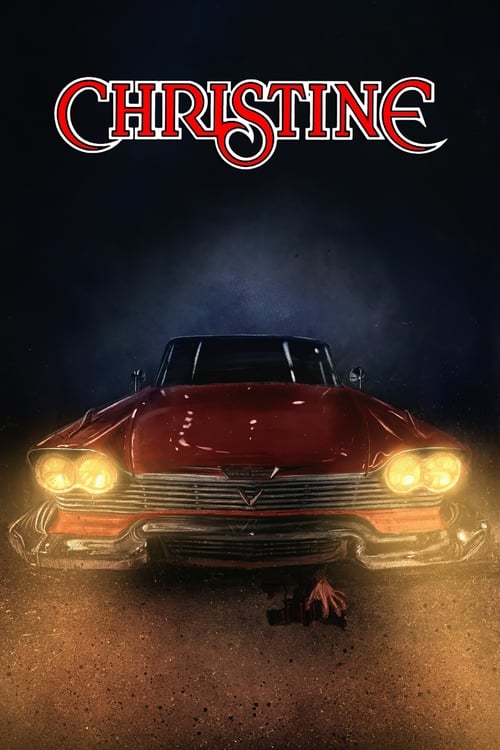
Christine (1983)
Directed by John Carpenter
No — Christine is not woke, scoring 0 out of 100 on our wokeness meter.
John Carpenter's Christine (1983) concerns a sentient 1958 Plymouth Fury and the bullied teenager it rescues from obscurity, then ruins.
Consciousness Markers
The cast is overwhelmingly white and assembled without any apparent diversity mandate; the film's 1983 milieu offers no modern representation casting agenda.
There are no LGBTQ+ characters, themes, or subtexts in the film.
Leigh is a girlfriend with some agency, but the film does not advance a feminist critique or agenda.
Race is not a thematic concern; the story is a supernatural car horror with no racial commentary.
The film's car culture and gas-station explosion are not framed as environmental or climate-crisis commentary.
The film may revel in American car obsession, but it offers no anti-capitalist or eat-the-rich message.
There is no body-positivity theme or challenge to conventional body standards.
Arnie is a bullied nerd, but the film does not frame him through a modern neurodivergence lens.
The film is a contemporary supernatural horror story with no historical revisionism.
Christine is a genre thrill ride, not a sermon; it has no preachy lecture energy.
Why it received this score
John Carpenter's Christine (1983) concerns a sentient 1958 Plymouth Fury and the bullied teenager it rescues from obscurity, then ruins. The car repairs itself, murders Buddy Repperton's gang, and terrorizes Leigh and Dennis with the patience of a household appliance that has read too much Nietzsche. Carpenter has called the project a job, not a personal statement, and the film behaves accordingly: lean, mean, and uninterested in our current moral weather. The cast is white by default, not by decree. Leigh has agency and a streak of jealousy, but no feminist thesis is advanced. Race does not enter the frame. The gas station explosion is spectacle, not climate testimony. The film's love of Detroit steel is not anti-capitalist critique; it is car worship with a body count.
The remaining categories are barren in the same steady way. Arnie is a nerd, but not a neurodivergence case study. There is no body-positivity angle, no LGBTQ+ subtext, no revisionist history, no representation casting agenda. This is a Stephen King adaptation from 1983, made by a director who wanted a reliable thriller, and it delivers exactly that. The absence of contemporary social signifiers is not a failure of nerve. It is the historical condition of the material.
Christine never lectures. It has momentum, a nasty wit, and a junkyard finale that compresses the absurd premise into a cube. It wants to scare us with a grille and a radio dial, and it mostly succeeds. As a specimen of pre-2010 genre filmmaking, the film registers at the baseline of modern progressive signaling. A complete blank, delivered without fuss. The Plymouth Fury remains the most socially conservative automobile in cinema.
Analysis generated by our Consciousness Algorithm


Synopsis
Nerdy high schooler Arnie Cunningham falls for Christine, a rusty 1958 Plymouth Fury, and becomes obsessed with restoring the classic automobile to her former glory. As the car changes, so does Arnie, whose newfound confidence turns to arrogance behind the wheel of his exotic beauty. Arnie's girlfriend Leigh and best friend Dennis reach out to him, only to be met by a Fury like no other.
Questions about Christine
Is Christine woke?
No — Christine is not woke, scoring 0 out of 100 on our wokeness meter. That earns it a verdict of Ultra Based.
Does Christine have any woke elements?
No. All 10 markers score zero.
How does Christine compare to other 1983 movies?
It ranks #31 of the 38 films from 1983 we've scored; their average is 10. The wokest is Sans Soleil (68).
How is the Woke Score calculated?
An AI-assisted process researches the film and its reception, scores it 0–100 on ten markers, then combines those into one 0–100 Woke Score. It measures a specific set of 2020s cultural themes, not film quality.