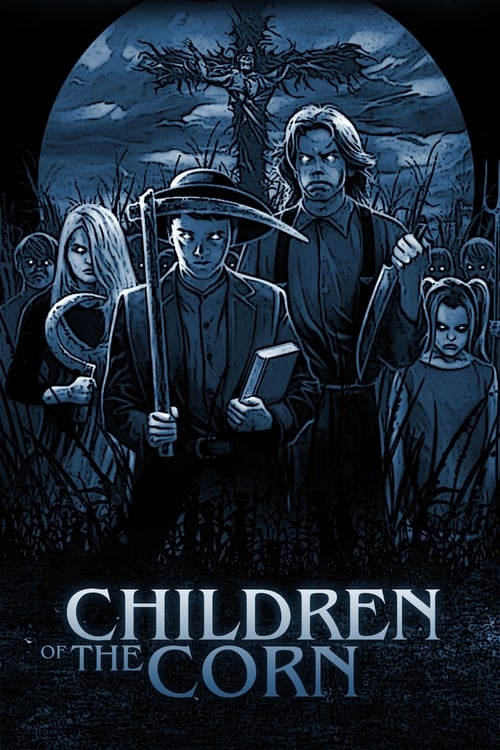
Children of the Corn (1984)
Directed by Fritz Kiersch
No — Children of the Corn is not woke, scoring 0 out of 100 on our wokeness meter.
Children of the Corn arrives from 1984 with a simple mandate: put a couple in a car, strand them in Nebraska, and let a congregation of homicidal children do the rest.
Consciousness Markers
The cast is overwhelmingly white, with no deliberate diverse or inclusive casting choices; the film reflects the demographics of rural Nebraska without comment.
There are no LGBTQ+ characters, themes, or subtext anywhere in the film.
Linda Hamilton's Vicky is largely a captive/sacrifice figure, and the film offers no feminist critique or commentary on gender dynamics.
The film engages no racial themes or commentary whatsoever; the conflict is entirely about a religious cult of children.
The failed corn harvest is a plot device for the cult's origin, not an environmentalist message about climate change.
There is no economic critique or 'eat the rich' messaging; the antagonist is a demonic cult, not capitalism.
No body positivity themes or messaging are present.
No neurodivergent characters or themes are depicted or explored.
The film is a fictional horror story with no historical revisionism; its Iranian Revolution metaphor is subtext, not a reworking of recorded history.
Despite the screenwriter's stated metaphor about religious fundamentalism, the film delivers no preachy or didactic messaging; it plays as a straightforward slasher.
Why it received this score
Children of the Corn arrives from 1984 with a simple mandate: put a couple in a car, strand them in Nebraska, and let a congregation of homicidal children do the rest. The film is based on a Stephen King short story, and it treats rural isolation as a stage for sacrifice, not as an occasion for social instruction. The cast is white because the setting is white. No LGBTQ characters appear. Linda Hamilton's Vicky spends most of the running time as a captive, and the film has no interest in turning that into a gender critique. It is a slasher with a folk-horror finish, and it knows it.
Screenwriter George Goldsmith later described the story as a metaphor for the Iranian Revolution, with the children standing in for revolutionary zealots and Burt and Vicky as hostages. That reading lives in interviews, not in the film. On screen, the cult worships a cornfield demon, and the movie delivers gore, chases, and a fiery finale. The failed harvest is a plot device, not an environmental warning. The children's rebellion is not an economic parable. No character explores body positivity or neurodivergence. History is not revised. The sermonizing that might have accompanied a religious-fundamentalist allegory never makes it to the screen. The film prefers a knife to a lecture.
We are left with a lean, brutal, occasionally silly horror picture that earned mixed reviews, a D+ CinemaScore, and Roger Ebert's one-star dismissal. Its cultural footprint is a franchise, a rap group, and the memory of Malachai's glare. It carries no modern progressive agenda, no representation mandate, no climate crusade, no anti-capitalist fury. The corn is just corn. The demon is just a demon. The children are just murderous. The critic can file this one under straightforward slasher and move on to the next vintage. The harvest has been inspected. It is not built for contemporary checklisting.
Analysis generated by our Consciousness Algorithm


Synopsis
A traveling couple end up in an abandoned Nebraska town inhabited by a cult of murderous children who worship a demon that lives in the local cornfields.
Questions about Children of the Corn
Is Children of the Corn woke?
No — Children of the Corn is not woke, scoring 0 out of 100 on our wokeness meter. That earns it a verdict of Ultra Based.
Does Children of the Corn have any woke elements?
No. All 10 markers score zero.
How does Children of the Corn compare to other 1984 movies?
It ranks #43 of the 51 films from 1984 we've scored; their average is 7. The wokest is Revenge of the Nerds (30).
How is the Woke Score calculated?
An AI-assisted process researches the film and its reception, scores it 0–100 on ten markers, then combines those into one 0–100 Woke Score. It measures a specific set of 2020s cultural themes, not film quality.