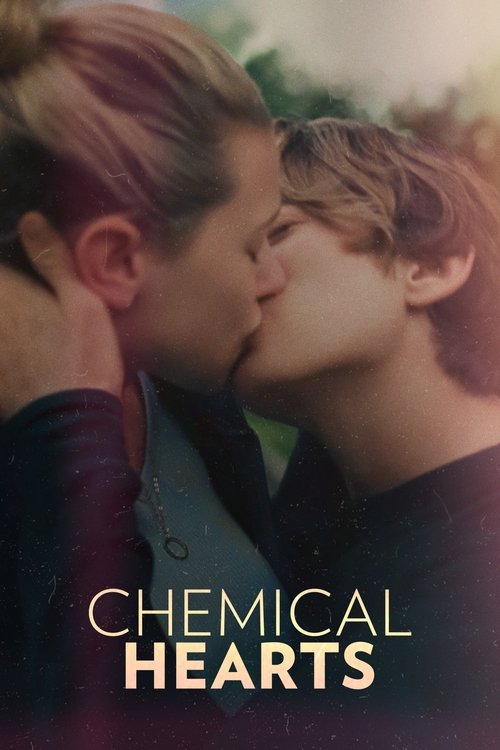
Chemical Hearts (2020)
Directed by Richard Tanne
No — Chemical Hearts is not woke, scoring 12 out of 100 on our wokeness meter.
Chemical Hearts arrives from the summer of 2020, a year in which the theatrical calendar collapsed and small streaming romances were left to fend for themselves.
Consciousness Markers
The female lead, Grace, is a physically disabled character who walks with a limp and uses a cane, and the supporting cast includes some racial diversity. However, the disability is largely a plot mechanism tied to her trauma rather than foregrounded as a representational statement.
The film deals with grief, trauma, and depression in its lead character, touching on mental health, though it does not explicitly frame these as neurodivergence.
The story is told squarely from the male protagonist's romantic perspective, and some critics noted the female lead's interiority is subordinated to his narrative. There is no discernible feminist agenda.
The film is a sincere, feeling-driven YA romance rather than a preachy one; its thematic musings on love and biochemistry are emotional rather than didactic.
No LGBTQ+ characters or themes appear in the film.
Race is not a theme in the film; the diverse supporting cast exists without any racial commentary.
No environmental or climate themes are present.
No economic or class-based critique is present; the abandoned factory serves only as a romantic setting.
The film does not engage with body positivity themes; Grace's disability is treated as a consequence of trauma rather than a body-acceptance subject.
The film is a contemporary fictional romance with no historical revisionism.
Why it received this score
Chemical Hearts arrives from the summer of 2020, a year in which the theatrical calendar collapsed and small streaming romances were left to fend for themselves. Adapted from Krystal Sutherland's young adult novel, it follows Henry Page, an aspiring writer who wants the editorship of his high school newspaper and instead receives a shared title with Grace Town, a transfer student who walks with a cane, speaks in monosyllables, and carries a grief she will not name. Richard Tanne directs with patience and a fondness for 35mm grain. The result is sincere, unhurried, and entirely disinclined to instruct anyone about anything.
The film's representational gestures are modest and largely structural. Grace's disability is a consequence of the crash that killed her boyfriend, which means the cane functions as a plot mechanism, a visible marker of invisible damage, instead of a statement about bodies. The supporting cast is diverse in the quiet manner of a New Jersey high school, and race is never raised as a subject. Grace's interiority is filtered almost entirely through Henry's longing, a limitation several critics observed and the film never corrects. Her depression and trauma are rendered as atmosphere, as mood, as weather, not as a clinical condition demanding vocabulary. No characters are queer. No one mentions the climate. The abandoned factory with its koi pool is a romantic location, not an economic indictment.
The film's thematic ambitions are emotional. Henry's essay on the biochemistry of teenage heartbreak is the closest thing to a thesis, and it arrives as a feeling instead of a lesson. Grace wears a wedding dress in a koi pond and the camera does not scold her for it. A taped-together Neruda poem passes between them in a hallway at the end. This is a film about two young people being sad near each other, and it has the good sense not to turn that into a sermon.
Analysis generated by our Consciousness Algorithm


Synopsis
When a hopelessly romantic high school senior falls for a mysterious new classmate, it sets them both on an unexpected journey that teaches them about love, loss, and most importantly themselves.
Questions about Chemical Hearts
Is Chemical Hearts woke?
No — Chemical Hearts is not woke, scoring 12 out of 100 on our wokeness meter. That earns it a verdict of Ultra Based.
Does Chemical Hearts have any woke elements?
1 of the 10 markers register at 30 or above, led by Representation Casting (35). On Representation Casting: The female lead, Grace, is a physically disabled character who walks with a limp and uses a cane, and the supporting cast includes some racial diversity.
How does Chemical Hearts compare to other 2020 movies?
It ranks #126 of the 227 films from 2020 we've scored; their average is 21. The wokest is One Night in Miami... (83).
How is the Woke Score calculated?
An AI-assisted process researches the film and its reception, scores it 0–100 on ten markers, then combines those into one 0–100 Woke Score. It measures a specific set of 2020s cultural themes, not film quality.