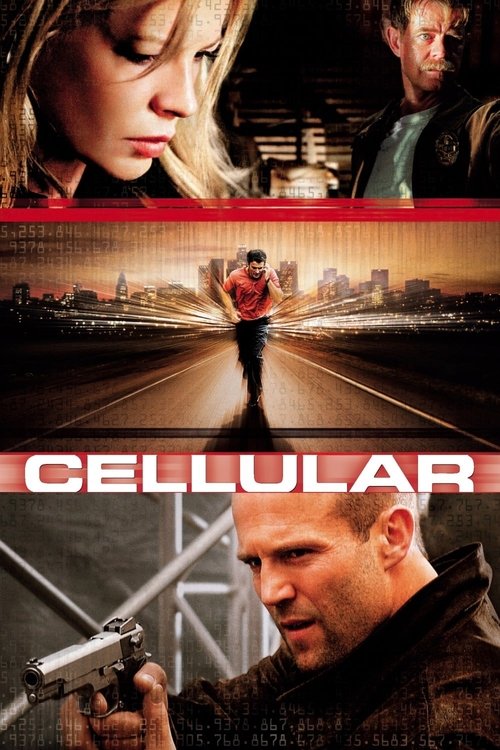
Cellular (2004)
Directed by David R. Ellis
No — Cellular is not woke, scoring 6 out of 100 on our wokeness meter.
David R. Ellis's Cellular (2004) arrives as a trim, gimmick-driven chase picture, built around a dying battery and a stranger's voice.
Consciousness Markers
Kim Basinger's Jessica is resourceful and ultimately fights back, but this is standard action-thriller survivalism, not a feminist statement or agenda.
The cast is overwhelmingly white, with Valerie Cruz and a few minority actors in minor supporting roles. They exist naturally in the story with no commentary, so no representation agenda is present.
No LGBTQ+ characters, themes, or subtext of any kind.
No engagement with race, racism, or racial identity as a theme.
No environmental or climate themes whatsoever.
The villains are corrupt cops, not capitalists, and the film has no economic critique.
No body positivity themes or messaging.
No neurodivergent characters or themes.
No historical revisionism; the film is a contemporary fictional thriller.
A brisk, gimmick-driven chase thriller with no preaching, moralizing, or social messaging.
Why it received this score
David R. Ellis's Cellular (2004) arrives as a trim, gimmick-driven chase picture, built around a dying battery and a stranger's voice. Chris Evans plays Ryan, a laid-back young man who turns improvisational hero after Kim Basinger's kidnapped science teacher reaches him through a random cell connection. The premise is absurd and efficient, and the film treats it with the seriousness of a public safety demonstration. There is no sermon here, no broader social instruction, just a plot that moves because the signal might drop.
Basinger's Jessica is allowed resourcefulness and a violent late surge, strangling a captor with handcuffs and nicking an artery when the moment demands it. This is survivalism in an action-thriller key, not a feminist manifesto, and the film never pauses to announce its significance. The cast is overwhelmingly white, with Valerie Cruz and other minority performers in minor supporting parts that exist without comment. Race, sexual identity, climate, body image, neurodivergence, and economic critique are absent from the frame. The villains are corrupt police officers, not boardroom predators, and the story has no interest in systems beyond the immediate conspiracy.
The picture is a product of its era, a post-Phone Booth contraption with a why not premise and a satisfyingly ludicrous third act. It offers no historical revision, no moralizing, no lecture. It remains a competent thriller about keeping a call connected, an ambition the film meets without pretense. The experience is brief, loud, and untroubled by the culture wars. We leave with a smile and a mild concern about battery life.
Analysis generated by our Consciousness Algorithm


Synopsis
A young man receives an emergency phone call on his cell phone from an older woman. She claims to have been kidnapped – and the kidnappers have targeted her husband and child next.
Questions about Cellular
Is Cellular woke?
No — Cellular is not woke, scoring 6 out of 100 on our wokeness meter. That earns it a verdict of Ultra Based.
Does Cellular have any woke elements?
Very few. None of the 10 markers reaches 30, the level where a marker counts as present; the highest is Feminist Agenda at 12.
How does Cellular compare to other 2004 movies?
It ranks #104 of the 178 films from 2004 we've scored; their average is 12. The wokest is Tropical Malady (62).
How is the Woke Score calculated?
An AI-assisted process researches the film and its reception, scores it 0–100 on ten markers, then combines those into one 0–100 Woke Score. It measures a specific set of 2020s cultural themes, not film quality.