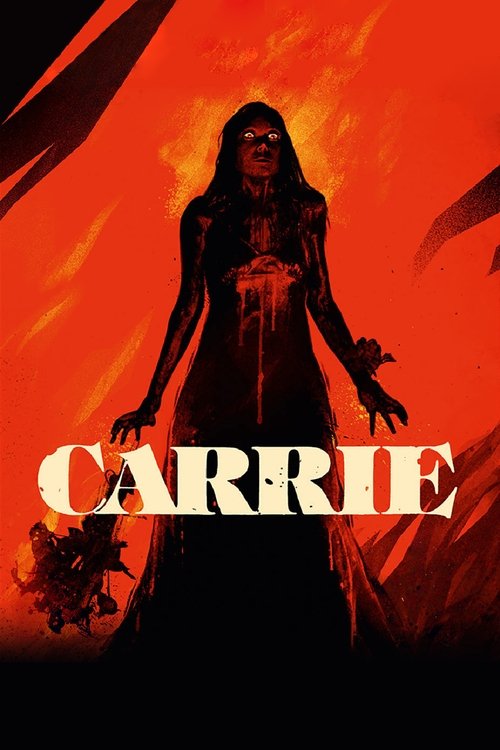
Carrie (1976)
Directed by Brian De Palma
No — Carrie is not woke, scoring 9 out of 100 on our wokeness meter.
Brian De Palma's Carrie arrives with the confidence of a director who understands that the most efficient way to horrify an audience is to first make them care.
Consciousness Markers
The film centers on a teenage girl's coming-of-age trauma, menstruation shaming, and an abusive mother-daughter dynamic, which some critics have read through a feminist lens, but it advances no explicit feminist thesis.
The film is a visceral horror piece that shows rather than preaches; it carries no didactic social messaging.
The cast is uniformly white, with no meaningful racial or ethnic diversity and no commentary on representation.
There are no LGBTQ+ characters, themes, or subtext present in the film.
Race is entirely absent as a subject; the story is set in an all-white Maine community with no engagement with racial themes.
There is no environmental or climate-related content whatsoever.
The film contains no critique of capitalism, wealth, or class structures.
The film depicts body shaming and humiliation of Carrie but does not advocate any body-positive message; the cruelty is presented as horror, not as a platform.
No neurodivergent characters or themes are present or explored.
The film is a contemporary supernatural horror story with no historical revisionism.
Why it received this score
Brian De Palma's Carrie arrives with the confidence of a director who understands that the most efficient way to horrify an audience is to first make them care. The film was adapted from Stephen King's first published novel, and De Palma treats the material with a cold, operatic precision. Sissy Spacek plays the title character with a trembling interiority that has aged better than the film's split-screen flourishes. The prom sequence remains a masterclass in escalation, moving from tenderness to slaughter with almost no dialogue. The movie is a machine built for dread, and it runs clean.
Critics in the decades since have read the film through a feminist lens, and there is material to support the reading. Carrie's first period is met with thrown tampons, her mother equates womanhood with sin, and the climactic violence is a teenage girl's fury at a world that has humiliated her. Yet the film never argues a thesis. It depicts these cruelties as horror, not as a platform. De Palma's camera leers where it might have sympathized, which complicates any tidy political claim. The suffering is the point, not a lesson extracted from it.
The surrounding landscape is otherwise barren of contemporary social messaging. The cast is uniformly white, the town of Chamberlain offers no racial texture, and the story engages with no questions of class or capital. There is no body-positive counterargument to the shaming, no neurodivergent subplot, no environmental anxiety. The film shows rather than lectures, which is its strength and, by the standards of a later era, its quiet refusal. It wants to scare us, and it does, without ever telling us how to vote.
Analysis generated by our Consciousness Algorithm


Synopsis
Withdrawn and sensitive teenager Carrie White faces bullying from her classmates and abuse from her fanatically pious mother. When she begins to suspect that she has supernatural powers, things take a dark and violent turn.
Questions about Carrie
Is Carrie woke?
No — Carrie is not woke, scoring 9 out of 100 on our wokeness meter. That earns it a verdict of Ultra Based.
Does Carrie have any woke elements?
Very few. None of the 10 markers reaches 30, the level where a marker counts as present; the highest is Feminist Agenda at 15.
How does Carrie compare to other 1976 movies?
It ranks #11 of the 30 films from 1976 we've scored; their average is 13. The wokest is 1900 (77).
How is the Woke Score calculated?
An AI-assisted process researches the film and its reception, scores it 0–100 on ten markers, then combines those into one 0–100 Woke Score. It measures a specific set of 2020s cultural themes, not film quality.