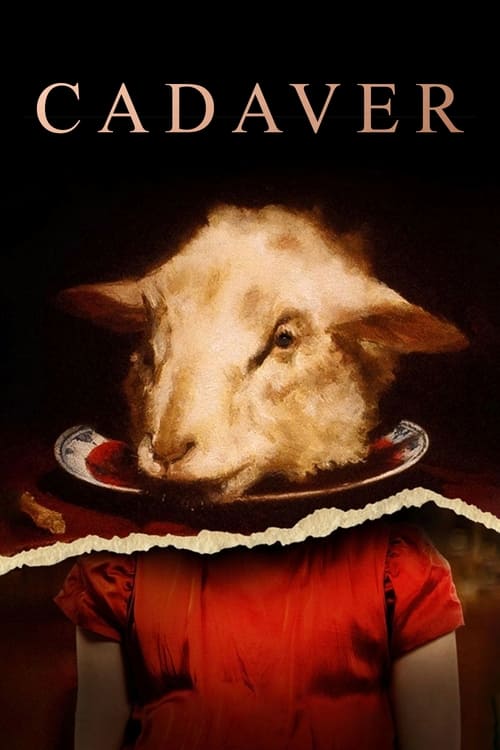
Cadaver (2020)
Directed by Jarand Herdal
No — Cadaver is not woke, scoring 10 out of 100 on our wokeness meter.
Cadaver arrives from Norway with a nuclear winter, a starving family, and a hotel that serves dinner to guests who turn out to be the dinner.
Consciousness Markers
Leonora is a resourceful mother-protagonist who drives the survival narrative and weaponizes her past as an actress to expose the villains. This is a strong female lead, but the film frames it as maternal survival horror rather than an explicit feminist statement.
The charismatic hotelier Mathias lures starving survivors with a free meal and harvests them for flesh, a faint 'the privileged feed on the desperate' dynamic. It reads as horror villainy rather than a coherent economic critique.
The cast is predominantly white Norwegian, with a couple of supporting actors of color (Kingsford Siayor, Maria Grazia Di Meo) present but unremarked upon. No deliberate diversity-forward casting agenda.
The film is a moody, atmospheric thriller that shows rather than tells, offering no moralizing monologues or social messaging.
No LGBTQ+ characters, relationships, or themes appear anywhere in the film.
The film engages no racial themes, commentary, or social-justice framing whatsoever.
The nuclear-disaster backdrop is a genre plot device to create scarcity and desperation, not a climate-crisis allegory or environmental message.
No body-positivity themes or messaging are present.
No neurodivergent characters or themes are depicted or referenced.
The film is a fictional post-apocalyptic horror with no historical subject matter to revise.
Why it received this score
Cadaver arrives from Norway with a nuclear winter, a starving family, and a hotel that serves dinner to guests who turn out to be the dinner. This is sturdy genre machinery, and director Jarand Herdal operates it with a straight face. The film is chilly, red-lit, and patient. It also tips its hand early, a flaw the critics noticed and the film never quite recovers from. Still, the masked ballroom, the long corridors, the boiler room of burned clothing: the atmosphere does the heavy lifting.
On the matter of social consciousness, the film is nearly a blank slate, and there is something almost restful about that. Leonora is a capable protagonist who drives the entire survival plot and eventually weaponizes her former career as an actress to turn a crowd against the man carving them up. That is a strong female lead, though the film frames it as maternal desperation, not a thesis. The cast is overwhelmingly white Nordic, with a pair of supporting performers of color who appear without comment and exit without consequence. No romantic or identity subplots intrude. The villain's scheme, in which a charming hotelier fattens the desperate and harvests them, gestures at a class parable, the well-fed dining on the hungry, but it plays as monster logic, not economics.
There is no sermon here. No monologue explains the moral. The film shows a body in the street and a golden light above a hotel and lets us sit with it. For a 2020 release, that restraint is its own small distinction. It is a grim little film that respects the audience enough to bore them instead of scold them.
Analysis generated by our Consciousness Algorithm


Synopsis
In the aftermath of a nuclear disaster, a starving family finds hope in a charismatic hotel owner. Lured by the prospect of a free dinner, they discover that the evening's entertainment blurs the lines between performance and reality. Will they wind up the spectators or the spectacle?
Questions about Cadaver
Is Cadaver woke?
No — Cadaver is not woke, scoring 10 out of 100 on our wokeness meter. That earns it a verdict of Ultra Based.
Does Cadaver have any woke elements?
Very few. None of the 10 markers reaches 30, the level where a marker counts as present; the highest is Feminist Agenda at 22.
How does Cadaver compare to other 2020 movies?
It ranks #143 of the 227 films from 2020 we've scored; their average is 21. The wokest is One Night in Miami... (83).
How is the Woke Score calculated?
An AI-assisted process researches the film and its reception, scores it 0–100 on ten markers, then combines those into one 0–100 Woke Score. It measures a specific set of 2020s cultural themes, not film quality.