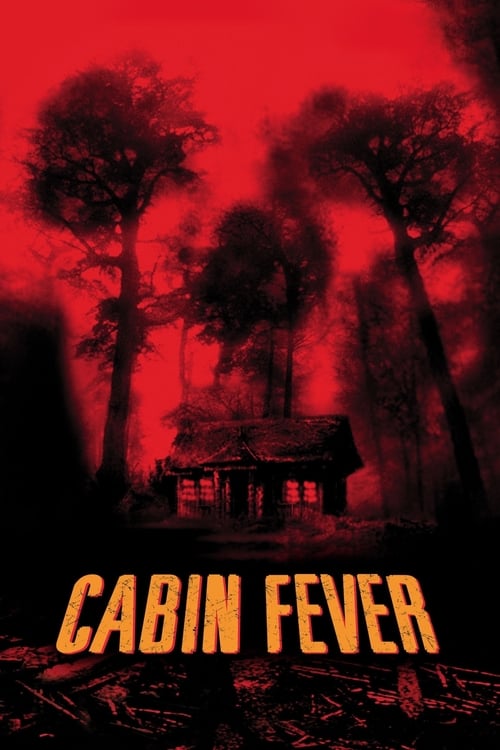
Cabin Fever (2003)
Directed by Eli Roth
No — Cabin Fever is not woke, scoring 0 out of 100 on our wokeness meter.
Cabin Fever arrives from 2003, a year when a young director could still make a horror film about a flesh-eating virus without stopping to explain himself.
Consciousness Markers
The cast is predominantly white and the film makes no deliberate effort toward inclusive or representative casting.
There are no LGBTQ+ characters, themes, or subtext in the film.
The film does not engage with feminist themes or critique; female characters are primarily defined by horror tropes and sexual situations.
The film contains no racial consciousness or commentary on race, despite a brief use of a racial slur that is not framed as social critique.
There is no environmental or climate-related messaging in the film.
The film does not critique capitalism, wealth inequality, or class structures.
The film is a body-horror work about a flesh-eating virus and does not promote body positivity or diverse body acceptance.
There is no exploration or representation of neurodivergence as a theme.
The film is a fictional horror story and does not revise or reinterpret historical events.
The film is a gory horror-comedy and does not contain preachy or lecture-like messaging.
Why it received this score
Cabin Fever arrives from 2003, a year when a young director could still make a horror film about a flesh-eating virus without stopping to explain himself. Eli Roth's debut follows five college graduates to a rented cabin, where the water supply carries something that dissolves skin and the locals carry something worse. The film has one interest, which is the spectacle of the human body betraying its owner in close-up. It pursues that interest with the enthusiasm of a man who once caught a skin infection in Iceland and never quite got over it.
The cultural inventory here is close to empty. That is not a compliment. The cast is white and unbothered by the question. No character wrestles with identity, orientation, or the arrangement of the economy. The women exist to be infected, undressed, or both, and a production anecdote about the precise measurement of an actress's buttock suggests where the creative energy was spent. A racial slur lands early, deployed for shock and nothing else, which the financiers found unsettling and which the film never examines. There is no environmental sermon, no class anger, no celebration of bodies as they are. The bodies here are dissolving, and the film considers this funny. It lectures no one. It has no thesis to deliver.
A sommelier of such things might call this a clean vintage. The bottle contains gore, gallows humor, and a dog named Dr. Mambo, and it contains nothing else. Every progressive marker we might test for returns an honest zero, not from timidity but from total disinterest in the project. The film wants to make you squirm and then laugh at yourself for squirming. On that narrow brief, it succeeds. On every other brief, it was never in the room.
Analysis generated by our Consciousness Algorithm


Synopsis
A group of five college graduates rent a cabin in the woods and begin to fall victim to a horrifying flesh-eating virus, which attracts the unwanted attention of the homicidal locals.
Questions about Cabin Fever
Is Cabin Fever woke?
No — Cabin Fever is not woke, scoring 0 out of 100 on our wokeness meter. That earns it a verdict of Ultra Based.
Does Cabin Fever have any woke elements?
No. All 10 markers score zero.
How does Cabin Fever compare to other 2003 movies?
It ranks #131 of the 150 films from 2003 we've scored; their average is 12. The wokest is Mona Lisa Smile (60).
How is the Woke Score calculated?
An AI-assisted process researches the film and its reception, scores it 0–100 on ten markers, then combines those into one 0–100 Woke Score. It measures a specific set of 2020s cultural themes, not film quality.