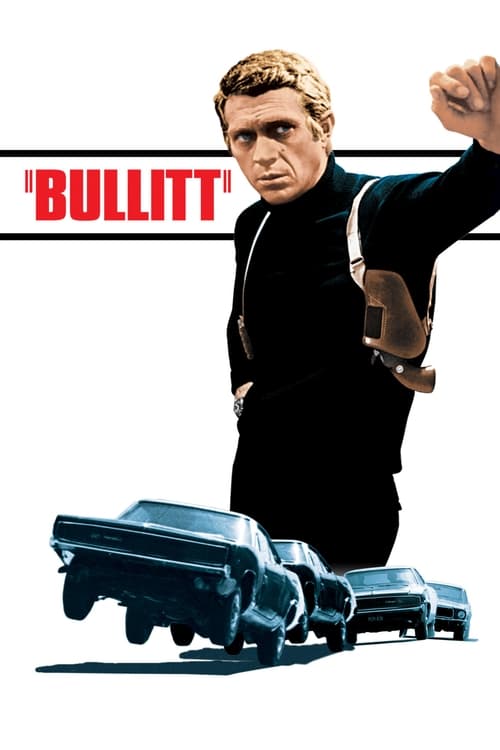
Bullitt (1968)
Directed by Peter Yates
No — Bullitt is not woke, scoring 0 out of 100 on our wokeness meter.
Bullitt arrives from 1968, a year when a man could still be judged by the quality of his shoulder holster.
Consciousness Markers
The cast includes a Black actor as a doctor, but this is natural, uncommented casting rather than modern representation-driven casting.
No LGBTQ+ themes, characters, or subtext are present.
Jacqueline Bisset's Cathy has a brief scene questioning Bullitt's violent world, but the film does not advance a feminist agenda.
Race is not a thematic concern in the film.
No environmental or climate themes appear.
The film is a crime procedural and does not critique capitalism or wealth inequality.
No body-positivity themes or messaging are present.
No neurodivergence themes or characters are present.
The film is fictional and based on a novel, not a revisionist historical narrative.
The film is a straightforward action thriller with no modern moral lecturing.
Why it received this score
Bullitt arrives from 1968, a year when a man could still be judged by the quality of his shoulder holster. Peter Yates directs Steve McQueen through the streets of San Francisco with documentary patience, lingering over evidence bags and emergency room procedure as though the audience had enrolled in a night course. The result is a crime thriller that treats bureaucracy as texture and violence as an administrative inconvenience. The famous chase, ten minutes of Mustang against Charger, remains the film's argument for itself, and it is a good one.
The cultural inventory here is remarkably bare. A Black actor appears as a doctor in the hospital sequence, and the film neither announces him nor asks for credit, which is the correct and unremarkable approach. Jacqueline Bisset's Cathy gets a single scene in which she asks what will become of them, a question the film answers by having her asleep in his bed by Monday morning. Senator Chalmers is a study in political ambition, not an indictment of any economic order. Race, sexuality, the environment, the body, the mind, and the historical record are all left undisturbed. Nobody lectures. Nobody explains the lesson. The lesson, such as it is, is that a man should drive well and keep his word.
We have graded this one honestly and found nothing to grade. It is a film about a detective, a witness, and a car. The absence of contemporary messaging cannot be awarded points as a virtue. It is simply a fact of the calendar. Every measure we keep returns zero, and the sommelier sets down the glass and reaches for the next bottle.
THEMATIC TAGS: oscar_winner, book_adaptation
Analysis generated by our Consciousness Algorithm


Synopsis
Senator Walter Chalmers is aiming to take down mob boss Pete Ross with the help of testimony from the criminal's hothead brother Johnny, who is in protective custody in San Francisco under the watch of police lieutenant Frank Bullitt. When a pair of mob hitmen enter the scene, Bullitt follows their trail through a maze of complications and double-crosses. This thriller includes one of the most famous car chases ever filmed.
Questions about Bullitt
Is Bullitt woke?
No — Bullitt is not woke, scoring 0 out of 100 on our wokeness meter. That earns it a verdict of Ultra Based.
Does Bullitt have any woke elements?
No. All 10 markers score zero.
How does Bullitt compare to other 1968 movies?
It ranks #19 of the 23 films from 1968 we've scored; their average is 7. The wokest is Night of the Living Dead (27).
How is the Woke Score calculated?
An AI-assisted process researches the film and its reception, scores it 0–100 on ten markers, then combines those into one 0–100 Woke Score. It measures a specific set of 2020s cultural themes, not film quality.