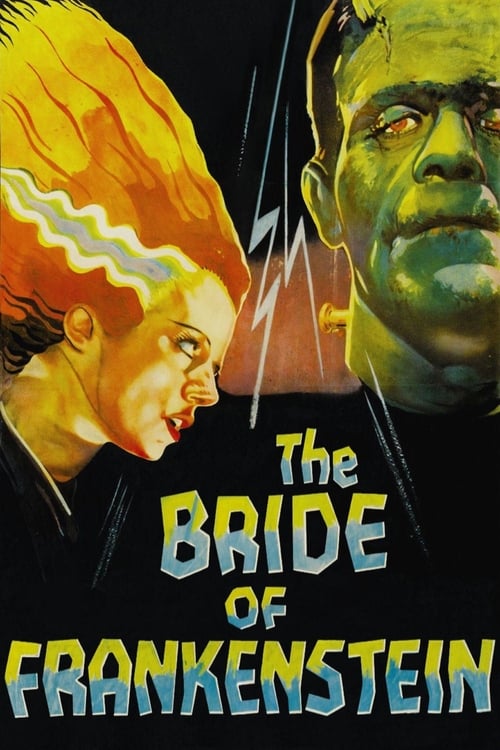
Bride of Frankenstein (1935)
Directed by James Whale
No — Bride of Frankenstein is not woke, scoring 6 out of 100 on our wokeness meter.
Bride of Frankenstein arrives ninety years after its release still wearing its reputation like a borrowed coat.
Consciousness Markers
Director James Whale was openly gay and the Monster's status as a rejected outsider has invited retrospective queer readings, but the film contains no explicit LGBTQ+ content.
The Mary Shelley prologue gestures at a moral lesson about playing God, but the film delivers it as Gothic tragedy rather than modern sermonizing.
The Mary Shelley framing device grants a woman authorial voice, but Elizabeth exists mainly to be hysterical and kidnapped, and the Bride is a mute plot device destroyed within minutes.
The cast is entirely white, reflecting the demographics of 1935 Hollywood with no deliberate inclusive casting.
No engagement with race or racial themes whatsoever.
No environmental or climate themes present.
No critique of wealth, class, or capitalism; the conflict is entirely about science and morality.
The Monster is feared for his appearance, but this is horror convention rather than a body-positivity message.
The Monster's childlike mind is a narrative device, not a depiction or advocacy of neurodivergence.
A fictional Gothic horror tale with no historical revisionism.
Why it received this score
Bride of Frankenstein arrives ninety years after its release still wearing its reputation like a borrowed coat. James Whale, who had already squeezed the idea dry, returned to the material only on the condition that he could make a hoot of it, and the result is a sequel that improves on its predecessor by refusing to take it seriously. The Mary Shelley prologue, in which the author reminds Byron and Shelley that her novel was meant to impart a moral lesson about playing God, is a framing device of real literary ambition. It also happens to be the only stretch of the picture where a woman holds the floor without being carried off by a monster.
Elizabeth spends the running time foreseeing death, weeping, and being kidnapped to compel her husband's cooperation. The Bride herself, the titular attraction, is unveiled, hisses, and is destroyed inside four minutes of screen time. She is a plot device with a Nefertiti hairdo. That Whale was an openly gay man working inside the 1935 studio system has produced decades of retrospective reading, and the Monster's exile among people who fear him invites it. The film offers nothing explicit, only the loneliness of an outsider who learns the word friend and then loses the friend.
The concerns here are theological and Gothic: creation, responsibility, the price of ambition. There is no interest in race, class, capital, environment, or the body as a site of social meaning. The Monster is feared for his scars because this is a horror film, and horror has always understood that ugliness is cheaper than argument. What lingers is a melancholy, beautifully lit tragedy that lectures no one and preaches nothing. It watches a made thing ask for company and be refused. By the standards of contemporary cultural instruction the picture is nearly silent. By any other standard it is close to perfect. The classification stands at a modest figure, and the film survives it without difficulty.
Analysis generated by our Consciousness Algorithm
Part of


Synopsis
After recovering from injuries sustained in the mob attack upon himself and his creation, Dr. Henry Frankenstein falls under control of his former mentor, Dr. Pretorius, who insists the now-chastened doctor resume his experiments in creating new life. Meanwhile, the Monster remains on the run from those who wish to destroy him.
Questions about Bride of Frankenstein
Is Bride of Frankenstein woke?
No — Bride of Frankenstein is not woke, scoring 6 out of 100 on our wokeness meter. That earns it a verdict of Ultra Based.
Does Bride of Frankenstein have any woke elements?
Very few. None of the 10 markers reaches 30, the level where a marker counts as present; the highest is Lecture Energy at 10.
How does Bride of Frankenstein compare to other 1935 movies?
It is the wokest of the 4 films from 1935 we've scored; their average is 3.
How is the Woke Score calculated?
An AI-assisted process researches the film and its reception, scores it 0–100 on ten markers, then combines those into one 0–100 Woke Score. It measures a specific set of 2020s cultural themes, not film quality.