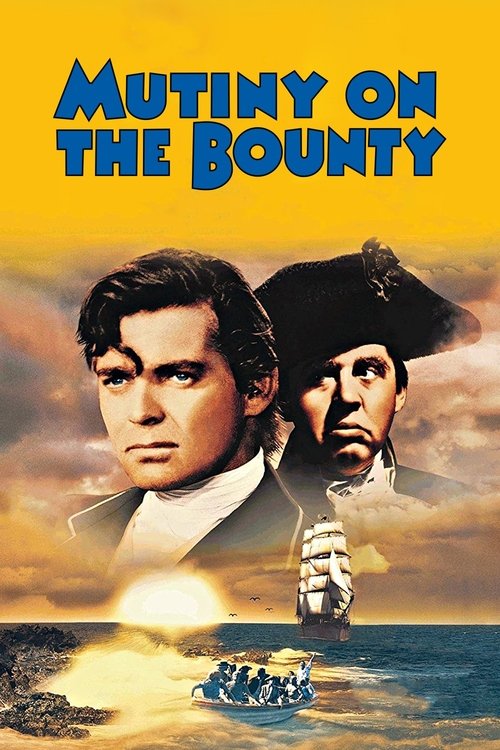
Mutiny on the Bounty (1935)
Directed by Frank Lloyd
No · Ultra Based
How we score movies →Consciousness Markers
While the film does take creative liberties with historical events, it lacks the specific modern revisionist impulse to center previously marginalized voices. It rewrites history in service of Hollywood drama, not progressive consciousness.
All significant roles are white and male. Indigenous Tahitians appear only as background extras with no agency or speaking roles of substance. The casting reflects 1935 Hollywood's complete disregard for meaningful representation.
Female characters are minimal and decorative. Women exist primarily as romantic interests or background figures, with no agency in the narrative. The film is entirely centered on male authority and male conflict.
The film demonstrates zero racial consciousness. Tahitian characters are portrayed as exotic others without depth, voice, or humanity. Colonial power structures are entirely unexamined and normalized.
No LGBTQ+ themes or characters present. The film operates within strict heteronormative frameworks with no exploration of alternative orientations or identities.
Climate consciousness is entirely absent. The film treats the natural environment as mere setting rather than subject of concern or ecological awareness.
No anti-capitalist sentiment present. The mutiny is framed as a personal grievance rather than a critique of hierarchical systems or economic exploitation.
Body positivity is not a consideration. The film reflects conventional 1935 aesthetic standards with no diversity in body representation or challenge to beauty norms.
Neurodivergence is not acknowledged or represented. There is no exploration of disability, autism, ADHD, or any neurodivergent conditions in the narrative.
The film contains no preachy messaging, no speeches about social justice, and no attempt to educate audiences about systemic issues. It is pure entertainment product without pedagogical intent.


Synopsis
Fletcher Christian successfully leads a revolt against the ruthless Captain Bligh on the HMS Bounty. However, Bligh returns one year later, hell bent on revenge.
Why it received this score
The 1935 "Mutiny on the Bounty" stands as a monument to Hollywood's pre-social consciousness era, a time when the machinery of entertainment operated on entirely different assumptions about representation and historical narrative. The film concerns itself with the conflict between two white men of authority, with the broader implications of colonial power structures, indigenous populations, and systemic oppression relegated to mere backdrop. The Tahitian inhabitants exist primarily as exotic scenery, their agency and humanity compressed into decorative roles that serve the dramatic needs of the male-centered power struggle.
What makes this particularly instructive for our purposes is its absolute indifference to the very concerns that would later define modern cultural awareness. There is no attempt to center marginalized voices, no interrogation of imperial systems, no recognition that the story involves the displacement and exploitation of colonized peoples. The film treats the mutiny as a matter of personal honor between gentlemen, a narrative that conveniently obscures the historical reality of British imperial expansion and its human costs. Captain Bligh's brutality is portrayed as a character flaw rather than symptomatic of larger structural violence.
The casting remains entirely within the Hollywood conventions of 1935, which is to say homogeneously white and male in all positions of agency and consequence. There are no queer subtexts explored, no feminist reconsideration of power dynamics, no acknowledgment of disability or neurodivergence, and certainly no climate consciousness or anti-capitalist sentiment. This is cinema in its most conservative historical mode, concerned with adventure spectacle and star power rather than social interrogation. It is precisely the kind of film against which all modern progressive sensibilities would measure themselves.
Analysis generated by our Consciousness Algorithm
Critic Reviews
“An exotic and gripping piece of Hollywood mythology, made with all the technical skill and gloss one associates with Irving Thalberg's MGM.”
“The weird and wonderful history of H. M. S. Bounty is magnificently transferred to the screen in Mutiny on the Bounty, which opened at the Capitol Theatre yesterday. Grim, brutal, sturdily romantic, made out of horror and desperate courage, it is as savagely exciting and rousingly dramatic a photoplay as has come out of Hollywood in recent years.”
“Expertly crafted and brilliantly acted, MUTINY ON THE BOUNTY is one of the most durable and engrossing adventure films ever made.”
“Despite the efforts of Producer Irving Thalberg, Director Frank Lloyd, three scenarists and $2,000,000 to give it balance, polish and direction, the picture lacks all three. There are intervals when the two hours which it lasts seem as interminable as Bligh's voyage in the open boat must have seemed to its occupants. The narrative, which skips the saga of Pitcairn's Island entirely for Tahiti love interest, still contains enough material for at least three films. These faults are indigenous to the historic material used. The picture has few others.”