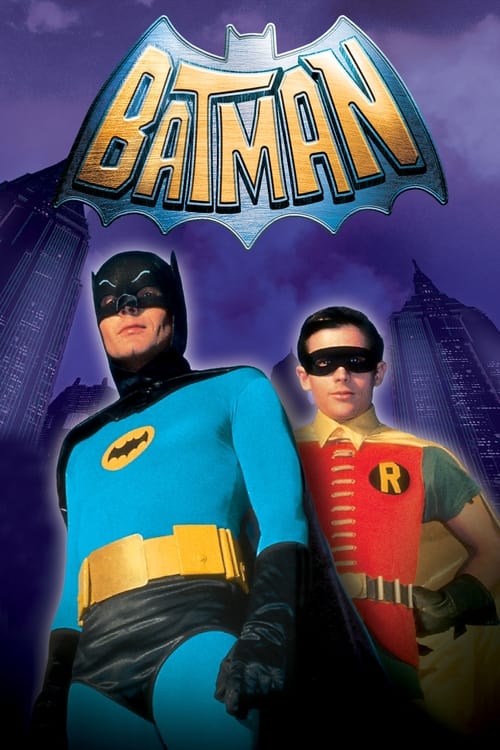
Batman (1966)
Directed by Leslie H. Martinson
No — Batman is not woke, scoring 3 out of 100 on our wokeness meter.
Leslie H. Martinson's Batman arrives in 1966 with a shark, a bottle of repellent, and no discernible interest in the moral renovation of its audience.
Consciousness Markers
The multi-national Security Council (Japan, USSR, Nigeria, etc.) exists as a plot device for a comic gag about swapped mannerisms, not as an intentional diversity statement; the all-white principal cast is a product of 1966, not commentary.
The Security Council's diversity is played for broad national stereotypes and a light Cold War gag; there is no racial consciousness or commentary on race as such.
The film is pure entertainment and slapstick; the only moral is a brief closing wish that people might learn to live together peacefully, delivered without preachiness.
No LGBTQ+ characters, subtext, or themes of any kind; the camp aesthetic is aesthetic, not identitarian.
Catwoman appears as a villain and Bruce Wayne's deceptive love interest, with no feminist framing, agency commentary, or critique of gender roles.
No environmental or climate themes whatsoever; the closest is a dehydration device and a bomb disposal scene.
No critique of capitalism or wealth; the villains want ransom, which is straightforward villainy rather than a systemic indictment.
No body positivity themes; the camp tone does not engage with body image or representation.
No neurodivergence represenation or themes.
The film is a straight camp parody of a comic-book character and mid-1960s culture; it makes no revisionist historical claims.
Why it received this score
Leslie H. Martinson's Batman arrives in 1966 with a shark, a bottle of repellent, and no discernible interest in the moral renovation of its audience. Adam West plays the Caped Crusader with the serene conviction of a man reading a tax form aloud, and the picture concerns itself chiefly with a dehydrating ray, a penguin-shaped submarine, and four villains who wish to hold the world for ransom. There is a bomb on a pier. There is a porpoise that gives its life for the cause. Nobody pauses to explain what any of it means, which is, in this critic's exhausted estimation, the film's quietest virtue.
The picture does assemble a United World Organization Security Council of Japanese, Soviet, Israeli, Nigerian and assorted European ambassadors, but they exist to be kidnapped, dehydrated, and then rehydrated speaking one another's languages. The joke is about swapped mannerisms, not about equity. A viewer hunting for a thesis on representation will find only a Cold War gag and a closing wish that people might learn to live together. It is a hope, not a sermon.
Camp is the entire enterprise, and camp is not a political program. The film has no interest in gender, wealth, bodies, climate, or the interior lives of anyone who is not wearing a cape. Catwoman is a villain with a mask and a scheme. The villains want money because villains want money. The final scene asks whether humanity might be improved by tampering with the dust of diplomats, and Batman declines, on the grounds that we should probably sort it out ourselves. That is the whole of the film's moral instruction, delivered in under a minute and never mentioned again. We are left with a picture that entertains ruthlessly and lectures not at all, a rare vintage. Score it as it is: a relic of pure play, untouched by the anxieties of a later decade.
Analysis generated by our Consciousness Algorithm


Synopsis
The Dynamic Duo faces four super-villains who plan to hold the world for ransom with the help of a secret invention that instantly dehydrates people.
Questions about Batman
Is Batman woke?
No — Batman is not woke, scoring 3 out of 100 on our wokeness meter. That earns it a verdict of Ultra Based.
Does Batman have any woke elements?
Very few. None of the 10 markers reaches 30, the level where a marker counts as present; the highest is Lecture Energy at 5.
How does Batman compare to other 1966 movies?
It ranks #11 of the 18 films from 1966 we've scored; their average is 7. The wokest is Daisies (28).
How is the Woke Score calculated?
An AI-assisted process researches the film and its reception, scores it 0–100 on ten markers, then combines those into one 0–100 Woke Score. It measures a specific set of 2020s cultural themes, not film quality.