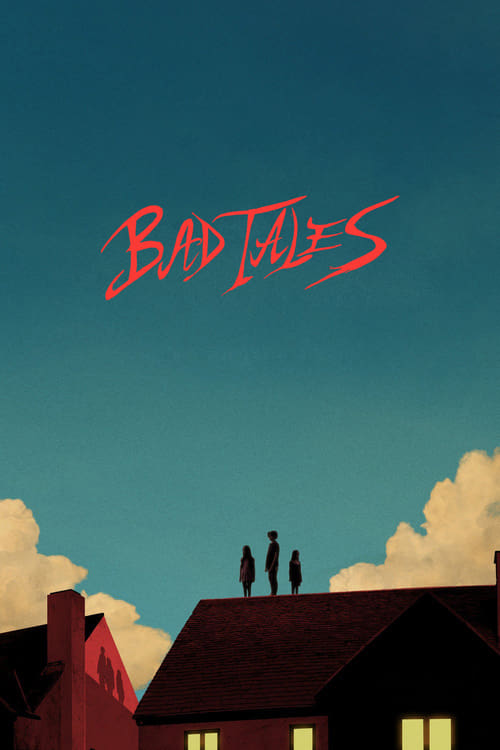
Bad Tales (2020)
Directed by Damiano D'Innocenzo
No — Bad Tales is not woke, scoring 3 out of 100 on our wokeness meter.
The D'Innocenzo brothers open Bad Tales with a narrator who claims to have found a diary in the garbage, which makes the story true, or possibly not true, and this is the level of epistemological mischief on offer for the next two hours.
Consciousness Markers
The narrator and bleak moral framing give the film a mild sermonizing quality about adult corruption, but it is not a modern progressive lecture.
The cast is almost entirely white Italian actors, with no evident emphasis on diverse or inclusive casting.
There are no LGBTQ+ characters, themes, or subplots in the film.
The film depicts passive mothers and abusive fathers, but it does not advance a feminist agenda or critique patriarchy in modern activist terms.
Race and racial identity are not addressed; the story focuses on white suburban Italian families.
There is no environmental or climate-related content.
The film critiques bourgeois hypocrisy and class envy, but it does not articulate an anti-capitalist or eat-the-rich message.
Body image, size, and body positivity are not themes in the film.
No characters are framed through neurodivergence or neurodiversity themes.
The film is a fictional contemporary story and does not revise or reinterpret historical events.
Why it received this score
The D'Innocenzo brothers open Bad Tales with a narrator who claims to have found a diary in the garbage, which makes the story true, or possibly not true, and this is the level of epistemological mischief on offer for the next two hours. In a suburb on the outskirts of Rome, terraced houses and tidy gardens conceal fathers who practice a quiet sadism, mothers who have been drained of all volition, and children who are building bombs in their bedrooms. The sun beats down. Nothing is well.
As a document of social consciousness, the film is a desert. The cast is white, Italian, and drawn from a narrow register of faces. There are no LGBTQ+ threads, no engagement with race, no environmental lament, no interest in body image or neurodiversity. Class animates the whole thing, the Rosas envy the Placidos for their children's grades while despising them as lower stock, but the film has no appetite for an economic thesis. It observes bourgeois rot and finds it simply rotten. The misery here is not a systemic critique awaiting a policy solution. It is a mood.
Where the film does carry a faint sermonizing hum is in its narration, which keeps apologizing for the sadness of what it is telling us and finally declares that it would prefer not to continue. That is a moral posture, a rebuke of adult corruption delivered from a slight elevation, and it lands with the weight of a shrug. The closing act of collective self-destruction arrives with the flatness of a formality. This is a film that wants to disturb and mostly manages to bore, which may be the cruelest thing a provocation can do.
Analysis generated by our Consciousness Algorithm


Synopsis
In a small suburb on the outskirts of Rome, the cheerful heat of summer camouflages a stifling atmosphere of alienation. From a distance, the families seem normal, but it’s an illusion: in the houses, courtyards and gardens, silence shrouds the subtle sadism of the fathers, the passivity of the mothers and the guilty indifference of adults. But it’s the desperation and repressed rage of the children that will explode and cut through this grotesque façade, with devastating consequences for the entire community.
Questions about Bad Tales
Is Bad Tales woke?
No — Bad Tales is not woke, scoring 3 out of 100 on our wokeness meter. That earns it a verdict of Ultra Based.
Does Bad Tales have any woke elements?
Very few. None of the 10 markers reaches 30, the level where a marker counts as present; the highest is Lecture Energy at 10.
How does Bad Tales compare to other 2020 movies?
It ranks #199 of the 227 films from 2020 we've scored; their average is 21. The wokest is One Night in Miami... (83).
How is the Woke Score calculated?
An AI-assisted process researches the film and its reception, scores it 0–100 on ten markers, then combines those into one 0–100 Woke Score. It measures a specific set of 2020s cultural themes, not film quality.