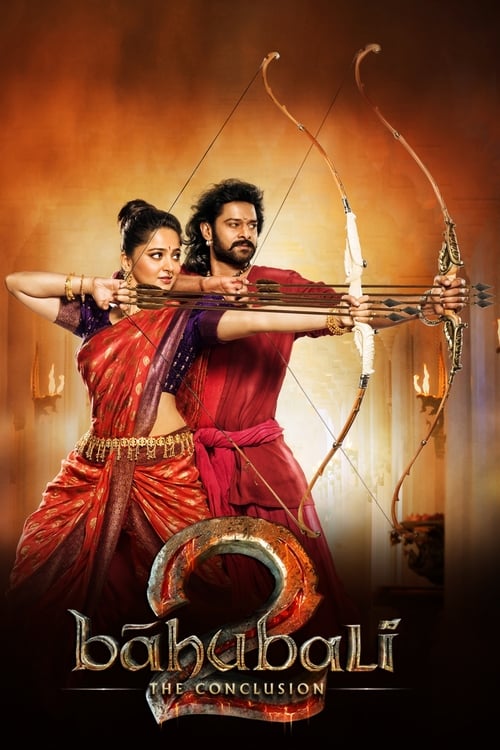
Bāhubali 2: The Conclusion (2017)
Directed by S. S. Rajamouli
No — Bāhubali 2: The Conclusion is not woke, scoring 18 out of 100 on our wokeness meter.
Bāhubali 2: The Conclusion arrives as a juggernaut of Indian cinema, a sequel that resolves the cliffhanger of its predecessor with a tale of royal succession, betrayal, and vengeance in a fictional medieval kingdom.
Consciousness Markers
Devasena and Avantika are martial, autonomous women; Devasena rejects a demeaning marriage demand and executes the villain. However, this is framed within a traditional epic revenge narrative rather than a modern feminist agenda.
The cast is entirely Indian, which is natural for an Indian production rather than a deliberate modern diversity-casting statement. No evidence of representation casting as a woke marker.
There are no LGBTQ+ themes, characters, or subtext in the film.
The film is set in a fictional medieval Indian kingdom and does not engage with modern racial consciousness or racial justice themes.
There is no environmental or climate-crisis messaging in the film.
The conflict concerns royal succession, loyalty, and revenge, not capitalism or economic inequality.
The film does not address body positivity or related themes.
There is no exploration of neurodivergence or neurodiverse characters.
The story is a fictional epic set in a mythical kingdom, not a revisionist account of real historical events.
The film delivers moral speeches about justice and righteous rule, but these are traditional epic themes rather than modern social-justice lecturing.
Why it received this score
Bāhubali 2: The Conclusion arrives as a juggernaut of Indian cinema, a sequel that resolves the cliffhanger of its predecessor with a tale of royal succession, betrayal, and vengeance in a fictional medieval kingdom. The film is a grand spectacle, all sweeping battles and emotional crescendos, and it operates entirely within the grammar of traditional epic storytelling. There is no modern social agenda on display here, no attempt to lecture the audience on contemporary issues. It is a story of honor, loyalty, and the rightful ruler, told with unapologetic sincerity.
The female characters merit a closer look. Devasena and Avantika are martial, autonomous women who fight and speak their minds. Devasena rejects a demeaning marriage demand and later executes the villain with her own hands. These are genuine moments of agency. Yet they are framed within a traditional revenge narrative, not a modern feminist manifesto. The film does not pause to interrogate gender roles or patriarchy. It simply presents capable women as part of its heroic tapestry. This is not a critique; it is an observation about the film's priorities.
Elsewhere, the markers of contemporary social consciousness are absent. There are no LGBTQ themes, no engagement with racial justice, no climate crusade, no eat-the-rich rhetoric, no body positivity, no exploration of neurodivergence, no revisionist history. The film delivers moral speeches about justice and righteous rule, but these are the stuff of ancient epics, not modern sermonizing. Bāhubali 2 is a triumph of scale and emotion, a film that knows exactly what it is: a grand, unapologetic crowd-pleaser. It does not seek to educate. It seeks to entertain, and it does so with a single-minded devotion that is almost admirable in its purity.
Analysis generated by our Consciousness Algorithm


Synopsis
When Mahendra, the son of Bāhubali, learns about his heritage, he begins to look for answers. His story is juxtaposed with past events that unfolded in the Mahishmati Kingdom.
Questions about Bāhubali 2: The Conclusion
Is Bāhubali 2: The Conclusion woke?
No — Bāhubali 2: The Conclusion is not woke, scoring 18 out of 100 on our wokeness meter. That earns it a verdict of Ultra Based.
Does Bāhubali 2: The Conclusion have any woke elements?
1 of the 10 markers register at 30 or above, led by Feminist Agenda (30). On Feminist Agenda: Devasena and Avantika are martial, autonomous women; Devasena rejects a demeaning marriage demand and executes the villain.
How does Bāhubali 2: The Conclusion compare to other 2017 movies?
It ranks #103 of the 309 films from 2017 we've scored; their average is 19. The wokest is I Am Not Your Negro (92).
How is the Woke Score calculated?
An AI-assisted process researches the film and its reception, scores it 0–100 on ten markers, then combines those into one 0–100 Woke Score. It measures a specific set of 2020s cultural themes, not film quality.