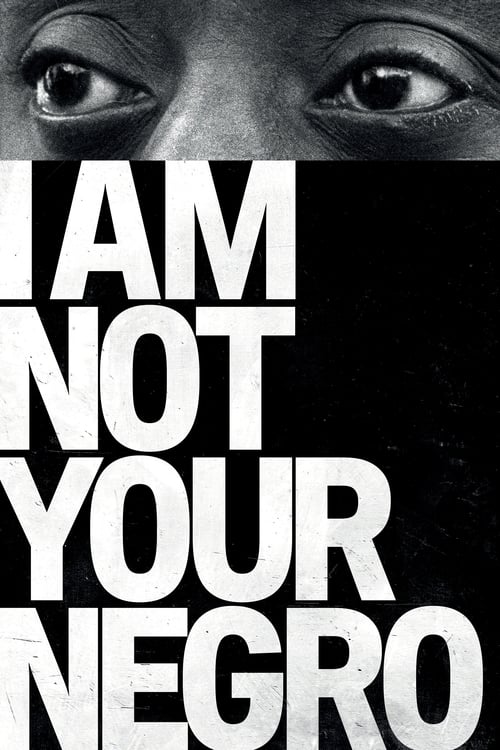
I Am Not Your Negro (2017)
Directed by Raoul Peck
Yes — I Am Not Your Negro is very woke, scoring 92 out of 100 on our wokeness meter.
Raoul Peck's essay film arrives with the calm assurance of a lecture hall, and it never leaves it.
Consciousness Markers
The entire documentary is an extended meditation on American racism, white supremacy, and Black identity, making racial consciousness its central and explicit subject.
The film is a narrated essay documentary built on direct argument, historical critique, and Baldwin's spoken and written words, giving it overwhelming lecture energy.
The film centers Black historical figures, a Black director, and a Black narrator, making Black representation the entire foundation of its subject and voice.
The documentary deliberately reexamines American history through James Baldwin's perspective, challenging traditional narratives about race, progress, and national identity.
The film critiques the American economy of forced labor, cheap Black labor, and the prison economy, linking racial oppression to capitalist exploitation.
James Baldwin's sexuality is not a focus of the documentary, and the research summary contains no LGBTQ+ thematic content.
The film includes women such as Lorraine Hansberry and Dorothy Counts, but it does not advance a feminist critique or agenda.
There is no engagement with climate change or environmental themes.
There is no body positivity theme or movement present.
There is no exploration of neurodivergence or neurodiversity.
Why it received this score
Raoul Peck's essay film arrives with the calm assurance of a lecture hall, and it never leaves it. Working from James Baldwin's unfinished manuscript, the director assembles archival footage, film clips and Samuel L. Jackson's measured narration into a sustained argument about American racism. Baldwin is the presiding intelligence, and the film grants him the floor without interruption. There is no counterargument offered, no gesture toward balance. The form is the point.
The documentary's real subject is the story America tells about itself, and its method is to take that story apart piece by piece. Peck revisits the assassinations of Medgar Evers, Malcolm X and Martin Luther King Jr. not as tragedy alone but as evidence in a case. He lingers on Hollywood's treatment of Black actors, including Sidney Poitier jumping off the train for the comfort of white audiences. The cheap labor that built the ports and railroads returns as the prison economy that inherited it. The critique of American capitalism here is inseparable from the critique of American race. Both are treated as a single machine.
What lingers is the voice. Jackson reads Baldwin's words with restraint, and the restraint makes the anger land harder. The film is a sermon, and it knows it, and it does not apologize. It asks white America to explain why it needed the figure it invented, and it leaves that question hanging in the air without an answer. Decades after Baldwin's death, the question has not aged. Neither has the film, which is the most damning thing anyone could say about it.
Analysis generated by our Consciousness Algorithm


Synopsis
Working from the text of James Baldwin’s unfinished final novel, director Raoul Peck creates a meditation on what it means to be Black in the United States.
Questions about I Am Not Your Negro
Is I Am Not Your Negro woke?
Yes — I Am Not Your Negro is very woke, scoring 92 out of 100 on our wokeness meter. That earns it a verdict of Peak Woke.
What makes I Am Not Your Negro woke?
5 of the 10 markers register at 30 or above, led by Racial Consciousness (100), Lecture Energy (95) and Representation Casting (85). On Racial Consciousness: The entire documentary is an extended meditation on American racism, white supremacy, and Black identity, making racial consciousness its central and explicit subject.
How does I Am Not Your Negro compare to other 2017 movies?
It is the wokest of the 309 films from 2017 we've scored; their average is 19.
How is the Woke Score calculated?
An AI-assisted process researches the film and its reception, scores it 0–100 on ten markers, then combines those into one 0–100 Woke Score. It measures a specific set of 2020s cultural themes, not film quality.