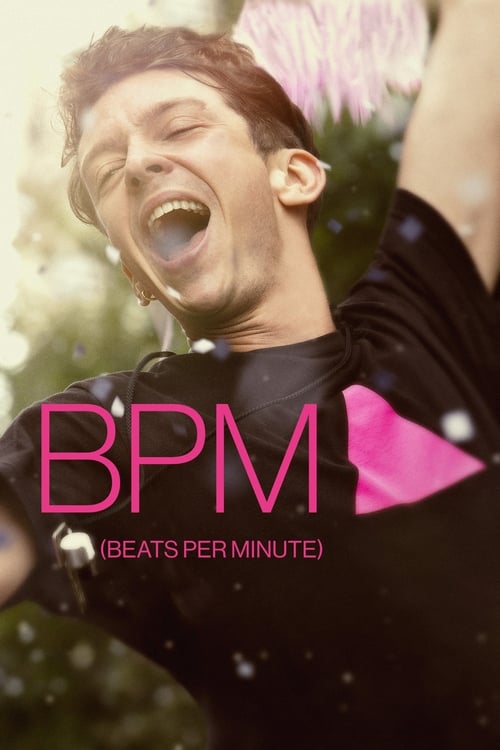
BPM (Beats per Minute) (2017)
Directed by Robin Campillo
Yes — BPM (Beats per Minute) is woke, scoring 77 out of 100 on our wokeness meter.
The film BPM (Beats per Minute) arrives from 2017, a French drama concerning ACT UP Paris in the early 1990s.
Consciousness Markers
AIDS activism, gay relationships, and queer community life are the film's core subject matter, making LGBTQ+ themes central and explicit throughout.
The film centers on a predominantly gay, HIV-positive activist community, with many LGBTQ actors and characters, though casting was not framed as a modern representation initiative.
The film features lengthy ACT UP meetings, debates, and speeches about strategy, government inaction, and pharmaceutical ethics, giving it a strong lecture-like energy.
The activists directly target pharmaceutical companies and health insurance conferences, criticizing profit-driven delays in AIDS treatment and care.
Women are present in ACT UP and one mother's story is important, but the film does not advance a feminist agenda or critique patriarchy.
The film is a historical dramatization of ACT UP Paris based on personal experience, recovering a marginalized history rather than revising established facts for modern ideology.
Race is not a significant theme in the film; the narrative focuses on AIDS activism and queer identity in 1990s Paris without racial commentary.
There is no engagement with climate change or environmental themes.
The film depicts illness and sexuality frankly, but it does not promote body positivity as a social movement or body-image politics.
A deaf character appears in the group, but deafness is not framed as neurodivergence, and no other neurodivergent themes are present.
Why it received this score
The film BPM (Beats per Minute) arrives from 2017, a French drama concerning ACT UP Paris in the early 1990s. Its central preoccupation is the AIDS crisis and the queer community that mobilized against government indifference and pharmaceutical greed. This is not a film that treats LGBTQ+ themes as a subplot or a gesture. They are the entire architecture. The casting reflects the community it portrays, with gay and HIV-positive actors filling the ranks of activists. That choice feels organic, not like a modern representation initiative. The film recovers a marginalized history from personal memory, which gives its historical revision a modest, elegiac quality. There is a feminist presence, notably a mother fighting for justice, but the narrative does not critique patriarchy. Race, climate, body positivity, and neurodivergence are absent as themes. A deaf character appears, yet deafness is not framed as neurodivergence. Those elements simply do not figure.
Where the film does assert its progressive sensibilities is in its anti-capitalist fury. The activists target pharmaceutical labs and health insurance conferences, condemning profit-driven delays in treatment. The film's lecture energy is high. We sit through lengthy meetings, debates over strategy, speeches about government inaction. These scenes have the texture of actual organizing, not sermonizing. The arguments are messy and internal. Some radicals want direct action; others prefer negotiation. The film does not resolve these tensions neatly. That messiness keeps the politics from becoming a simple morality play. The characters argue because they are desperate, not because the screenplay needs a teachable moment.
In the end, BPM is a moving and serious work, but its cultural awareness belongs to a specific historical moment. It is not a modern progressive checklist. It is a requiem for the dead and a testament to collective action. The film earns its emotional weight through intimacy, not through ideological instruction. We classify it as a moderate example of social consciousness, with its strongest markers in LGBTQ+ themes, anti-capitalist critique, and lecture energy. The rest is silence.
Analysis generated by our Consciousness Algorithm


Synopsis
Paris, in the early 1990s: a group of young activists is desperately tied to finding the cure against an unknown lethal disease. They target the pharmaceutical labs that are retaining potential cures, and multiply direct actions, with the hope of saving their lives as well as the ones of future generations.
Questions about BPM (Beats per Minute)
Is BPM (Beats per Minute) woke?
Yes — BPM (Beats per Minute) is woke, scoring 77 out of 100 on our wokeness meter. That earns it a verdict of Woke.
What makes BPM (Beats per Minute) woke?
4 of the 10 markers register at 30 or above, led by LGBTQ+ Themes (95), Lecture Energy (70) and Representation Casting (70). On LGBTQ+ Themes: AIDS activism, gay relationships, and queer community life are the film's core subject matter, making LGBTQ+ themes central and explicit throughout.
How does BPM (Beats per Minute) compare to other 2017 movies?
It ranks #2 of the 309 films from 2017 we've scored; their average is 19. The wokest is I Am Not Your Negro (92).
How is the Woke Score calculated?
An AI-assisted process researches the film and its reception, scores it 0–100 on ten markers, then combines those into one 0–100 Woke Score. It measures a specific set of 2020s cultural themes, not film quality.