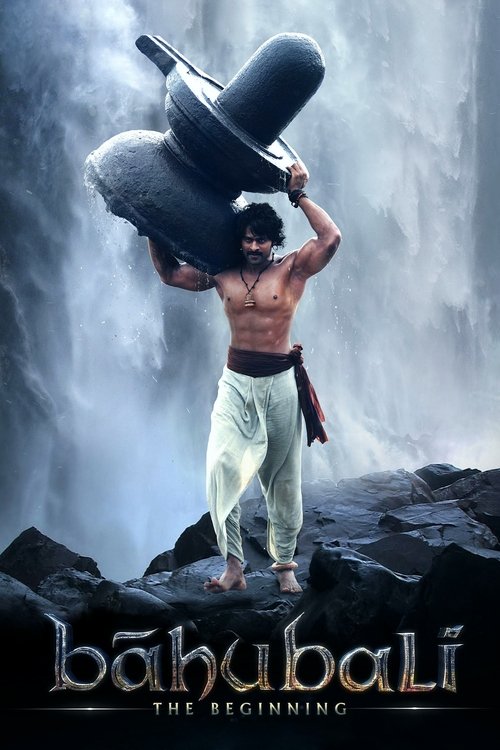
Bāhubali: The Beginning (2015)
Directed by S. S. Rajamouli
No — Bāhubali: The Beginning is not woke, scoring 14 out of 100 on our wokeness meter.
Bāhubali: The Beginning is a 2015 Telugu epic of waterfalls, statues, and shoulders broad enough to support a kingdom.
Consciousness Markers
The film includes warrior women and a powerful regent, but its narrative remains male-hero-centric and does not advance a modern feminist agenda.
It offers moral lessons about good leadership and protecting the people, but these are woven into the epic action rather than delivered as modern preachy lectures.
The cast is entirely Indian, which is the default for an Indian production rather than a deliberate modern diversity-casting initiative. No evidence of the specific 2020s representation-casting marker.
No LGBTQ+ characters, relationships, or themes appear in the film.
No engagement with racial identity, systemic racism, or racial justice themes.
No environmental or climate-crisis themes.
The conflict is against a tyrannical king, not capitalism or wealth inequality in the modern 'eat the rich' sense.
No body-positivity themes or body-diversity messaging.
No neurodivergent characters or themes.
The film is a fictional epic inspired by mythology, not a revisionist historical narrative.
Why it received this score
Bāhubali: The Beginning is a 2015 Telugu epic of waterfalls, statues, and shoulders broad enough to support a kingdom. It is also, by the standards of our current cultural audit, a mostly barren landscape. The cast is Indian because the film is Indian, not because a diversity consultant was summoned. No LGBTQ+ thread appears. No climate sermon interrupts the swordplay. The villains are tyrants, not shareholders, so the eat-the-rich ledger stays closed. This is not a failure. It is simply a film with other business on its mind.
There are warrior women, including Avantika and the captive Devasena, and a regent, Sivagami, who commands a kingdom with a stare. A reasonable viewer could detect a flicker of feminist possibility. The film, however, keeps its gaze fixed on Sivudu and the martyred Baahubali. The women are formidable but ornamental to the male inheritance plot. That earns a modest nod, not a manifesto. Similarly, the story offers lessons about good leadership and protecting the people, but they arrive through battle and sacrifice, not a lecture from a character who has recently read a policy paper.
Elsewhere the ledger is empty. Racial consciousness has no purchase in a mythological kingdom. Body positivity and neurodivergence do not enter the frame. History is not revised because history is not the subject. This is epic fiction built from the Mahabharata and comic-book memories. The result is a rousing, sincere spectacle with almost no modern progressive signifiers. We are left to classify it as a grand inherited myth, which is a relief in its own way. Not every film needs to arrive carrying a syllabus. Some arrive carrying a waterfall.
Analysis generated by our Consciousness Algorithm


Synopsis
The young Shivudu is left as a foundling in a small village by his mother. By the time he’s grown up, it has become apparent that he possesses exceptional gifts. He meets the beautiful warrior princess Avanthika and learns that her queen has been held captive for the last 25 years. Shividu sets off to rescue her, discovering his own origins in the process.
Questions about Bāhubali: The Beginning
Is Bāhubali: The Beginning woke?
No — Bāhubali: The Beginning is not woke, scoring 14 out of 100 on our wokeness meter. That earns it a verdict of Ultra Based.
Does Bāhubali: The Beginning have any woke elements?
Very few. None of the 10 markers reaches 30, the level where a marker counts as present; the highest is Feminist Agenda at 20.
How does Bāhubali: The Beginning compare to other 2015 movies?
It ranks #112 of the 289 films from 2015 we've scored; their average is 15. The wokest is Chi-Raq (78).
How is the Woke Score calculated?
An AI-assisted process researches the film and its reception, scores it 0–100 on ten markers, then combines those into one 0–100 Woke Score. It measures a specific set of 2020s cultural themes, not film quality.