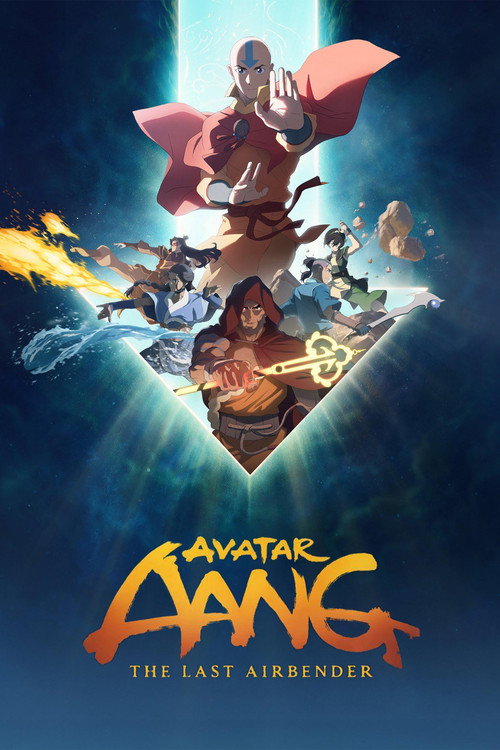
Avatar Aang: The Last Airbender (2026)
Directed by Lauren Montgomery
Yes — Avatar Aang: The Last Airbender is woke, scoring 66 out of 100 on our wokeness meter.
Avatar Aang: The Last Airbender arrives thirteen years after the Hundred Year War and roughly two decades after the television series that made this franchise a fixture of the collective childhood.
Consciousness Markers
The film explicitly recast principal roles to match the ethnic and racial backgrounds of the characters, with a diverse voice cast including Korean, Indigenous, Chinese, Māori, Indian, and Vietnamese actors.
The narrative centers on cultural identity, the genocide of the Air Nomads, and the villain's Air Nomad supremacy, while the casting emphasizes racial and ethnic representation.
Female characters like Katara, Toph, and Avatar Sonam hold positions of power and agency, but the film does not advance an explicit feminist agenda.
The film delivers mild moral lessons about forgiveness and cultural legacy, but avoids heavy-handed lecturing.
No LGBTQ+ themes or characters are present in the film.
No climate change or environmental crusade themes are present.
No anti-capitalist or eat-the-rich themes are present.
No body positivity themes are present.
No neurodivergence themes are present.
The film is a fictional fantasy continuation and does not revise real-world history.
Why it received this score
Avatar Aang: The Last Airbender arrives thirteen years after the Hundred Year War and roughly two decades after the television series that made this franchise a fixture of the collective childhood. The film is a serious piece of work about grief, legacy, and the terrible arithmetic of being the last of anything. Lauren Montgomery directs with a steady hand, and the animation, which pairs hand-drawn characters with computer-rendered environments, is genuinely lovely. The enterprise carries a distinct cultural charge. Principal roles were recast to align voice actors with the ethnic and racial heritages that inform each fictional nation, a decision the casting director frames as an exploration of cultural influence. Korean, Indigenous, Chinese, Māori, Indian, and Vietnamese performers populate the roster. The result is a production that wears its representational commitments openly, and mostly to its credit.
The story follows Aang as he pursues a lost airbending staff and a forgotten Avatar named Sonam, hoping to restore a people erased by genocide. The film takes cultural identity seriously. It dwells on the Air Nomad extinction, on the villain Tagah's supremacist fantasies, and on the question of what a culture passes down when its bloodline is gone. The answer, delivered with a light touch, concerns values instead of bodies. Female characters hold real power here: Katara sits on the council, Toph runs an academy, and the ancient Avatar Sonam commands her own legend. The film does not campaign on their behalf. It simply lets them lead, which is its own quiet argument.
Where the film declines to go is instructive. There is no romantic or identity politics beyond the heterosexual register, no environmental sermon, no critique of wealth, no meditation on body image or neurodivergence. The past is invented, not revised. Moral instruction arrives in mild doses, mostly about forgiveness and the burden of survival, and the film resists the urge to lecture. What remains is a handsomely mounted family adventure with a conscience and a budget. It classifies cleanly, and it will be filed accordingly.
Analysis generated by our Consciousness Algorithm
Part of


Synopsis
Avatar Aang, the world's last Airbender, learns of an ancient power that could save his culture from extinction. With the help of his friends, he embarks on a global quest to find it before it falls into the wrong hands and threatens to upend the peace they sacrificed everything to achieve.
Questions about Avatar Aang: The Last Airbender
Is Avatar Aang: The Last Airbender woke?
Yes — Avatar Aang: The Last Airbender is woke, scoring 66 out of 100 on our wokeness meter. That earns it a verdict of Woke.
What makes Avatar Aang: The Last Airbender woke?
3 of the 10 markers register at 30 or above, led by Representation Casting (90), Racial Consciousness (65) and Feminist Agenda (35). On Representation Casting: The film explicitly recast principal roles to match the ethnic and racial backgrounds of the characters, with a diverse voice cast including Korean, Indigenous, Chinese, Māori, Indian, and Vietnamese actors.
How does Avatar Aang: The Last Airbender compare to other 2026 movies?
It ranks #51 of the 800 films from 2026 we've scored; their average is 23. The wokest is Between Us (89).
How is the Woke Score calculated?
An AI-assisted process researches the film and its reception, scores it 0–100 on ten markers, then combines those into one 0–100 Woke Score. It measures a specific set of 2020s cultural themes, not film quality.