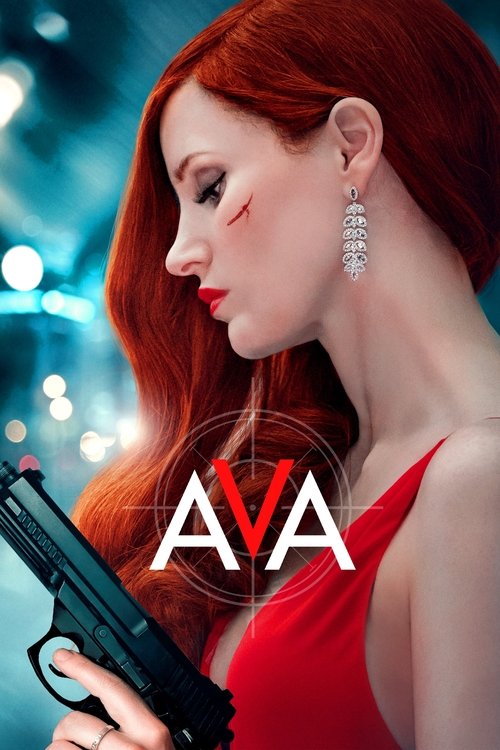
Ava (2020)
Directed by Tate Taylor
No — Ava is not woke, scoring 16 out of 100 on our wokeness meter.
Ava is a 2020 action thriller by Tate Taylor, written by Matthew Newton, produced by Jessica Chastain's Freckle Films.
Consciousness Markers
The cast is moderately diverse, with Common, Joan Chen, and Geena Davis in supporting roles and a female lead, but the diversity is incidental to a conventional action-thriller ensemble rather than a deliberate representational statement.
A female assassin leads the film and it was produced through Jessica Chastain's Freckle Films, giving it a mild female-driven action-hero framing, but the script offers no explicit feminist argument or critique.
The film is a straightforward genre thriller that makes no attempt to deliver social or political sermons to the audience.
No LGBTQ+ characters, relationships, or themes appear anywhere in the film.
The film features non-white actors but engages in no commentary on race, racism, or racial identity.
There is no environmental or climate-related content in the film.
The film's criminal underworld and gambling debts are plot mechanics, not a critique of capitalism or wealth.
No body-positivity themes or messaging are present.
No neurodivergent characters or themes are depicted.
The film is a fictional contemporary thriller with no historical revisionism.
Why it received this score
Ava is a 2020 action thriller by Tate Taylor, written by Matthew Newton, produced by Jessica Chastain's Freckle Films. It stars Chastain as a black ops assassin. The film has a female lead and a supporting cast including Common, Joan Chen, and Geena Davis. This creates moderate representational texture, but it is incidental to genre ensemble. No statement. The film's interest is in silencers, hotel fights, and family estrangement. It does not pause to instruct.
The film's social consciousness is thin. Beyond the casting, it carries almost no ideological freight. Questions of sexuality and race go unasked. Environmental crisis never enters the frame. The gambling den is plot machinery, not an economic parable. The body and the mind are not sites of advocacy. The female assassin framing gives a mild feminist flavor, especially through Chastain's production company, but the script offers no explicit feminist argument. It does not interrogate patriarchy or the assassin economy. It simply lets a woman do the shooting and the brooding. That is not nothing, but it is not a thesis.
Lecture energy is nearly absent. Ava is a straightforward genre exercise, content to deliver cliches and a few well-staged fights. It never sermonizes. The result is a film that wants to be a star vehicle and a B-movie, and mostly succeeds at the latter. Its cultural markers are faint, scattered, and subordinate to momentum. We are left with a competent, forgettable thriller, notable mainly for Chastain's commitment and for the restraint it shows in not turning its premise into a platform. It earns its small progressive credits through casting and casting alone, and spends them quietly.
Analysis generated by our Consciousness Algorithm


Synopsis
A black ops assassin is forced to fight for her own survival after a job goes dangerously wrong.
Questions about Ava
Is Ava woke?
No — Ava is not woke, scoring 16 out of 100 on our wokeness meter. That earns it a verdict of Ultra Based.
Does Ava have any woke elements?
2 of the 10 markers register at 30 or above, led by Representation Casting (35) and Feminist Agenda (30). On Representation Casting: The cast is moderately diverse, with Common, Joan Chen, and Geena Davis in supporting roles and a female lead, but the diversity is incidental to a conventional action-thriller ensemble rather than a deliberate representational statement.
How does Ava compare to other 2020 movies?
It ranks #100 of the 227 films from 2020 we've scored; their average is 21. The wokest is One Night in Miami... (83).
How is the Woke Score calculated?
An AI-assisted process researches the film and its reception, scores it 0–100 on ten markers, then combines those into one 0–100 Woke Score. It measures a specific set of 2020s cultural themes, not film quality.