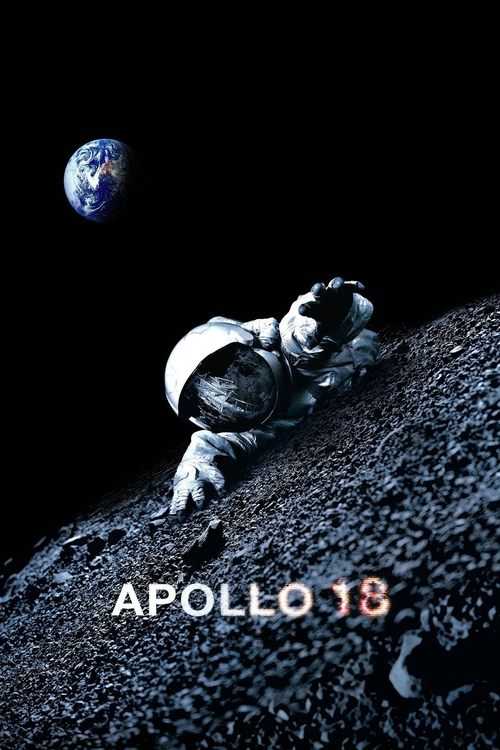
Apollo 18 (2011)
Directed by Gonzalo López-Gallego
No — Apollo 18 is not woke, scoring 0 out of 100 on our wokeness meter.
Apollo 18 arrives in 2011 with a premise that could charitably be called retroactive: a secret Department of Defense mission to the Moon in 1973, three astronauts, a found-footage archive that NASA officially disowns.
Consciousness Markers
The cast is an all-white, all-male astronaut crew with no diversity-conscious casting whatsoever; the film is a 2011 found-footage horror with no representation agenda.
No LGBTQ+ characters, themes, or subtext appear anywhere in the film.
The film centers on three male astronauts and features no feminist themes or commentary on gender.
Race is entirely absent as a subject; the film engages no racial themes or commentary.
There is no environmental or climate-related content; the threat is alien, not ecological.
The conspiracy is a government/military cover-up (DoD secrecy), not a critique of capitalism or wealth; no 'eat the rich' energy.
No body-positivity themes; bodies are only present as hosts for alien infection.
No neurodivergent characters or themes are present.
The film invents a fictional secret Apollo 18 mission, but this is a conspiracy-thriller premise, not progressive reinterpretation of history in the modern woke sense.
The film delivers no moralizing or preachy messaging; it is a straightforward found-footage creature feature.
Why it received this score
Apollo 18 arrives in 2011 with a premise that could charitably be called retroactive: a secret Department of Defense mission to the Moon in 1973, three astronauts, a found-footage archive that NASA officially disowns. The director, Gonzalo Lopez-Gallego, shoots in Vancouver and dresses the whole affair in the beige and gray textures of the Nixon era. It is a creature feature in a pressure suit. The creatures are lunar rocks. The astronauts are white men with military haircuts, and the film has no interest in complicating that arrangement, which is itself a kind of honesty.
For those of us who catalog the cultural temperature of a picture, Apollo 18 is a barren sample. There is no representation agenda in its casting, no LGBTQ subtext, no feminist reading to extract from three men bickering inside a lunar module. Race never surfaces as a subject. The environment is not a cause; the Moon is simply a hostile set. The villain is a government cover-up, not a corporation, so the class critique never arrives. There is no body positivity here, only bodies as hosts. There is no neurodivergence, no reinterpretation of history in any modern sense, and, most remarkably, no sermon. The film wants to scare us and then end.
That absence is not a virtue, nor is it a failing. It is a data point. Apollo 18 is a modest, mean-spirited little thriller that opened third at the box office, earned back its five million dollars, and was forgotten by critics who found it thin and airless. It lectures no one. It represents no one. It simply kills three astronauts and credits the Nixon administration with a rock giveaway that actually happened. The most socially engaged thing about it is a true fact in the closing crawl.
{"thematic_tags": []}
Analysis generated by our Consciousness Algorithm


Synopsis
Officially, Apollo 17 was the last manned mission to the moon. But a year later in 1973, three American astronauts were sent on a secret mission to the moon funded by the US Department of Defense. What you are about to see is the actual footage which the astronauts captured on that mission. While NASA denies its authenticity, others say it's the real reason we've never gone back to the moon.
Questions about Apollo 18
Is Apollo 18 woke?
No — Apollo 18 is not woke, scoring 0 out of 100 on our wokeness meter. That earns it a verdict of Ultra Based.
Does Apollo 18 have any woke elements?
No. All 10 markers score zero.
How does Apollo 18 compare to other 2011 movies?
It ranks #216 of the 245 films from 2011 we've scored; their average is 11. The wokest is Paul (68).
How is the Woke Score calculated?
An AI-assisted process researches the film and its reception, scores it 0–100 on ten markers, then combines those into one 0–100 Woke Score. It measures a specific set of 2020s cultural themes, not film quality.