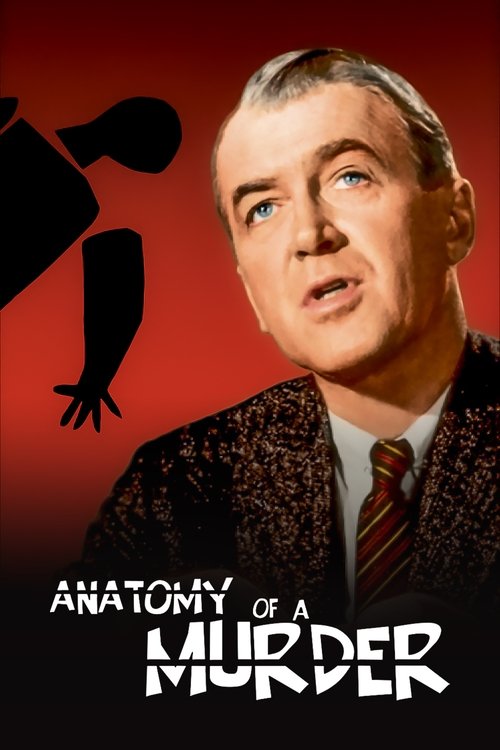
Anatomy of a Murder (1959)
Directed by Otto Preminger
No — Anatomy of a Murder is not woke, scoring 5 out of 100 on our wokeness meter.
Otto Preminger's Anatomy of a Murder arrives from 1959 as a black-and-white legal machine, adapted from John D. Voelker's novel and a real Michigan case.
Consciousness Markers
An almost entirely white principal cast typical of 1959 Hollywood; the notable exception is Duke Ellington and members of his orchestra appearing on-screen, an unusual but marginal instance of Black presence in a major studio film.
The rape victim is cross-examined about her clothing, flirtation, and 'provocative' behavior, and the plot ultimately endorses the murder of her alleged rapist; Eve Arden's sardonic secretary is a sharp character but not a feminist statement.
Extended courtroom argumentation and evidentiary procedure dominate the runtime, but the rhetoric serves the plot's legal tactics rather than preaching a social message.
No same-sex themes, characters, or subtext anywhere in the film.
The film contains no engagement with race as a theme; its casting, setting, and narrative are racially unmarked. Ellington's landmark score is a historical milestone in Black artistic contribution, not a subject of the film's content.
No environmental or climate content; the Upper Peninsula landscape is atmosphere, not advocacy.
Concerned with the machinery of criminal law and small-town practice, not with economic inequality or class critique.
No body-positive themes or framing whatsoever.
The insanity/irresistible-impulse defense is presented as a cynical legal stratagem the defendant is coached into, and the film strongly implies he is faking it — hardly a neurodivergence-affirming treatment.
Drawn from a real 1952 Michigan case via Voelker's novel, but presented as legal drama rather than a revisionist reframing of received history.
Why it received this score
Otto Preminger's Anatomy of a Murder arrives from 1959 as a black-and-white legal machine, adapted from John D. Voelker's novel and a real Michigan case. It has been praised as the finest pure trial movie ever made, and that praise is deserved. The film's interests are procedural, not ideological. Its social consciousness is faint enough to require a magnifying glass. The principal cast is almost entirely white, with Duke Ellington and members of his orchestra appearing on screen as a marginal exception. There are no same-sex themes, no racial argument, no climate concern, no class critique, no body-positive framing. The Upper Peninsula landscape is atmosphere, not advocacy. The film watches lawyers work.
The feminist dimension is present but sour. Laura Manion is cross-examined about her clothing, her flirtation, her pinball technique, and her torn panties. The plot finally endorses the killing of her alleged rapist. Eve Arden's sardonic secretary is a sharp creation, yet she is not a statement. The insanity defense is treated as a cynical stratagem, coached into the defendant and strongly implied to be fake, which leaves no room for a neurodivergence-affirming reading. The real case behind the story does not turn the film into revisionist history. It remains a legal drama, not a reframing of received memory. Courtroom argumentation dominates the runtime, but the rhetoric serves tactics. It is not a sermon.
Anatomy of a Murder is a great film about credibility, manipulation, and the fallibility of jurisprudence. It is not a vehicle for modern progressive sensibilities. The Ellington score is a landmark of African American artistic contribution, but the film itself does not engage race as a theme. The final gag, that Manion's flight was an irresistible impulse, confirms the picture's true allegiance: performance, not principle. For viewers seeking moral instruction, the film offers a dry martini and a bill. For the rest of us, it remains a masterclass in legal theater, elegant, cold, and almost entirely innocent of the cultural crusades that later generations would demand from their entertainment.
Analysis generated by our Consciousness Algorithm


Synopsis
Semi-retired Michigan lawyer Paul Biegler takes the case of Army Lt. Manion, who murdered a local innkeeper after his wife claimed that he raped her. Over the course of an extensive trial, Biegler parries with District Attorney Lodwick and out-of-town prosecutor Claude Dancer to set his client free, but his case rests on the victim's mysterious business partner, who's hiding a dark secret.
Questions about Anatomy of a Murder
Is Anatomy of a Murder woke?
No — Anatomy of a Murder is not woke, scoring 5 out of 100 on our wokeness meter. That earns it a verdict of Ultra Based.
Does Anatomy of a Murder have any woke elements?
Very few. None of the 10 markers reaches 30, the level where a marker counts as present; the highest is Representation Casting at 10.
How does Anatomy of a Murder compare to other 1959 movies?
It ranks #4 of the 12 films from 1959 we've scored; their average is 6. The wokest is Hiroshima Mon Amour (23).
How is the Woke Score calculated?
An AI-assisted process researches the film and its reception, scores it 0–100 on ten markers, then combines those into one 0–100 Woke Score. It measures a specific set of 2020s cultural themes, not film quality.