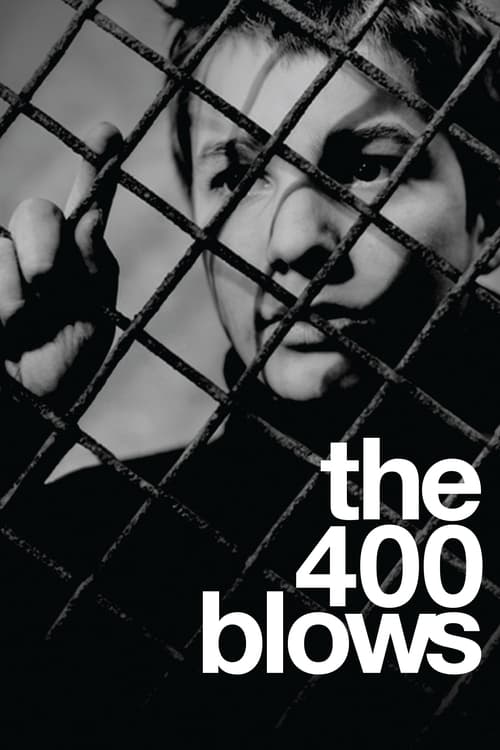
The 400 Blows (1959)
Directed by François Truffaut
No · Ultra Based
How we score movies →Consciousness Markers
The film critiques institutional failure and class barriers, depicting how poverty and negligent authority harm youth. However, this is humanist critique rather than explicit anti-capitalist ideology.
While the film is not preachy, Truffaut's directorial perspective imposes a somewhat melancholic moral judgment on adult society's failures. The ending has a contemplative, almost sermonic quality about institutional cruelty.
The cast consists entirely of white European actors, reflecting the Paris of the period and the film's focus. No meaningful attempt at diverse representation by modern standards, though this reflects historical reality of French cinema.
The film includes female characters but treats them as peripheral to the male protagonist's journey. The mother figure is sympathetic but ultimately part of the institutional framework that constrains Antoine.
No LGBTQ+ themes or representation present in the film. Heterosexual relations are depicted naturally without commentary.
The film predates contemporary discussions of racial consciousness and contains no themes related to race or ethnicity. The homogeneous casting reflects 1950s French cinema norms.
No environmental or climate themes appear in the film. The urban Paris setting is naturalistic and not presented as an ecological statement.
No body positivity themes are present. The film does not engage with contemporary discussions of body image or diversity in physical appearance.
Antoine's behavioral difficulties are not framed through a neurodivergence lens. He is presented as a troubled youth responding to circumstance rather than having neurological difference.
The film makes no attempt to revise historical narratives or challenge dominant historical interpretations. It is set in contemporary 1950s Paris.


Synopsis
For young Parisian boy Antoine Doinel, life is one difficult situation after another. Surrounded by inconsiderate adults, including his neglectful parents, Antoine spends his days with his best friend, Rene, trying to plan for a better life. When one of their schemes goes awry, Antoine ends up in trouble with the law, leading to even more conflicts with unsympathetic authority figures.
Why it received this score
Truffaut's debut feature remains a masterwork of observational cinema, which is precisely the problem when assessing it through the lens of contemporary cultural sensibilities. The film examines institutional failure and class indifference with genuine compassion for its protagonist, yet it does so in a language utterly foreign to modern progressive discourse. The camera follows Antoine Doinel through Paris with the tenderness of a humanist filmmaker, not an activist one, interested in suffering as a condition of human existence rather than as a symptom of systemic oppression requiring ideological correction.
The 400 Blows is a work about how adults fail children, a theme that carries moral weight across centuries. What the film lacks entirely is any sense that this failure could be remedied through consciousness-raising, representation audits, or institutional reform rooted in contemporary identity frameworks. Antoine's troubles stem from poverty, parental neglect, and an indifferent bureaucracy, yet the film never gestures toward the notion that diverse casting or explicit political positioning would have improved his circumstances. The world Truffaut depicts is one of individual tragedy within social structures, presented with the stoicism of pre-ideological cinema.
This is not to say the film is reactionary or hostile to social consciousness. Rather, it operates in a register where such concerns simply do not register as relevant. A 1959 French film about a poor boy in Paris contains what it contains: white Parisian actors, conventional gender roles, and an implicit faith in artistic sensitivity as a response to injustice. To score this film on contemporary cultural markers is to measure a photograph against the specifications of a thermometer. The score reflects not the film's quality or moral seriousness, but the vast temporal gulf between its production and the emergence of the specific ideological framework we now use to categorize cinema.
Analysis generated by our Consciousness Algorithm
Critic Reviews
“Truffaut's 1959 masterpiece — recently restored — is appreciated for its sense of heedlessness, a freedom-relishing child rushing into adulthood without a clue what he's in for but in a hurry to escape an intolerable present.”
“Truffaut's natural direction is a master stroke for this film as it intrigues, moves and emotes without histrionics or the intense drama that often accompanies such a film.”
“Instead of compressing time, he loosens it, allowing Antoine's story to unfurl with a naturalness which, in its own way, was just as inspiring to young cineastes.”