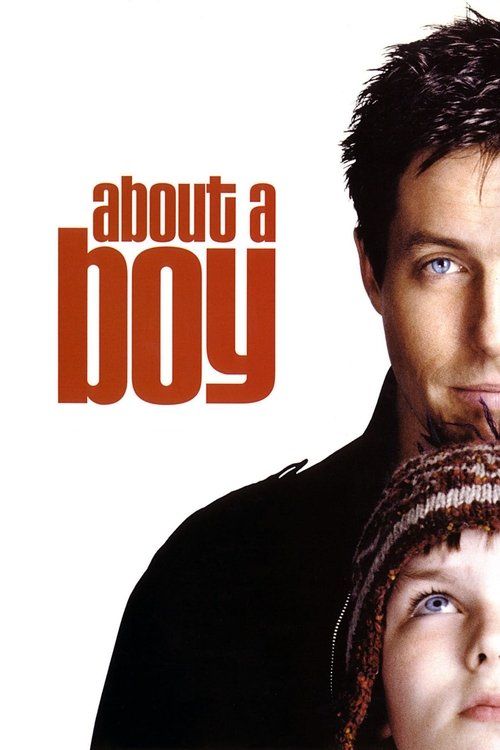
About a Boy (2002)
Directed by Chris Weitz
No — About a Boy is not woke, scoring 3 out of 100 on our wokeness meter.
About a Boy arrives from 2002, a year in which a British comedy could still concern a man learning to stop being awful, and it wears its era lightly.
Consciousness Markers
The film sympathetically portrays single motherhood and Fiona's depression, but its narrative engine is a man's personal growth, not a feminist agenda.
The cast is almost entirely white British, with no deliberate diversity casting or commentary on representation. Toni Collette and Rachel Weisz round out a homogeneous ensemble.
Will's idle-royalty lifestyle is gently mocked and his lack of profession is a romantic liability, but the film offers no systemic critique of wealth or capitalism.
Marcus is bullied for his awkward appearance and the film is sympathetic to his outsider status, but it never articulates a body-positivity message.
Fiona's depression and Marcus's social awkwardness are portrayed with sensitivity, but neither is framed through a modern neurodivergence lens.
This is a warm, character-driven comedy-drama that tugs at heartstrings rather than preaching; it delivers no moral lecture to the audience.
Marcus's embrace of rap (a Mystikal album) is a passing character detail about fitting in, not a meditation on race or racial consciousness.
There are no LGBTQ+ characters, themes, or subtext anywhere in the film.
There is no environmental or climate theme in the film whatsoever.
The film is a contemporary fictional story with no historical subject matter to revise.
Why it received this score
About a Boy arrives from 2002, a year in which a British comedy could still concern a man learning to stop being awful, and it wears its era lightly. Hugh Grant plays Will Freeman, a bachelor subsisting on royalties from a Christmas song his father wrote, a man who declares himself an island and means it. The cast is white British throughout, and the film has no interest in commenting on that fact. Toni Collette and Rachel Weisz are excellent, but they are supporting a man's education. There is no LGBTQ presence of any kind. There is no environmental concern. The camera points at North London flats and school gates, never at the planet.
The emotional machinery is genuine. Fiona's depression is treated with a seriousness most comedies of the period would have flinched from, and Marcus's bullying is rendered with real discomfort. Yet the film declines to convert either into a thesis. Marcus is mocked for his haircut and his shoes, and the script sympathizes without ever proposing that appearance should not matter. His embrace of a Mystikal album is a detail about a boy trying to fit in, nothing more. The depression is depression, not a modern diagnosis with a name and a hashtag.
Will's idle wealth gets a gentle ribbing, mostly because Rachel finds his lack of profession unattractive, but nobody suggests the arrangement is unjust. He simply needs a purpose. This is a warm film that wants to move an audience and never once lectures it. It is the cultural equivalent of a pleasant evening in a comfortable chair, and it has no ambitions beyond that. For the purposes of modern classification, that restraint is the most interesting thing about it.
Analysis generated by our Consciousness Algorithm
Part of


Synopsis
Will Freeman is a good-looking, smooth-talking bachelor whose primary goal in life is avoiding any kind of responsibility. But when he invents an imaginary son in order to meet attractive single moms, Will gets a hilarious lesson about life from a bright, but hopelessly geeky 12-year-old named Marcus. Now, as Will struggles to teach Marcus the art of being cool, Marcus teaches Will that you're never too old to grow up.
Questions about About a Boy
Is About a Boy woke?
No — About a Boy is not woke, scoring 3 out of 100 on our wokeness meter. That earns it a verdict of Ultra Based.
Does About a Boy have any woke elements?
Very few. None of the 10 markers reaches 30, the level where a marker counts as present; the highest is Feminist Agenda at 8.
How does About a Boy compare to other 2002 movies?
It ranks #124 of the 150 films from 2002 we've scored; their average is 12. The wokest is Far from Heaven (78).
How is the Woke Score calculated?
An AI-assisted process researches the film and its reception, scores it 0–100 on ten markers, then combines those into one 0–100 Woke Score. It measures a specific set of 2020s cultural themes, not film quality.