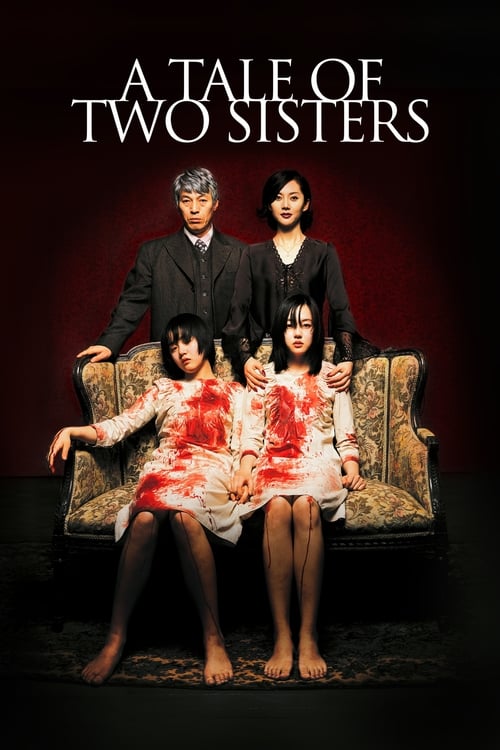
A Tale of Two Sisters (2003)
Directed by Kim Jee-woon
No — A Tale of Two Sisters is not woke, scoring 12 out of 100 on our wokeness meter.
Kim Jee-woon's A Tale of Two Sisters arrives from 2003 with a folktale pedigree and a stepmother who is not what she seems, which is to say it predates the era in which such material would be asked to carry a message.
Consciousness Markers
The protagonist's dissociative identity disorder and psychosis are central to the plot, but they are deployed as a horror device and tragic reveal rather than as affirming neurodivergent representation.
The cast is entirely Korean, but this is a Korean-language production with Korean characters; the ethnic homogeneity is native to the story rather than a deliberate diversity-casting gesture.
No LGBTQ+ characters, themes, or subtext appear anywhere in the film.
The film centers on women and a monstrous stepmother, but it treats them as horror archetypes and psychological case studies rather than advancing any feminist thesis.
Race and racial identity play no role in the narrative or its themes.
No environmental or climate themes are present.
The film is a domestic psychological horror with no economic or class critique.
No body-positivity themes; the body is treated as a site of horror and decay.
The film is loosely inspired by a Joseon-era folktale, but it makes no historical revisionist claims or re-readings of real events.
The film is a moody, ambiguous psychological horror that never pauses to deliver a message or moral to the audience.
Why it received this score
Kim Jee-woon's A Tale of Two Sisters arrives from 2003 with a folktale pedigree and a stepmother who is not what she seems, which is to say it predates the era in which such material would be asked to carry a message. Two sisters return from an institution to a country estate, a wardrobe, a ghost, and a father who would rather not discuss any of it. The film has no interest in representation as a project. Its cast is Korean because the story is Korean. Race, class, and climate are absent, not suppressed. Nobody pauses to explain what the audience ought to feel.
The one area where a modern viewer might expect friction is the protagonist's dissociative identity disorder, which the plot hinges on entirely. Su-mi's psychosis is the engine of the final act, and the reveal lands as tragedy and shock, not as a plea for understanding. The condition is a mechanism for dread. That is a horror tradition older than the multiplex, and the film honors it without apology. There is no affirmation here, no gentle lesson about the mind's variety. The body, too, is treated as a site of decay and suffocation, which is to say the opposite of any contemporary wellness posture.
What remains is craft. The film is restrained, cold, and genuinely upsetting, and it took Best Picture at Fantasporto for reasons that have nothing to do with a thesis. It never lectures. It never explains. It simply closes the wardrobe door and lets the audience sit with the sound. Viewed from the current moment, this is a relic from a time when a horror film could be about grief, guilt, and a collapsing family and leave the moral ledger entirely to us.
Thematic tags: none apply. The film is not a sequel, remake, superhero picture, Oscar winner, or based on real events, and its relationship to the Janghwa Hongryeon folktale is inspiration rather than adaptation of a published book. Its record as the highest-grossing Korean horror film is a domestic Korean statistic, not a number one finish at the American box office. The classification stands at zero across the board, with the sole exception of the dissociative identity material, which functions as plot machinery and not as advocacy. A tidy specimen, and a quiet one. It will not be troubling the ledger further.
{"thematic_tags": []}
Analysis generated by our Consciousness Algorithm

Synopsis
Two sisters return home after a stay in a mental institution, only to face disturbing events and a strained relationship with their stepmother. As eerie occurrences unfold, dark family secrets begin to surface, blurring the line between reality and nightmare.
Questions about A Tale of Two Sisters
Is A Tale of Two Sisters woke?
No — A Tale of Two Sisters is not woke, scoring 12 out of 100 on our wokeness meter. That earns it a verdict of Ultra Based.
Does A Tale of Two Sisters have any woke elements?
Very few. None of the 10 markers reaches 30, the level where a marker counts as present; the highest is Neurodivergence at 20.
How does A Tale of Two Sisters compare to other 2003 movies?
It ranks #51 of the 150 films from 2003 we've scored; their average is 12. The wokest is Mona Lisa Smile (60).
How is the Woke Score calculated?
An AI-assisted process researches the film and its reception, scores it 0–100 on ten markers, then combines those into one 0–100 Woke Score. It measures a specific set of 2020s cultural themes, not film quality.