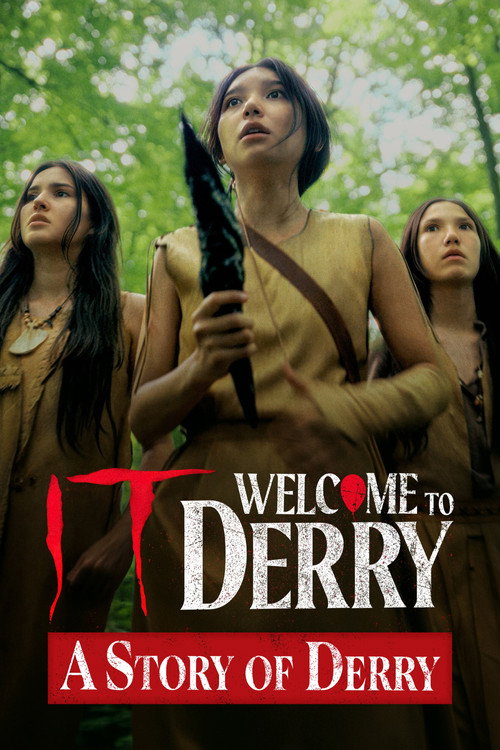
A Story of Derry (2026)
Directed by Tazbah Chavez
Partly — A Story of Derry is somewhat woke, scoring 40 out of 100 on our wokeness meter.
Three children wander into the Western Wood and meet an ancient spirit, which is the sort of premise that has powered horror cinema since before anyone thought to attach a franchise to it.
Consciousness Markers
The principal cast and director are Indigenous, and the project appears built around Native American performers and a tribal setting; this is a clear, deliberate representation choice.
The story is set within a Native tribe and Western Wood with Indigenous casting and a director known for Native-centered work, suggesting racial and ethnic identity are central rather than incidental.
No LGBTQ+ characters, themes, or subtext are indicated in the metadata or research.
Female performers are present, but nothing in the available material points to an explicit feminist thesis or gender-justice agenda.
Forest and hunting imagery do not amount to a climate-crisis narrative.
No evidence of eat-the-rich or anti-capitalist critique.
No body-positivity themes are indicated.
No neurodivergence themes are indicated.
As a fictional prequel to IT, it does not appear to revise real historical events.
The horror and mystery framing and available research suggest atmosphere and scares rather than didactic messaging.
Why it received this score
Three children wander into the Western Wood and meet an ancient spirit, which is the sort of premise that has powered horror cinema since before anyone thought to attach a franchise to it. Its casting sets it apart. Tazbah Chavez directs an ensemble of Indigenous performers, among them Kiawentiio, Zahn McClarnon, and Jennifer Podemski, and the choice is plainly deliberate. The tribe is not a backdrop. It is the setting, the texture, and the reason the Western Wood feels inhabited rather than merely haunted.
That decision carries a quiet cultural weight. Identity here is structural, not ornamental, and the film trusts its audience to absorb it without a character stopping to explain the significance. Elsewhere the ledger is remarkably clean. There is no romantic subplot reaching for a broader spectrum, no speech about gender or capital, no anxious nod toward the climate. The body is not a theme. The mind is not a diagnosis. History is not being corrected, and nobody turns to the camera to instruct us on how to feel. We are left with a monster, a forest, and three children who should have stayed home.
This is, after all, a prequel to IT, arriving centuries before a certain clown learned to smile. The cannibal, the hunt, the tribe, the trees: the machinery is familiar and the film seems content to run it. There is something almost restful about a horror picture that wants only to frighten us. It does not ask to be agreed with. It asks to be survived.
Analysis generated by our Consciousness Algorithm

Synopsis
Hundreds of years before Pennywise, three youngsters venture into the Western Wood...where they encounter a terrifying ancient spirit.
Critic Reviews
“As madness takes over, 'A Story of Derry' really shines: the shapeshifting and reality-bending antics escalate with every encounter, terrorizing those foolish enough to venture into the Woods.”
“Stephen King obsessives will gobble up all of the references to Maturin and The Dark Tower, but even if you're not plugged into each and every Easter egg, Zahn McClarnon's performance alone makes this a must-watch spooky season watch.”
“Overall, while this isn't the best installment of It: Welcome to Derry, it is still a decent little half-hour look into the world.”
Questions about A Story of Derry
Is A Story of Derry woke?
Partly — A Story of Derry is somewhat woke, scoring 40 out of 100 on our wokeness meter. That earns it a verdict of Woke-Adjacent.
What makes A Story of Derry woke?
2 of the 10 markers register at 30 or above, led by Representation Casting (82) and Racial Consciousness (55). On Representation Casting: The principal cast and director are Indigenous, and the project appears built around Native American performers and a tribal setting; this is a clear, deliberate representation choice.
How does A Story of Derry compare to other 2026 movies?
It ranks #185 of the 800 films from 2026 we've scored; their average is 23. The wokest is Between Us (89).
How is the Woke Score calculated?
An AI-assisted process researches the film and its reception, scores it 0–100 on ten markers, then combines those into one 0–100 Woke Score. It measures a specific set of 2020s cultural themes, not film quality.