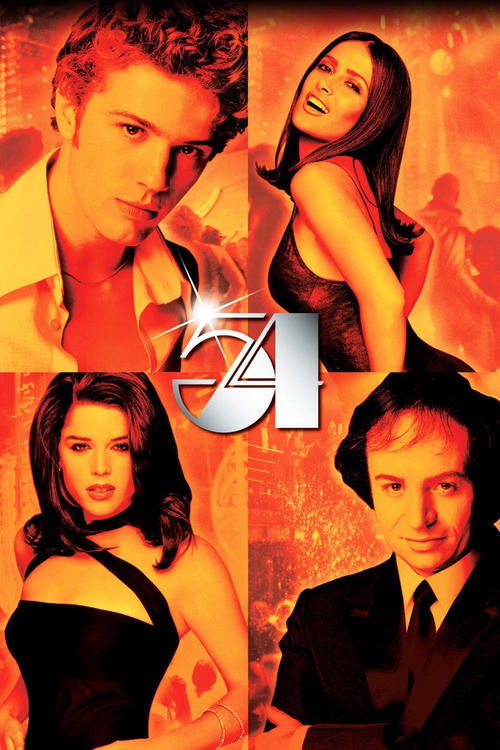
54 (1998)
Directed by Mark Christopher
No — 54 is not woke, scoring 18 out of 100 on our wokeness meter.
54 arrives in two distinct forms, and the distinction matters for any honest accounting.
Consciousness Markers
The director's cut restores the film's integral bisexual storyline and its depiction of Studio 54 as the epicenter of gay cultural explosion, though the theatrical release famously excised these themes. The film's cult following among gay audiences and its Outfest revival underscore its LGBTQ significance.
Salma Hayek is the sole prominent performer of color in a cast otherwise composed of white actors; her character's ethnicity is not a narrative factor. A modest nod to diversity, but hardly a woke casting statement.
The film depicts tax evasion, skimming, and the eventual FBI raid on Studio 54, but frames these as criminal excess rather than a systemic critique of capitalism. The downfall is personal, not political.
Female characters exist largely as romantic interests, aspiring singers, or objects of male desire; the narrative is driven by Shane's hedonistic rise and fall. No discernible feminist agenda.
The film aims to entertain with disco excess and melodrama rather than deliver moral lectures. Any social commentary is implicit and subdued.
The film does not engage with racial identity, systemic racism, or racial justice in any substantive way. Studio 54's diverse crowd is background texture, not a theme.
No environmental themes, climate anxiety, or ecological messaging appear in the film.
Shirtless bartenders and beefcake photo shoots are presented as objectification and hedonistic display, not as a body-positive celebration of diverse bodies.
No neurodivergent characters or themes are present.
While based on real events and people, the film is a fictionalized dramatization rather than a revisionist reinterpretation of history through a modern ideological lens.
Why it received this score
54 arrives in two distinct forms, and the distinction matters for any honest accounting. The 1998 theatrical release was recut at the insistence of Miramax, which stripped out the lead character's bisexuality, downplayed the club's significance as a center of gay life in late-1970s New York, and bolted on a romance with Neve Campbell's soap actress to make the whole thing palatable to a test audience that had recoiled at two men kissing. The director's cut, restored years later and screened at Outfest and Berlin, puts the material back. The studio's fear is precisely what the film is about.
Weighted against the cultural markers of the present decade, the film registers unevenly. Its strongest claim is to LGBTQ representation, and it is a genuine one: the restored version treats Studio 54 as the epicenter of a gay cultural explosion, and its bisexual protagonist is allowed to be amoral, vulnerable, and unapologetic. The cult following it earned in the gay community is not incidental. Elsewhere the record thins. Salma Hayek is the lone prominent performer of color in an otherwise white cast, and her ethnicity is never a narrative concern. Women exist as girlfriends, aspiring singers, and objects of desire. The engine is Shane's hedonistic climb and fall.
The rest of the ledger is quiet. No engagement with racial identity or systemic injustice, no ecological anxiety, no celebration of diverse bodies (the shirtless bartenders are objectification, plain and simple), no neurodivergent characters, no revisionist reframing of the historical record. The tax evasion and the FBI raid read as personal criminal excess, not a systemic indictment of capital. And the film would sooner entertain us with disco excess than instruct us. It has a moral, but it keeps the moral to itself.
Analysis generated by our Consciousness Algorithm


Synopsis
When the mastermind behind New York's infamous Studio 54 disco plucks young Shane from the sea of faces clamoring to get inside his club, he not only gets his foot in the door, but lands a coveted job behind the bar — and a front-row ticket to the most legendary party on the planet!
Questions about 54
Is 54 woke?
No — 54 is not woke, scoring 18 out of 100 on our wokeness meter. That earns it a verdict of Ultra Based.
Does 54 have any woke elements?
1 of the 10 markers register at 30 or above, led by LGBTQ+ Themes (65). On LGBTQ+ Themes: The director's cut restores the film's integral bisexual storyline and its depiction of Studio 54 as the epicenter of gay cultural explosion, though the theatrical release famously excised these themes.
How does 54 compare to other 1998 movies?
It ranks #22 of the 118 films from 1998 we've scored; their average is 12. The wokest is Show Me Love (60).
How is the Woke Score calculated?
An AI-assisted process researches the film and its reception, scores it 0–100 on ten markers, then combines those into one 0–100 Woke Score. It measures a specific set of 2020s cultural themes, not film quality.