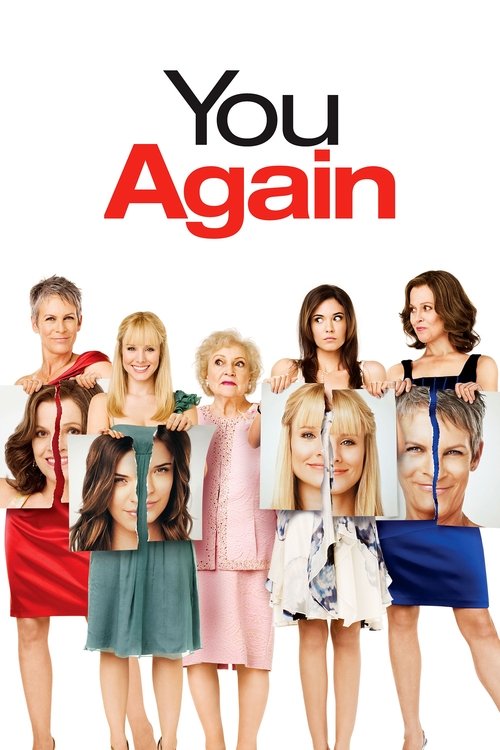
You Again (2010)
Directed by Andy Fickman
No — You Again is not woke, scoring 11 out of 100 on our wokeness meter.
On the spectrum of contemporary social consciousness, You Again arrives at the table like a bottle of 2010 Pinot Grigio left in a warm car: harmless, faintly sweet, and entirely of its moment.
Consciousness Markers
The film centers on women and female rivalry/reconciliation, but it does not advance a modern feminist agenda; critics even called it misogynistic.
The film delivers mild moral lessons about bullying and forgiveness, but not in a preachy lecture style.
The principal cast is overwhelmingly white, with no meaningful racial diversity or inclusive casting choices.
No LGBTQ+ characters, relationships, or themes appear in the film.
Race is not a subject of the film; no racial themes or commentary are present.
No environmental or climate themes appear in the film.
A wealthy aunt pays for the wedding, but the film offers no critique of capitalism or class.
No body-positive themes; a binge-eating scene is played for pathos, not acceptance.
No neurodivergent characters or themes are present.
No historical revisionism or reimagined historical narrative appears.
Why it received this score
On the spectrum of contemporary social consciousness, You Again arrives at the table like a bottle of 2010 Pinot Grigio left in a warm car: harmless, faintly sweet, and entirely of its moment. Andy Fickman's comedy concerns Marni, a public relations executive who learns that her brother's fiancée is the girl who tormented her in high school. The cast is white to a person, and the film never notices. No character registers as anything other than heterosexual, and the question of orientation never arises because it never occurs to the screenplay. Race is not a subject. Climate is not a subject. Money appears in the form of a wealthy aunt who pays for a wedding, an arrangement treated as a convenience of plot and not an indictment of capital. There is a scene of a bride weeping into a cake while still in her wedding dress, played for sorrow and never for self-acceptance. Nobody is coded as neurodivergent, no historical record is revised, and the twentieth century passes unmentioned.
The film does center women, which is not the same as advancing them. Three generations of actresses circle each other through old grudges, and the engine here is female rivalry resolved by female reconciliation. That structure drew little goodwill at the time. The New York Times called the picture a rancid, misogynistic revenge comedy, and it is difficult to argue with the assessment. Centering women while asking them to behave badly for ninety minutes is not a program. It is a casting decision.
What remains is a light sermon on bullying and the possibility of change, delivered without a pulpit and without much conviction. Joanna apologizes. Marni forgives. The film proposes that people can grow. This is agreeable, mild, and heavily sugar-coated, a moral offered the way a host offers a second slice of cake, expecting no one to refuse.
Analysis generated by our Consciousness Algorithm


Synopsis
History -- make that high school -- may repeat itself when Marni learns that Joanna, the mean girl from her past, is set to be her sister-in-law. Before the wedding bells toll, Marni must show her brother that a tiger doesn't change its stripes. On Marni's side is her mother, while Joanna's backed by her wealthy aunt.
Questions about You Again
Is You Again woke?
No — You Again is not woke, scoring 11 out of 100 on our wokeness meter. That earns it a verdict of Ultra Based.
Does You Again have any woke elements?
Very few. None of the 10 markers reaches 30, the level where a marker counts as present; the highest is Feminist Agenda at 15.
How does You Again compare to other 2010 movies?
It ranks #77 of the 238 films from 2010 we've scored; their average is 11. The wokest is My Name Is Khan (84).
How is the Woke Score calculated?
An AI-assisted process researches the film and its reception, scores it 0–100 on ten markers, then combines those into one 0–100 Woke Score. It measures a specific set of 2020s cultural themes, not film quality.