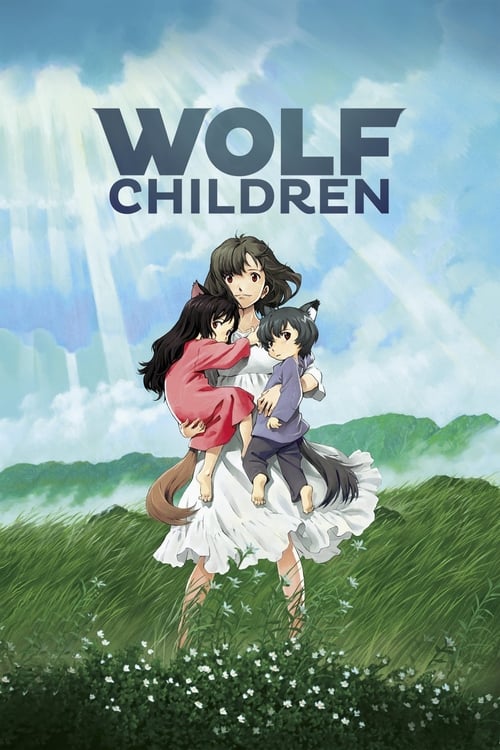
Wolf Children (2012)
Directed by Mamoru Hosoda
No — Wolf Children is not woke, scoring 11 out of 100 on our wokeness meter.
Wolf Children arrives from 2012, which is to say from a more innocent era of animated family drama, and it conducts itself with a restraint that modern classifiers may find disorienting.
Consciousness Markers
The film is squarely centered on a resilient single mother who raises her children alone and runs her own life, giving female experience real weight, though it advocates no explicit feminist thesis.
The move to the countryside and the family's financial struggle gesture faintly at the hardship of urban life, but there is no critique of wealth, capitalism, or class.
The film is a quiet, observational family drama that illustrates its themes through lived experience rather than speeches or moral instruction.
The cast and characters are Japanese in a Japanese production; there is no deliberate diversity-casting or race-swapping in service of a representational message.
No LGBTQ+ characters, relationships, or themes appear; the romance is a conventional heterosexual pairing.
There is no engagement with racial identity, systemic racism, or racial consciousness of any kind.
No environmental or climate themes are present; nature is a setting for survival and growth, not advocacy.
No body image, size, or self-acceptance themes appear at all.
Ame's social struggles stem from his werewolf nature, not from any neurodivergent condition or framing.
The film is an original story and makes no revisionist claims about historical events.
Why it received this score
Wolf Children arrives from 2012, which is to say from a more innocent era of animated family drama, and it conducts itself with a restraint that modern classifiers may find disorienting. The premise involves a young woman who falls in love with a werewolf, bears his two children, and loses him to an accident before the boy can walk. What follows is thirteen years of farming, grieving, and school runs. The film has no interest in instructing us. It simply watches a mother rebuild a collapsed house and a collapsed life, and it trusts us to draw our own conclusions about endurance.
The mother, Hana, carries the entire emotional architecture of the picture. She is widowed, broke, and raising two children who transform into wolves at inconvenient moments, and she handles all of it with a composure that borders on the supernatural. This is a film that grants a woman's labor real weight, that treats single motherhood as a subject worthy of two hours of animation, and it does so without ever announcing a thesis. The nearest thing to a political statement is a vague sigh about the cost of city living, which registers faintly on any scale of economic grievance and then evaporates.
Elsewhere the ledger is bare. The cast is Japanese because the film is Japanese, and no representational arithmetic intrudes. There are no queer characters, no racial reckoning, no climate sermon, no body-image discourse, and the boy's difficulty fitting in at school is a matter of lycanthropy, not neurology. Nobody lectures. The wolf howls at the end, the mother feels proud, and the credits roll over a landscape rendered with tenderness. We are left with a film that is warm, well-made, and largely free of the cultural signifiers a modern auditor is paid to detect. It is a story about a parent and her children, and it declines to be anything more.
Analysis generated by our Consciousness Algorithm


Synopsis
After her werewolf lover unexpectedly dies in an accident, a woman must find a way to raise the son and daughter that she had with him. However, their inheritance of their father's traits prove to be a challenge for her.
Questions about Wolf Children
Is Wolf Children woke?
No — Wolf Children is not woke, scoring 11 out of 100 on our wokeness meter. That earns it a verdict of Ultra Based.
Does Wolf Children have any woke elements?
1 of the 10 markers register at 30 or above, led by Feminist Agenda (30). On Feminist Agenda: The film is squarely centered on a resilient single mother who raises her children alone and runs her own life, giving female experience real weight, though it advocates no explicit feminist thesis.
How does Wolf Children compare to other 2012 movies?
It ranks #78 of the 230 films from 2012 we've scored; their average is 12. The wokest is Killing Them Softly (92).
How is the Woke Score calculated?
An AI-assisted process researches the film and its reception, scores it 0–100 on ten markers, then combines those into one 0–100 Woke Score. It measures a specific set of 2020s cultural themes, not film quality.