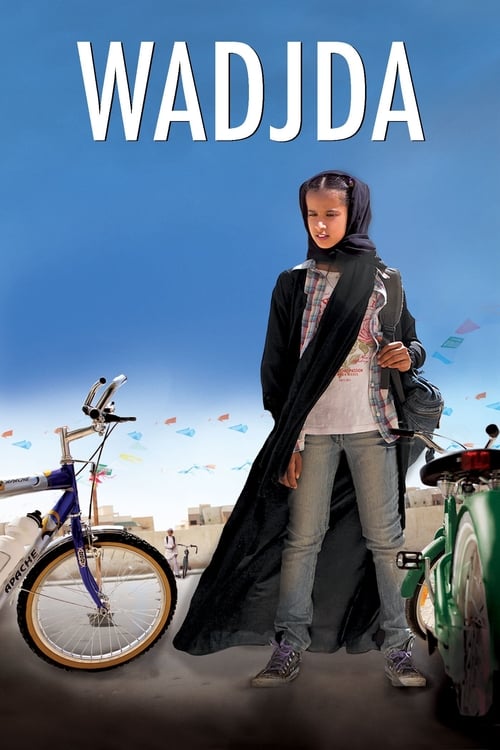
Wadjda (2012)
Directed by Haifaa al-Mansour
Yes — Wadjda is woke, scoring 60 out of 100 on our wokeness meter.
Wadjda arrives from a place where cinema barely exists, and it carries the weight of that absence without turning it into a slogan.
Consciousness Markers
The narrative directly critiques patriarchal restrictions on women in Saudi Arabia, following a girl's defiance of gender norms and her mother's struggles with male guardianship and abandonment.
The film features an entirely Saudi cast and is the first feature film shot in Saudi Arabia, directed by a Saudi woman, offering authentic representation of Saudi life and a young female protagonist.
The film delivers its social critique through subtle storytelling and character drama, avoiding overt preaching or sloganeering.
No LGBTQ+ themes or characters are present.
The film addresses gender and cultural oppression but does not engage with racial consciousness or racial justice themes.
No environmental or climate-related themes.
No critique of capitalism or economic systems; the story focuses on personal and social freedom.
No body positivity themes.
No neurodivergence themes.
The film is a fictional story set in contemporary Saudi Arabia, not a historical revision.
Why it received this score
Wadjda arrives from a place where cinema barely exists, and it carries the weight of that absence without turning it into a slogan. Haifaa al-Mansour's 2012 drama follows a ten-year-old girl in Riyadh who wants a green bicycle, a modest desire that exposes the entire architecture of gender restriction around her. The cast is entirely Saudi, the streets are real, and the director's own constraints during production (directing from a van, communicating by walkie-talkie) give the film a texture that no outsider could fake. This is representation as lived specificity, not as a box checked by a studio committee.
The film's social criticism is unmistakably feminist. Wadjda is told that girls should not ride bicycles, her mother suffers under male guardianship and the threat of being replaced by a second wife, and the school headmistress punishes any sign of female self-expression. Yet the film rarely lectures. It lets the audience feel the injustice through small humiliations, a confiscated prize, a red dress, a rooftop view of a wedding. Al-Mansour has said she did not want to scream a slogan, and that restraint is the film's greatest strength. The message lands because it is carried by character and place.
Other contemporary progressive concerns are simply not present. There is no queer storyline, no racial justice framework, no environmental alarm, no attack on capitalism, no body positivity arc, no neurodivergence theme, and no revision of history. The story is contemporary and fictional, focused on one girl's negotiation with custom and family. Wadjda succeeds because it refuses to make its heroine a mouthpiece. She is a child who wants to race her friend, and the film respects that small, stubborn wish enough to build an entire world around it.
{"thematic_tags": []}
Analysis generated by our Consciousness Algorithm


Synopsis
An enterprising Saudi girl signs on for her school's Quran recitation competition as a way to raise the remaining funds she needs in order to buy the green bicycle that has captured her interest.
Questions about Wadjda
Is Wadjda woke?
Yes — Wadjda is woke, scoring 60 out of 100 on our wokeness meter. That earns it a verdict of Woke.
What makes Wadjda woke?
2 of the 10 markers register at 30 or above, led by Feminist Agenda (85) and Representation Casting (75). On Feminist Agenda: The narrative directly critiques patriarchal restrictions on women in Saudi Arabia, following a girl's defiance of gender norms and her mother's struggles with male guardianship and abandonment.
How does Wadjda compare to other 2012 movies?
It ranks #4 of the 230 films from 2012 we've scored; their average is 12. The wokest is Killing Them Softly (92).
How is the Woke Score calculated?
An AI-assisted process researches the film and its reception, scores it 0–100 on ten markers, then combines those into one 0–100 Woke Score. It measures a specific set of 2020s cultural themes, not film quality.