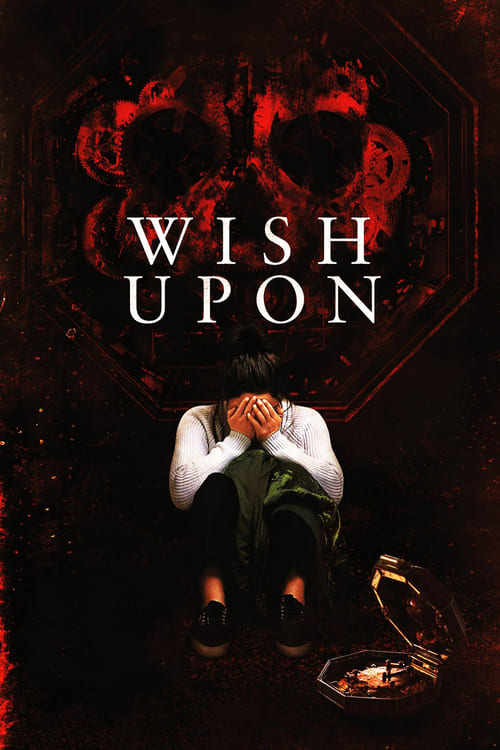
Wish Upon (2017)
Directed by John R. Leonetti
No — Wish Upon is not woke, scoring 12 out of 100 on our wokeness meter.
Wish Upon arrives from the summer of 2017 with the confidence of a film that has solved a puzzle nobody posed.
Consciousness Markers
The cast includes actors of Asian descent (Ki Hong Lee, Sydney Park) in supporting roles, but the film does not make diversity a central theme or comment on it.
No LGBTQ+ characters or themes are present.
The film has a female protagonist but does not advance a feminist agenda or critique patriarchy.
Chinese folklore is used as a plot device, but the film does not engage with racial consciousness or social justice.
No environmental or climate themes.
No critique of capitalism or wealth inequality.
No body positivity themes.
No neurodivergent characters or themes.
No revisionist history elements.
The film does not lecture or preach on social issues.
Why it received this score
Wish Upon arrives from the summer of 2017 with the confidence of a film that has solved a puzzle nobody posed. Clare Shannon, seventeen and haunted by her mother's suicide, receives a Chinese music box from her dumpster-diving father. Seven wishes. One corpse per wish. The rules are deciphered by a classmate named Ryan Hui and his cousin Gina, who translates the inscriptions and is promptly impaled on a statue for her trouble. The rest is a tidy actuarial table of adolescent desire and neighborhood fatalities: necrotizing fasciitis for the bully, a thirty-floor elevator plunge for the best friend, a chainsaw for the patriarch.
The cultural ledger here is thin and mostly blank. Supporting roles go to performers of Asian descent, and the backstory borrows a Yaoguai spirit and a 1910 plague quarantine, yet none of it is asked to carry meaning. The box is a device. The folklore is set dressing. We are given a female protagonist with no interest in patriarchy, a wealthy great-uncle whose death registers as a windfall, and a moral universe in which the only sin is wanting things. No sermon arrives. Nobody turns to the camera to explain what we should think. That absence is not virtue, merely silence, but we score what is on the page.
Critics were unkind. Twenty percent on the aggregator, a C from opening-night audiences, a seventh-place debut, a quiet crawl to twenty-three million against a twelve-million budget. Left behind is a genuine curiosity: a horror film so committed to its own nonsense that it becomes endearing, which is why a certain video series canonized it years later. The mid-credits scene dangles a sequel that never materialized, and that feels like the correct punishment. The box grants nothing here. No lessons, no causes, no reforms. Just a teenager, a curse, and a car with her name on it.
Analysis generated by our Consciousness Algorithm


Synopsis
A teenage girl discovers a box with magical powers, but those powers comes with a deadly price.
Questions about Wish Upon
Is Wish Upon woke?
No — Wish Upon is not woke, scoring 12 out of 100 on our wokeness meter. That earns it a verdict of Ultra Based.
Does Wish Upon have any woke elements?
Very few. None of the 10 markers reaches 30, the level where a marker counts as present; the highest is Representation Casting at 20.
How does Wish Upon compare to other 2017 movies?
It ranks #138 of the 309 films from 2017 we've scored; their average is 19. The wokest is I Am Not Your Negro (92).
How is the Woke Score calculated?
An AI-assisted process researches the film and its reception, scores it 0–100 on ten markers, then combines those into one 0–100 Woke Score. It measures a specific set of 2020s cultural themes, not film quality.