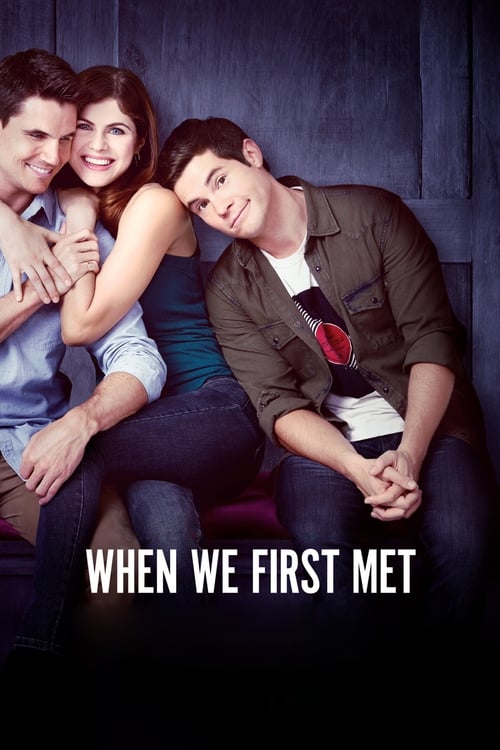
When We First Met (2018)
Directed by Ari Sandel
No — When We First Met is not woke, scoring 10 out of 100 on our wokeness meter.
When We First Met arrives from 2018 with the weary confidence of a film that knows exactly which streaming algorithm summoned it.
Consciousness Markers
The plot mildly rebukes the 'nice guy' entitlement fantasy by having Noah realize he cannot manipulate Avery into loving him and must respect her choice of Ethan, though this is standard rom-com moralizing rather than an explicit feminist thesis.
The cast is overwhelmingly white, with Andrew Bachelor and Noureen DeWulf in supporting roles that exist naturally without any commentary on their identity.
A subplot in which Noah's senior VP job sours his friendship with Max and his relationship with Avery gestures faintly at the costs of corporate ambition, but it is framed as work-life balance rather than a critique of capitalism.
The film delivers its lesson about not engineering love through plot mechanics rather than speeches, keeping didacticism minimal.
No LGBTQ+ characters, themes, or subtext appear anywhere in the film.
Race is never addressed or thematized; the film operates in a raceless rom-com register.
No environmental or climate content whatsoever.
No body-positivity themes; the film adheres to conventional romantic-comedy beauty standards.
No neurodivergent characters or themes are present.
The time-loop premise is personal wish-fulfillment fantasy, not a revisionist reframing of historical events.
Why it received this score
When We First Met arrives from 2018 with the weary confidence of a film that knows exactly which streaming algorithm summoned it. Noah Ashby, played by Adam DeVine, finds a photo booth that returns him to the night he met Avery, and he spends four attempts rearranging history to make her love him. The premise is wish fulfillment with a mechanic attached. The cast is white, pleasant, and drawn from the standard romantic-comedy catalogue, with Andrew Bachelor and Noureen DeWulf appearing in supporting turns the film never asks to mean anything. Race goes unmentioned. So does nearly everything else.
The script does eventually rebuke Noah's entitlement, and we should credit it for that much. He learns that Avery cannot be engineered into affection, that she belongs with Ethan, and that his own happiness waits in Carrie, the roommate he overlooked. This is the ordinary moral arithmetic of the genre, present in romantic comedies since the studio system, and it registers as a mild correction of the nice-guy fantasy instead of a thesis about anything larger. A subplot about Noah taking the senior vice president job that Max wanted gestures at the toll of corporate ambition, though the film frames the problem as work-life balance. Nobody is asked to examine an economy.
What remains is a picture with almost no cultural agenda to speak of. There is no climate anxiety, no body politics, no neurodivergent interiority, no historical revisionism, no queer presence, and no sermonizing. The lesson arrives through plot mechanics, which is the least preachy way to deliver one. For a viewer assembling a taxonomy of 2018 streaming romances, this is a clean specimen: agreeable, forgettable, ideologically inert. The photo booth resets everything. So, mercifully, do the closing credits.
Analysis generated by our Consciousness Algorithm


Synopsis
Using a magical photo booth that sends him back in time, Noah relives the night he met Avery over and over, trying to persuade her to fall for him.
Questions about When We First Met
Is When We First Met woke?
No — When We First Met is not woke, scoring 10 out of 100 on our wokeness meter. That earns it a verdict of Ultra Based.
Does When We First Met have any woke elements?
Very few. None of the 10 markers reaches 30, the level where a marker counts as present; the highest is Feminist Agenda at 20.
How does When We First Met compare to other 2018 movies?
It ranks #191 of the 325 films from 2018 we've scored; their average is 20. The wokest is Return (92).
How is the Woke Score calculated?
An AI-assisted process researches the film and its reception, scores it 0–100 on ten markers, then combines those into one 0–100 Woke Score. It measures a specific set of 2020s cultural themes, not film quality.