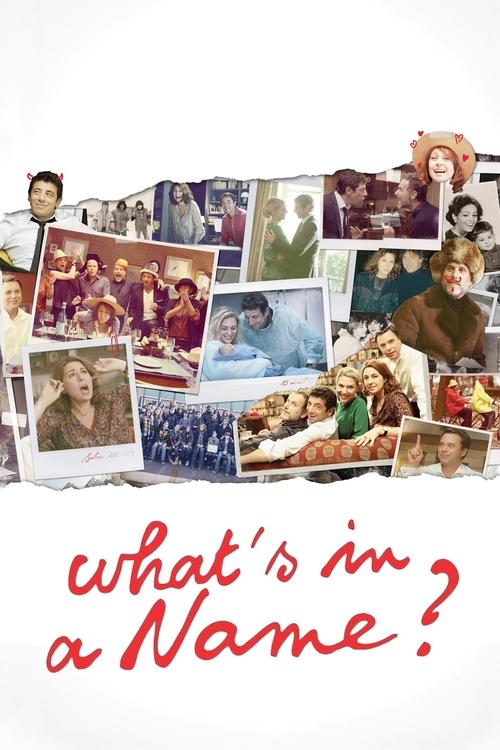
What's in a Name (2012)
Directed by Matthieu Delaporte
No — What's in a Name is not woke, scoring 12 out of 100 on our wokeness meter.
A French-Belgian chamber comedy adapted from a stage play, in which five adults sit around a dinner table and shout at each other for ninety minutes about what a man intends to name his unborn son.
Consciousness Markers
Elisabeth resents having sacrificed her academic career for her husband and being stuck with the domestic and parenting burden, and Anna is frustrated that Vincent ignores her professional success; these grievances are aired but framed as personal marital conflict rather than a feminist thesis.
The film is relentlessly talky and argumentative, but its escalating dinner-table disputes are played for laughs and character revelation rather than moral instruction.
There is mild friction between Vincent the wealthy real estate agent and Pierre the liberal, miserly professor, but the film mines this for character comedy rather than any eat-the-rich critique.
The cast is a small ensemble of largely white French actors; a couple of performers are of North African descent, but they exist naturally in the story with no commentary or diversity agenda.
Claude is teased for 'effeminate habits' and his sexuality is questioned by the others, but the film treats this as a running joke and he ultimately reveals a heterosexual affair, so there is no genuine LGBTQ+ theme.
The central argument concerns naming a child 'Adolphe' and its evocation of Adolf Hitler, which gestures at historical atrocity but has nothing to do with modern racial justice consciousness.
No environmental or climate themes appear anywhere in this dinner-party comedy.
No body image or body positivity content is present.
No neurodivergence themes or characters are present.
The film does not reinterpret or revise any historical narrative.
Why it received this score
A French-Belgian chamber comedy adapted from a stage play, in which five adults sit around a dinner table and shout at each other for ninety minutes about what a man intends to name his unborn son. The chosen name is Adolphe, which summons Adolf, and from this modest provocation the film unfolds its true subject: the accumulated petty resentments of people who have known each other too long. Vincent sells real estate and has money. Pierre teaches and has principles, or at least the posture of them. The friction between the two is played for character comedy, never as an indictment of wealth, and the film's interest in class ends where the appetizers begin.
The women fare marginally better, though not by design. Elisabeth seethes over the academic career she traded for her husband's comfort and the parenting she carries alone. Anna notes that Vincent has never once asked about her professional success. These are real grievances, delivered with force, but the film frames them as marital weather rather than a thesis, and the resolution amounts to a man being told to do the dishes. Claude, meanwhile, endures jokes about his effeminate habits and his surname, which the script deploys as a running gag before revealing that his secret lover is a woman. The picture gestures at a question it has no intention of answering.
What remains is talk. Endless, escalating, expertly timed talk, which is the film's genuine pleasure and also its limitation. The arguments build and detonate and rebuild, and the cast is very good at it, but the movie has no sermon to deliver and no lesson to impart. It simply enjoys the sound of intelligent people behaving badly, then hands out a daughter named Françoise as a punchline. A tidy, well-mannered evening of French misanthropy. Nothing more.
Analysis generated by our Consciousness Algorithm


Synopsis
Vincent, a wealthy real estate agent, is invited to dinner by his sister Elizabeth and her husband Peter, both professors in Paris. Claude, a childhood friend and trombonist in a symphony orchestra, is also present. Vincent brings news from the prenatal examination of his and his wife Anna's unborn son. The name chosen by the soon-to-be parents strongly offends the others for many reasons. The dispute between the guests quickly escalates and before long the resurgence of old grudges and hidden secrets is unavoidable...
Questions about What's in a Name
Is What's in a Name woke?
No — What's in a Name is not woke, scoring 12 out of 100 on our wokeness meter. That earns it a verdict of Ultra Based.
Does What's in a Name have any woke elements?
Very few. None of the 10 markers reaches 30, the level where a marker counts as present; the highest is Feminist Agenda at 28.
How does What's in a Name compare to other 2012 movies?
It ranks #76 of the 230 films from 2012 we've scored; their average is 12. The wokest is Killing Them Softly (92).
How is the Woke Score calculated?
An AI-assisted process researches the film and its reception, scores it 0–100 on ten markers, then combines those into one 0–100 Woke Score. It measures a specific set of 2020s cultural themes, not film quality.