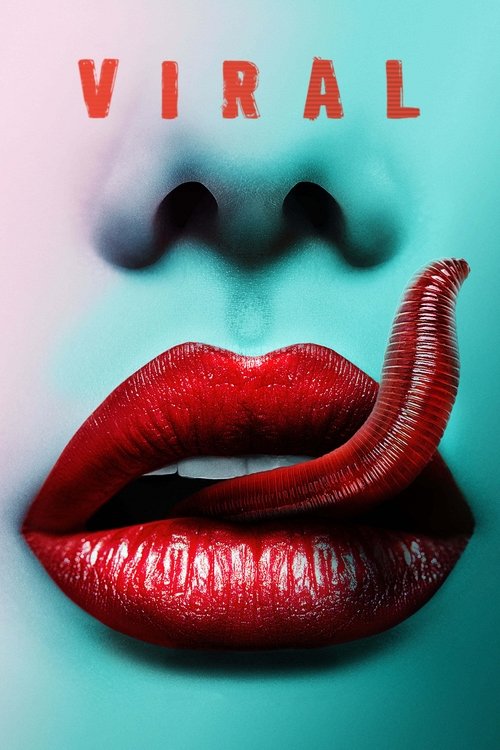
Viral (2016)
Directed by Henry Joost
No — Viral is not woke, scoring 7 out of 100 on our wokeness meter.
Viral arrives from the Blumhouse assembly line with the modest ambition of making its audience flinch, and it achieves this with a businesslike efficiency that leaves room for very little else.
Consciousness Markers
The film centers on two sisters and gives Emma the agency to devise a plan and ultimately dispatch the threat herself, but this is standard horror-protagonist competence rather than any articulated feminist thesis.
The cast is led by two white actresses with a handful of supporting players of color, but the film makes no deliberate effort at inclusive or representative casting; diversity is incidental rather than a stated aim.
No LGBTQ+ characters, relationships, or themes appear anywhere in the story; the plot is a straight-forward viral-outbreak survival narrative.
Race is never a subject of the film; the outbreak narrative is entirely colorblind and engages no racial themes or commentary.
The virus is a parasitic worm flu with no environmental or climate-driven origin; no ecological messaging is present.
There is no economic critique; the antagonist is a parasite and an incompetent government quarantine, not capitalism or the wealthy.
Bodies are depicted as sites of infection and horror, the opposite of any body-positive messaging; no such theme exists.
No neurodivergent characters or themes are present in the film.
The film is a fictional outbreak story with no historical subject matter to revise.
The film is a lean Blumhouse horror-thriller that aims to scare rather than preach; it contains no didactic or moralizing monologues.
Why it received this score
Viral arrives from the Blumhouse assembly line with the modest ambition of making its audience flinch, and it achieves this with a businesslike efficiency that leaves room for very little else. A worm flu sweeps through a quarantined California suburb, two sisters barricade themselves inside a house, and the camera documents the decay with handheld urgency. It is a survival story in the narrowest sense. The parasite does the menacing, the military does the herding, and the film keeps its gaze fixed on the next scare. No thesis hides beneath the viscera. No argument is being advanced about how we live now.
Casting is led by two white actresses, with supporting players of color appearing in small roles the script never pauses to examine. The diversity on screen is incidental, a byproduct of an ordinary ensemble instead of a stated aim, and the film offers no commentary on race at all. Its treatment of gender is equally unambitious. Emma receives the competence the genre routinely hands its final girls: she improvises a plan, wields a gun, and dispatches the threat. That is horror-protagonist business as usual, not an articulated position on anything.
What the film declines to do is lecture. There is no economic grievance, no ecological warning, no reconsideration of history, no sermon on how bodies ought to be regarded. The infected body is a site of revulsion, and the film is content to leave it there. Even the government quarantine functions as a plot mechanism, not a critique of institutions. Viral wants only to be a tight, unpleasant ninety minutes, and judged against that narrow contract, it mostly honors the terms.
Analysis generated by our Consciousness Algorithm
Part of


Synopsis
Following the outbreak of a virus that wipes out the majority of the human population, a young woman documents her family's new life in quarantine and tries to protect her infected sister.
Questions about Viral
Is Viral woke?
No — Viral is not woke, scoring 7 out of 100 on our wokeness meter. That earns it a verdict of Ultra Based.
Does Viral have any woke elements?
Very few. None of the 10 markers reaches 30, the level where a marker counts as present; the highest is Feminist Agenda at 15.
How does Viral compare to other 2016 movies?
It ranks #190 of the 285 films from 2016 we've scored; their average is 16. The wokest is 13th (92).
How is the Woke Score calculated?
An AI-assisted process researches the film and its reception, scores it 0–100 on ten markers, then combines those into one 0–100 Woke Score. It measures a specific set of 2020s cultural themes, not film quality.