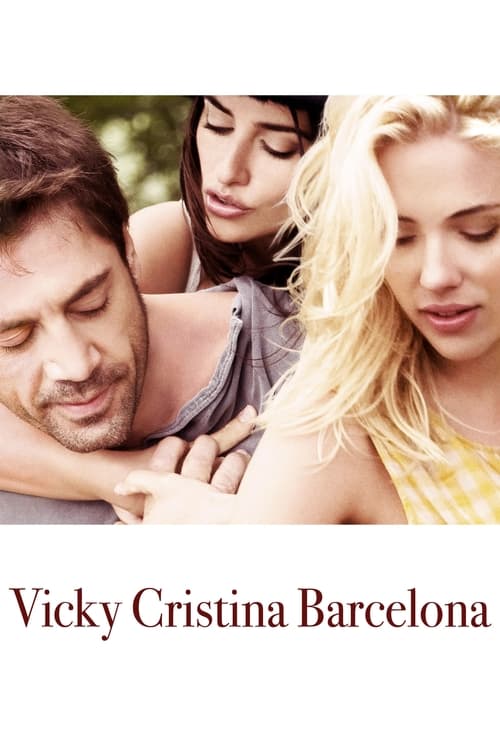
Vicky Cristina Barcelona (2008)
Directed by Woody Allen
No — Vicky Cristina Barcelona is not woke, scoring 16 out of 100 on our wokeness meter.
Vicky Cristina Barcelona arrives in 2008 as a sunlit postcard of Catalan tourism and Woody Allen's anxieties.
Consciousness Markers
The central ménage à trois between Cristina, Juan Antonio, and María Elena includes explicit romantic and physical intimacy between the two women, though it is framed as bohemian experimentation rather than as an LGBTQ+ statement.
The film is built around two women's romantic dissatisfaction and Cristina's refusal of conventional commitment, but it is filtered through Allen's wry male narrator and never advances a feminist argument.
Allen's omnipresent narrator offers philosophical musings on love and desire, but the tone is wry and ambivalent rather than preachy or didactic.
The cast is overwhelmingly white European and American, with Spanish actors appearing naturally because the film is set in Spain; there is no deliberate diversity-casting agenda at work.
A faint bohemian-versus-bourgeois tension exists between the artist Juan Antonio and the conventional businessman Doug, but the film never mounts an economic critique.
Race is entirely absent from the film's concerns; the characters are white Americans and Spaniards with no engagement with racial themes whatsoever.
There is no environmental or climate content in the film.
No body-positivity themes are present; the film's eroticism is conventionally framed around attractive stars.
María Elena's emotional instability and suicide attempt are portrayed as dangerous romantic volatility, not as neurodivergence to be understood or celebrated.
The film is a contemporary romantic drama with no historical subject matter to revise.
Why it received this score
Vicky Cristina Barcelona arrives in 2008 as a sunlit postcard of Catalan tourism and Woody Allen's anxieties. Two American women, one practical and engaged, one restless and undefined, enter the orbit of a painter who invites them to Oviedo with an honesty that borders on performance art. The cast is overwhelmingly white European and American, a demographic fact that suits the setting and reveals no deliberate design. Spanish actors appear because the story is in Spain. The film's cultural awareness is geographic, not ideological. It observes bohemian manners and lets the audience do the moral math.
The erotic architecture includes a ménage à trois in which Cristina and María Elena share explicit intimacy. The film treats this arrangement as an extension of artistic temperament, a summer experiment in polyamory. It does not announce an identity politics. The women's romantic dissatisfaction drives the plot, yet Allen's male narration frames their choices as case studies in desire and indecision. A faint tension between the artist and the businessman Doug gestures at bohemian disdain for bourgeois comfort, but no economic argument is mounted. Race, climate, body image, neurodivergence, and historical revision are absent. María Elena's instability is romantic danger, not a condition to be understood or celebrated. The narrator muses on love and loss, but he never preaches. His tone is wry, ambivalent, and content to leave contradictions unresolved.
The result is a handsome, melancholy comedy of manners that flirts with progressive themes without committing to any of them. It offers bisexual spectacle, female frustration, and a vague critique of conventional marriage, all filtered through a sensibility that remains detached. The film is charming the way a boutique hotel is charming. It is well appointed, temporary, and designed for people who will return to their regular lives. Penélope Cruz won an Academy Award for her volatile performance, which gives the proceedings a jolt of chaos. Otherwise, the movie drifts along on guitar music and beautiful people making questionable decisions. As a document of social consciousness, it is a light breeze, not a manifesto. The summer ends. Everyone goes home. The narrator keeps talking.
Analysis generated by our Consciousness Algorithm


Synopsis
Two girlfriends on a summer holiday in Spain become enamored with the same painter, unaware that his ex-wife, with whom he has a tempestuous relationship, is about to re-enter the picture.
Questions about Vicky Cristina Barcelona
Is Vicky Cristina Barcelona woke?
No — Vicky Cristina Barcelona is not woke, scoring 16 out of 100 on our wokeness meter. That earns it a verdict of Ultra Based.
Does Vicky Cristina Barcelona have any woke elements?
1 of the 10 markers register at 30 or above, led by LGBTQ+ Themes (35). On LGBTQ+ Themes: The central ménage à trois between Cristina, Juan Antonio, and María Elena includes explicit romantic and physical intimacy between the two women, though it is framed as bohemian experimentation rather than as an LGBTQ+ statement.
How does Vicky Cristina Barcelona compare to other 2008 movies?
It ranks #51 of the 212 films from 2008 we've scored; their average is 12. The wokest is Milk (68).
How is the Woke Score calculated?
An AI-assisted process researches the film and its reception, scores it 0–100 on ten markers, then combines those into one 0–100 Woke Score. It measures a specific set of 2020s cultural themes, not film quality.