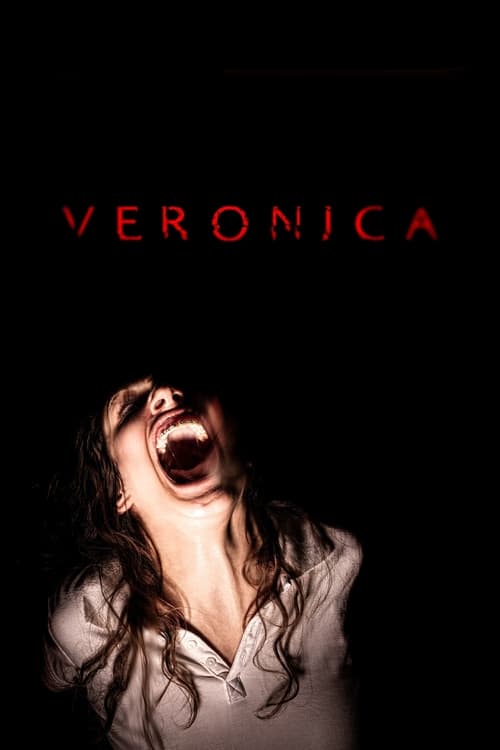
Veronica (2017)
Directed by Paco Plaza
No — Veronica is not woke, scoring 6 out of 100 on our wokeness meter.
Paco Plaza's Veronica arrives dressed as a possession picture and behaves like one, which is to say it has no interest in being anything else.
Consciousness Markers
A teenage girl carries the film and a blind nun and weary working mother populate it, but the narrative offers no feminist thesis or gender-politics commentary; the horror is domestic and supernatural, not ideological.
The cast is entirely Spanish, which is the natural default for a Spanish production set in Madrid; the female lead and child actors reflect the story's needs rather than any deliberate diversity agenda.
The teacher's eclipse lecture about ancient sacrifices is functional exposition to set up the séance, not a sermon directed at the audience.
There are no LGBTQ+ characters, relationships, or themes anywhere in the film.
The film is set in a working-class Madrid district but engages no racial themes or commentary whatsoever.
The 1991 solar eclipse is a supernatural plot device for the séance, not an environmental or climate statement.
The family's modest circumstances and the mother's long working hours are background texture for the drama, not a critique of capitalism or wealth.
A first-period scene occurs as a plot beat tied to the haunting, but it carries no body-positivity messaging or self-acceptance theme.
No neurodivergent characters or themes are present in the film.
The film is loosely based on a real 1991 Vallecas case, but it presents this as straightforward horror inspiration rather than reinterpreting history through a modern ideological lens.
Why it received this score
Paco Plaza's Veronica arrives dressed as a possession picture and behaves like one, which is to say it has no interest in being anything else. The setting is Vallecas, Madrid, 1991, and the machinery is familiar: a solar eclipse, a Ouija board in a school basement, a teenage girl left to mind three younger siblings while her widowed mother works the hours the plot requires. The cast is uniformly Spanish, which for a Spanish film shot in a Spanish neighborhood is not a gesture of inclusion but simply the weather. We note it. We move on.
The film does place a fifteen-year-old girl at its center, and around her it arranges a blind nun, a weary mother, and two schoolfriends. A case could be assembled from this arrangement. The film declines to assemble it. Veronica's terror is domestic and supernatural, aimed at the nerves instead of the conscience, and what she endures is the ordeal of a haunted teenager in a haunted apartment. The single lecture in the picture, delivered by a teacher about ancient eclipse sacrifices, exists to explain why a shattered glass cup might summon something, and it lasts exactly as long as that job takes.
Elsewhere the ledger is bare. There is no LGBTQ content, no racial commentary, no environmental lament, no indictment of the modest economy that keeps the mother away from her children. Her long shifts are texture. The first period that arrives mid-haunting is a plot beat about blood and burn marks, not a meditation on self-acceptance. The real 1991 Vallecas case is borrowed for atmosphere and then abandoned, which is what horror films do with true stories. The craft survives: a child actress doing real work, a director who knows where to put the camera, and a demon that never overstays. A restrained vintage. We score it accordingly and pour the next.
{"thematic_tags": ["true_story"]}
Analysis generated by our Consciousness Algorithm
Part of


Synopsis
In 1991 Madrid, after holding a séance at school, a teen girl minding her younger siblings at home suspects an evil force has entered their apartment.
Questions about Veronica
Is Veronica woke?
No — Veronica is not woke, scoring 6 out of 100 on our wokeness meter. That earns it a verdict of Ultra Based.
Does Veronica have any woke elements?
Very few. None of the 10 markers reaches 30, the level where a marker counts as present; the highest is Feminist Agenda at 12.
How does Veronica compare to other 2017 movies?
It ranks #224 of the 309 films from 2017 we've scored; their average is 19. The wokest is I Am Not Your Negro (92).
How is the Woke Score calculated?
An AI-assisted process researches the film and its reception, scores it 0–100 on ten markers, then combines those into one 0–100 Woke Score. It measures a specific set of 2020s cultural themes, not film quality.