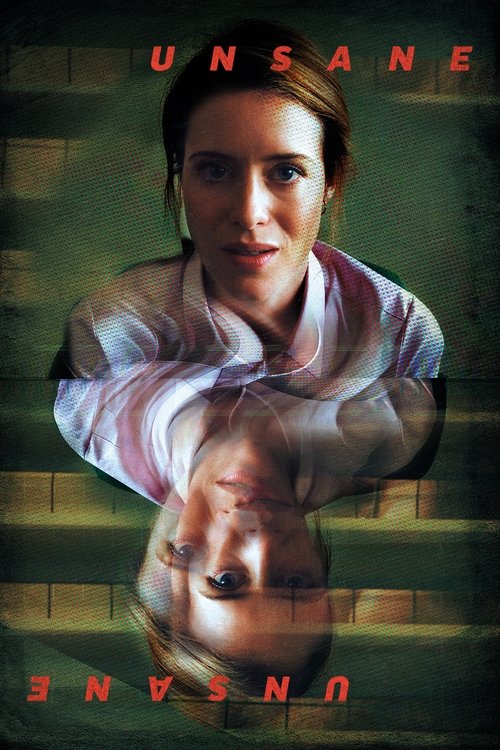
Unsane (2018)
Directed by Steven Soderbergh
No — Unsane is not especially woke, scoring 23 out of 100 on our wokeness meter.
Steven Soderbergh shot this on an iPhone 7 Plus, and the resulting grit suits a story about a woman nobody will believe.
Consciousness Markers
A central plot engine is the institution's scheme to exploit patients' health insurance claims for profit, a pointed critique of the for-profit healthcare and insurance system.
The cast includes Jay Pharoah and Myra Lucretia Taylor as Black supporting players and Aimee Mullins, a double amputee actress, in a minor role, but the film makes no narrative point of any of this diversity.
The film centers on a woman whose stalking trauma is dismissed and who is disbelieved and trapped by an institution, a reading that resonates with contemporary feminist concerns about women not being believed, though it is played as genre thriller rather than explicit advocacy.
The film is set in a psychiatric facility and deals with mental illness and institutionalization, but treats it as horror-thriller material rather than as neurodivergence advocacy or representation.
The insurance-fraud critique is embedded in the plot but the film is a lurid B-movie thriller that revels in style rather than preaching to the audience.
Black characters exist in the story (notably Nate, the undercover journalist) but race is never commented upon or thematized.
No LGBTQ+ characters, relationships, or themes appear anywhere in the film.
No environmental or climate themes are present.
Despite the presence of an actress with a disability, the film contains no body-positivity messaging or themes.
The film is a contemporary fictional thriller with no historical subject matter to revise.
Why it received this score
Steven Soderbergh shot this on an iPhone 7 Plus, and the resulting grit suits a story about a woman nobody will believe. Claire Foy's Sawyer is committed against her will, dismissed by police, disbelieved by staff, and eventually hunted by the orderly who is also her stalker. The film has no interest in arguing a case. It wants to trap you in that corridor with her, and it succeeds. Soderbergh keeps the frame tight and the mood sour, and the cheap digital texture turns into an asset.
The institutional villainy here is financial. Highland Creek detains patients for as long as their insurance pays and releases them the moment the money dries up. That is a real swipe at for-profit care, delivered as plot machinery instead of sermon, which keeps the temperature low. The film also lets a woman's testimony be the thing the world refuses to credit, and that carries a certain cultural charge, though Soderbergh stages it as suspense, not advocacy. Jay Pharoah's undercover journalist and Myra Lucretia Taylor's presence are simply there, unremarked, and Aimee Mullins appears without the screenplay ever acknowledging her prosthetics.
Mental illness receives the least respectful treatment, functioning as set dressing for jump scares and unreliable-narrator games. There is no interest in the lived experience of any diagnosis, only in what a locked ward can do to the lighting. What remains is a tight, nasty, efficient thriller that flirts with ideas and commits to none of them. It is the cinematic equivalent of a well-made knife: sharp, briefly thrilling, and entirely indifferent to what it is pointed at. Soderbergh had fun. The audience gets a competent shiver and a faint whiff of a message that never quite arrives.
Analysis generated by our Consciousness Algorithm


Synopsis
A woman is involuntarily committed to a mental institution where she is confronted by her greatest fear.
Questions about Unsane
Is Unsane woke?
No — Unsane is not especially woke, scoring 23 out of 100 on our wokeness meter. That earns it a verdict of Based.
Does Unsane have any woke elements?
3 of the 10 markers register at 30 or above, led by Eat the Rich (45), Feminist Agenda (30) and Representation Casting (30). On Eat the Rich: A central plot engine is the institution's scheme to exploit patients' health insurance claims for profit, a pointed critique of the for-profit healthcare and insurance system.
How does Unsane compare to other 2018 movies?
It ranks #90 of the 325 films from 2018 we've scored; their average is 20. The wokest is Return (92).
How is the Woke Score calculated?
An AI-assisted process researches the film and its reception, scores it 0–100 on ten markers, then combines those into one 0–100 Woke Score. It measures a specific set of 2020s cultural themes, not film quality.