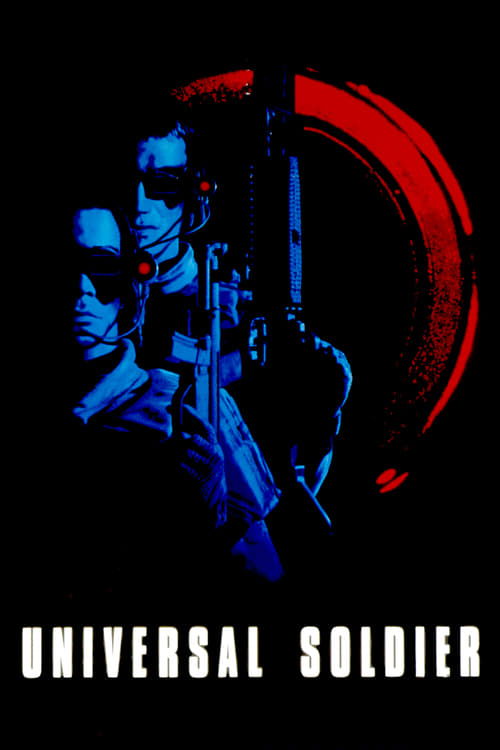
Universal Soldier (1992)
Directed by Roland Emmerich
No — Universal Soldier is not woke, scoring 7 out of 100 on our wokeness meter.
Universal Soldier arrives from 1992 with the confidence of a B-grade action machine and the cultural awareness of a barracks fridge.
Consciousness Markers
Ally Walker's Veronica Roberts is a persistent investigative journalist with some agency who survives to the end, a modest notch above the era's typical damsel, but she remains primarily a companion/pursued figure in a male-driven action plot.
The cast is overwhelmingly white, with Black actors (Tico Wells, Tommy 'Tiny' Lister Jr.) relegated to minor supporting roles and Vietnamese characters serving largely as backdrop in the 1969 prologue.
The secret military-industrial UniSol program is depicted as a shady, cost-driven government project, but this is generic conspiracy-thriller texture rather than a critique of wealth or capitalism.
The Vietnam framing provides non-white soldiers and villagers in the background, but the film offers no commentary on race, colonialism, or racial injustice.
Expository dialogue about the UniSol program exists purely to explain plot mechanics, carrying no moral instruction or social sermonizing.
No LGBTQ+ characters, themes, or subtext of any kind appear in the film.
No environmental themes, imagery, or messaging whatsoever.
The film celebrates hyper-muscular, genetically augmented super-soldier physiques with no body-diversity or self-acceptance themes.
Sergeant Scott's homicidal madness is framed as trauma-driven villainy, not as neurodivergence or mental-health advocacy.
The Vietnam War is used as a straightforward action-movie flashback setting without reinterpreting or reframing historical events.
Why it received this score
Universal Soldier arrives from 1992 with the confidence of a B-grade action machine and the cultural awareness of a barracks fridge. Roland Emmerich's tale of cryogenically revived Vietnam dead turned into a secret military unit has energy, muscle, and very little else on its mind. The cast is overwhelmingly white. Black performers such as Tico Wells and Tommy Lister Jr. occupy minor supporting corners, while Vietnamese characters exist mostly as backdrop in the 1969 prologue. The film offers no racial argument, no colonial reckoning, and no interest in who these people were before they became scenery. There is no LGBTQ presence, no environmental concern, no body-diverse celebration of the augmented physique, and no attempt to frame Sergeant Scott's homicidal instability as anything but trauma-driven villainy. The Vietnam War itself is used as a straightforward flashback setting, not reinterpreted or reframed.
Ally Walker's Veronica Roberts is the closest thing to a progressive pulse. She is a journalist with persistence, she sneaks onto a base, and she survives. Yet she remains a pursued companion in a plot powered by two men and their grudges. Her agency is a modest notch above the era's standard damsel, not a feminist thesis. The UniSol program has a faint anti-capitalist texture: a shadowy military-industrial project, cost-driven and disposable in its attitude toward human life. This is conspiracy-thriller wallpaper, not an indictment of wealth. The dialogue about neural serums and cooling systems exists to explain mechanics. It never stops to instruct us on social virtue. The lecture energy is minimal because the film is too busy exploding gas stations and shredding villains with farm equipment.
What remains is a lean, silly, occasionally effective genre exercise. Its social consciousness is faint, accidental, and mostly visible in the margins. The film does not preach, which is to its credit, but neither does it possess any urgent cultural vision. It treats its female lead with mild professional competence, its military conspiracy with vague suspicion, and everything else with the blank stare of a studio hoping to keep Carolco afloat. The result is neither offensive nor enlightened. It is simply a product of its moment, flexing its biceps and forgetting to have a thought.
Analysis generated by our Consciousness Algorithm


Synopsis
An American soldier who had been killed during the Vietnam War is revived 25 years later by the military as a semi-android, UniSols, a high-tech soldier of the future. After the failure of the initiative to erase all the soldier's memories, he begins to experience flashbacks that are forcing him to recall his past.
Questions about Universal Soldier
Is Universal Soldier woke?
No — Universal Soldier is not woke, scoring 7 out of 100 on our wokeness meter. That earns it a verdict of Ultra Based.
Does Universal Soldier have any woke elements?
Very few. None of the 10 markers reaches 30, the level where a marker counts as present; the highest is Feminist Agenda at 18.
How does Universal Soldier compare to other 1992 movies?
It ranks #41 of the 74 films from 1992 we've scored; their average is 12. The wokest is The Crying Game (62).
How is the Woke Score calculated?
An AI-assisted process researches the film and its reception, scores it 0–100 on ten markers, then combines those into one 0–100 Woke Score. It measures a specific set of 2020s cultural themes, not film quality.