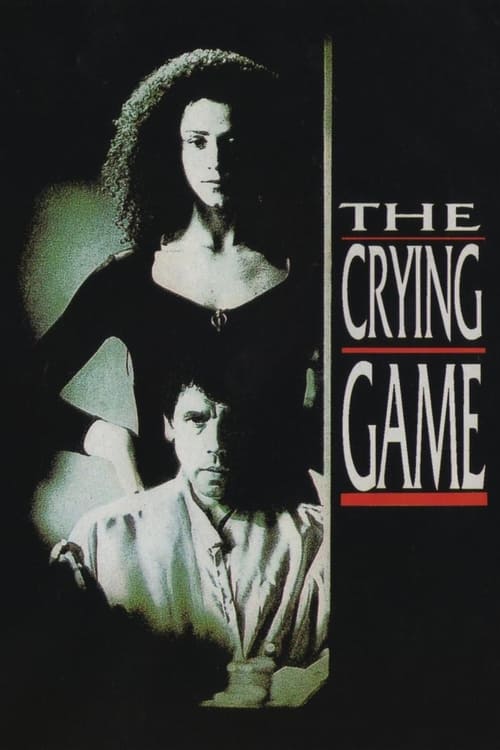
The Crying Game (1992)
Directed by Neil Jordan
Yes · Woke
How we score movies →Consciousness Markers
Centers on a transgender woman and explores attraction across gender lines, which was remarkably progressive for 1992. The film treats sexuality with relative openness but frames identity primarily as plot mechanism.
Features a transgender woman (Jaye Davidson) in a leading role during 1992 when such casting was virtually unprecedented in mainstream cinema. However, the character is introduced through narrative shock rather than developed representation.
While Dil is the emotional center, she lacks agency in her own narrative and is often positioned as object rather than subject. Miranda Richardson's IRA character provides some female presence but remains secondary to male-driven violence.
The film presents IRA history and British-Irish relations through a humanizing but not revisionist lens. It acknowledges moral complexity without fundamentally reframing historical narratives.
The film maintains dramatic momentum and does not present itself as educational or preachy. Its progressive elements emerge organically from plot rather than through explicit messaging.
The film contains no evidence of engagement with racial themes or racial consciousness. The diverse cast (Forest Whitaker, Jaye Davidson) appears without any thematic attention to race.
No climate-related themes are present in this political thriller set in urban London and rural Ireland.
While the film engages with IRA politics and class tensions, it contains no systematic critique of capitalism or 'eat the rich' sensibility.
No body positivity themes are evident in the film. Bodies are presented through conventional cinematic aesthetics without challenge to normative standards.
No representation of neurodivergence or engagement with neurodivergent themes appears in the narrative.


Synopsis
Irish Republican Army member Fergus forms an unexpected bond with Jody, a kidnapped British soldier in his custody, despite the warnings of fellow IRA members Jude and Maguire. Jody makes Fergus promise he'll visit his girlfriend, Dil, in London, and when Fergus flees to the city, he seeks her out. Hounded by his former IRA colleagues, he finds himself increasingly drawn to the enigmatic, and surprising, Dil.
Why it received this score
The Crying Game arrives at a particular historical juncture, 1992, when its central conceit regarding Dil could not yet be absorbed into the current vocabulary of social consciousness. The film presents a transgender woman as its emotional and moral center, yet does so through a framework that treats her identity primarily as narrative shock rather than lived experience. Jaye Davidson's performance transcends this limitation, generating genuine pathos and complexity that the script does not fully earn. The film deserves credit for centering a transgender character in a mainstream thriller when such visibility was virtually nonexistent, yet the mechanism of revelation still operates as a violation of the audience's expectations rather than an exploration of Dil's interiority.
The surrounding narrative complicates any straightforward progressive reading. The IRA subplot, while attempting political nuance, still fundamentally presents Irish republicanism through a lens of masculine violence and moral compromise. The film's treatment of sexuality exists in tension with its handling of identity. Fergus moves from heterosexual presumption to attraction across gender lines, but the film never quite grants him the discomfort of genuine self-examination. His journey centers his feelings rather than Dil's agency or the specific vulnerabilities facing a trans woman in 1990s London. The cinematography and direction are accomplished, the performances often excellent, yet the progressive elements remain incidental to a thriller architecture that has not been restructured to accommodate them.
By contemporary standards, The Crying Game reads as a film that stumbled toward representation without fully understanding what it was representing. It asked important questions about identity and attraction that mainstream cinema was not yet equipped to ask, yet asked them through the language of plot mechanics and audience manipulation. The film's significance lies partly in what it attempted and partly in what its limitations reveal about the gap between visibility and understanding.
Analysis generated by our Consciousness Algorithm
Critic Reviews
“Rea and Davidson are incomparably good in an exceptional film that is by turns darkly funny and deeply affecting. Though Jordan's control sometimes falters, it's a small price to pay for his daring.”
“One of a very few films that wants to do something unexpected and challenging, and succeeds even beyond its ambitions. See this film. Then shut up about it.”
“By the time The Crying Game is over, you'll never look at beauty in quite the same way.”
“Jordan would like us to believe that the three films are stages in a metamorphosis, but the stitching shows… Part Two, explored and expanded, might have made a good film, especially since Davidson gives a quiet, knowledgeable, perfectly poised performance. [14 Dec 1992]”