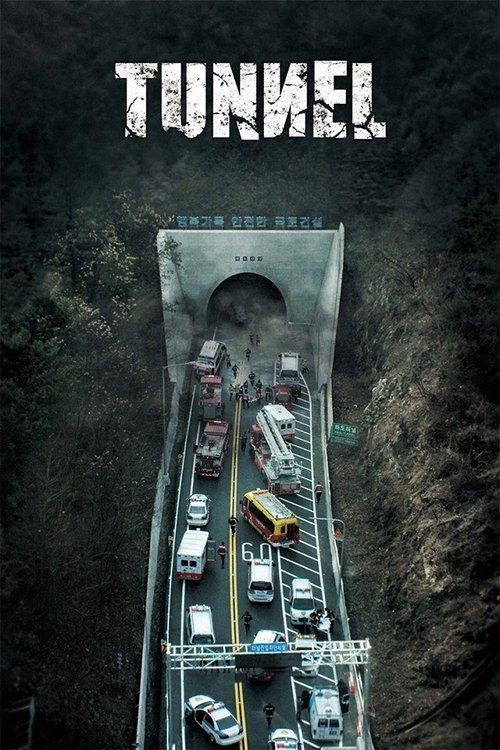
Tunnel (2016)
Directed by Kim Seong-hun
No — Tunnel is not woke, scoring 15 out of 100 on our wokeness meter.
The film begins with a man purchasing a birthday cake for his daughter and driving home through a newly opened tunnel.
Consciousness Markers
The film critiques shoddy construction, profit-driven media exploiting a trapped man for ratings, and a system that prioritizes resuming construction over a life. This is systemic cynicism rather than an explicit eat-the-rich manifesto.
The film gestures at institutional failure and media cynicism, but the director explicitly avoided making an angry systemic screed, favoring empathy over preaching.
Bae Doona's Se-hyun has a few forceful moments (threatening to keep her husband fighting, signing the stop-rescue contract), but the film is a survival thriller, not a statement on gender.
The cast is entirely Korean, which reflects the film's natural setting rather than any deliberate diversity initiative. No representation-casting agenda is present.
There are no LGBTQ+ characters, themes, or subtext anywhere in the film.
No racial themes or commentary; the story is a domestic Korean survival drama with no engagement with racial politics.
No environmental or climate themes whatsoever.
No body-positivity themes or messaging.
No neurodivergent characters or themes.
Based on an original novel, not a reworking of historical events; no revisionist-history agenda.
Why it received this score
The film begins with a man purchasing a birthday cake for his daughter and driving home through a newly opened tunnel. The tunnel, having been built cheaply and inspected carelessly, collapses on top of him. The next thirty-five days bring rationed water, a phone battery ticking down, and a rescue operation bungled by bad maps and abandoned by public opinion. Kim Seong-hun directs with a procedural patience that most disaster pictures cannot sustain. The result is tense, textured, and notably short on speeches.
The film does carry a sour view of institutions. Contractors cut corners. A news crew tries to interview the trapped man for ratings until the rescue chief runs them off. When an excavator dies, the operation is shut down so that construction on a second tunnel can resume, which amounts to a state deciding a man is no longer worth the cost. This is systemic cynicism, not a manifesto. Kim has said plainly that he wanted empathy for pain instead of an angry screed against the system, and the film honors that intention. Bae Doona, as the wife, gets a handful of forceful beats, including a threat meant to keep her husband fighting and a tearful signature on the agreement that ends his rescue. These are moments of steel in a survival thriller, not a treatise.
Elsewhere the film is admirably uninterested in the cultural signposting of its moment. There is no environmental sermon, no messaging about bodies or brains, no engagement with racial politics, no reworking of history. The cast is Korean because Korea is where the story happens. The ending, all sunlight and held hands, struck some audiences as too gentle given the Sewol disaster shadowing the material, and we can see their point. Still, the picture knows what it is: a man in a hole, a system that would rather pour concrete, and a dog named Taeng. Classified accordingly.
Analysis generated by our Consciousness Algorithm


Synopsis
A man is on his way home when the poorly constructed tunnel he is driving through collapses, leaving him trapped leaving himself for the unexpected whilst emergency services struggle to help.
Questions about Tunnel
Is Tunnel woke?
No — Tunnel is not woke, scoring 15 out of 100 on our wokeness meter. That earns it a verdict of Ultra Based.
Does Tunnel have any woke elements?
1 of the 10 markers register at 30 or above, led by Eat the Rich (35). On Eat the Rich: The film critiques shoddy construction, profit-driven media exploiting a trapped man for ratings, and a system that prioritizes resuming construction over a life.
How does Tunnel compare to other 2016 movies?
It ranks #107 of the 285 films from 2016 we've scored; their average is 16. The wokest is 13th (92).
How is the Woke Score calculated?
An AI-assisted process researches the film and its reception, scores it 0–100 on ten markers, then combines those into one 0–100 Woke Score. It measures a specific set of 2020s cultural themes, not film quality.