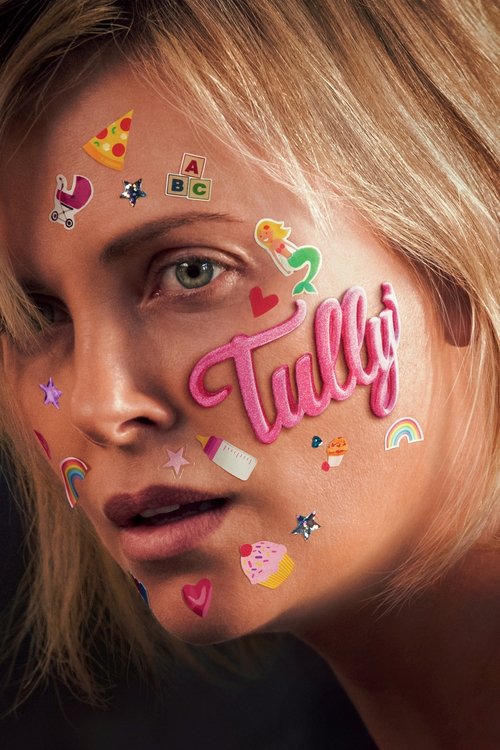
Tully (2018)
Directed by Jason Reitman
No — Tully is not especially woke, scoring 33 out of 100 on our wokeness meter.
Marlo, a mother of three, is drowning, and Jason Reitman and Diablo Cody have the good sense not to hand her a life raft shaped like a lesson.
Consciousness Markers
The film is a woman-centered meditation on the invisible, unreciprocated labor of motherhood and the erasure of self it entails, with the oblivious husband as a recurring foil. It critiques maternal burden without adopting an explicitly activist register.
Jonah has an undiagnosed behavioral/sensory disorder (strongly coded as autism), and his nightly skin-brushing routine and school struggles are a central thread. The portrayal is textured rather than didactic.
Marlo is revealed to be bisexual — she impulsively rides to her former girlfriend's apartment, the home she once shared with a woman. The queerness is genuine but understated and not the film's focus.
Theron gained roughly 50 pounds to portray a realistic postpartum body, and the film dwells on the physical toll of pregnancy, nursing, and aging. It is more a raw depiction of bodily reality than a body-positivity manifesto.
The film favors character study and ambiguity over preaching, though its final act gestures toward themes of maternal mental health and self-acceptance. It largely resists moralizing.
The principal cast is overwhelmingly white (Theron, Davis, Livingston, Duplass), with only incidental background diversity. No deliberate representation-casting agenda is evident.
Race is not a subject of the film; no racial themes, commentary, or consciousness are present.
No environmental or climate content whatsoever.
The wealthy brother who funds the nanny is a plot device, not a target of class critique. No eat-the-rich messaging.
The film is a contemporary fictional story with no historical subject matter to revise.
Why it received this score
Marlo, a mother of three, is drowning, and Jason Reitman and Diablo Cody have the good sense not to hand her a life raft shaped like a lesson. The film tracks the grinding, unreciprocated labor of parenthood: the nightly skin-brushing, the school meetings, the husband who exists mostly as a warm body in a recliner. This is a woman-centered reckoning with the erasure of self, and it earns its sympathies through exhaustion and specificity, not manifesto. The critique lands because the camera simply watches, patient and slightly appalled.
Charlize Theron gained roughly fifty pounds for the role, and the film dwells on the physical toll with a candor that stops short of advocacy. It shows the postpartum body; it does not campaign on its behalf. Young Jonah's undiagnosed sensory disorder, brushed nightly and doubted by his school, gets a similarly textured treatment, coded clearly enough for anyone paying attention and never once explained to the audience by a helpful expert. The queerness arrives late and quietly: Marlo steals a bicycle and rides to the Bushwick apartment she once shared with a woman, knocks, and gets no answer. Nothing is announced.
Where the film declines to engage, it declines completely. Race is not a subject here. Neither is the climate, nor the wealth of the brother who pays for the nanny, a plot device doing honest labor and nothing more. The closing act gestures at mental health and self-acceptance, then steps back, preferring ambiguity to a sermon. The cast is white and comfortable, which the film neither notices nor apologizes for. We are left with a modest, well-acted study of a woman keeping her head above water. The classification is unremarkable. The performance is not.
Analysis generated by our Consciousness Algorithm


Synopsis
Marlo, a mother of three, including a newborn, is gifted a night nanny by her brother. Hesitant at first, she quickly forms a bond with the thoughtful, surprising, and sometimes challenging nanny named Tully.
Questions about Tully
Is Tully woke?
No — Tully is not especially woke, scoring 33 out of 100 on our wokeness meter. That earns it a verdict of Based.
Does Tully have any woke elements?
4 of the 10 markers register at 30 or above, led by Feminist Agenda (50), Neurodivergence (45) and LGBTQ+ Themes (35). On Feminist Agenda: The film is a woman-centered meditation on the invisible, unreciprocated labor of motherhood and the erasure of self it entails, with the oblivious husband as a recurring foil.
How does Tully compare to other 2018 movies?
It ranks #64 of the 325 films from 2018 we've scored; their average is 20. The wokest is Return (92).
How is the Woke Score calculated?
An AI-assisted process researches the film and its reception, scores it 0–100 on ten markers, then combines those into one 0–100 Woke Score. It measures a specific set of 2020s cultural themes, not film quality.