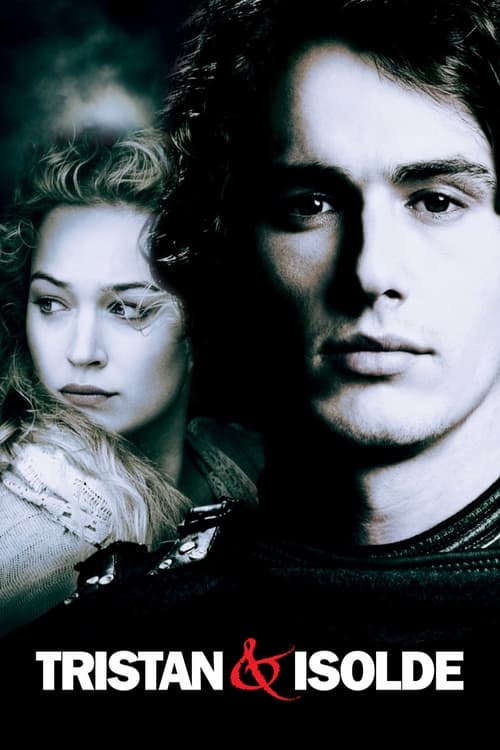
Tristan & Isolde (2006)
Directed by Kevin Reynolds
No — Tristan & Isolde is not woke, scoring 3 out of 100 on our wokeness meter.
Kevin Reynolds directed this 2006 adaptation of the medieval legend, produced by Ridley Scott from a notion he had been nursing since the mid-1970s.
Consciousness Markers
Isolde is given some agency as a healer and a woman who chooses her own affair, but the narrative treats her largely as a diplomatic prize traded between kings, with no feminist framing.
The cast is uniformly white British and Irish actors playing medieval European roles; there is no diverse or color-conscious casting to speak of.
The film is a heterosexual star-crossed romance with no LGBTQ+ characters or themes whatsoever.
The tribal conflict between Britons and Irish is a medieval political/ethnic struggle, not a modern racial-consciousness narrative.
No environmental or climate themes appear in the film.
The story concerns kings, treaties, and warfare; there is no economic critique or anti-capitalist messaging.
No body-positivity themes; the romance is chaste and conventional in its presentation of the leads.
No neurodivergent characters or themes are present.
The film adapts a medieval legend rather than reinterpreting documented history, so there is no revisionist-history agenda.
The film delivers a straightforward tragic romance with no preachy or didactic messaging.
Why it received this score
Kevin Reynolds directed this 2006 adaptation of the medieval legend, produced by Ridley Scott from a notion he had been nursing since the mid-1970s. It arrived in roughly 1,845 North American theaters, finished eighth in its opening weekend, and departed with twenty-eight million dollars to its name. The critics were generous enough to call it competent and static. That assessment holds up. The film delivers exactly what it promises: castles, a poisoned sword, a funeral boat, and a love triangle conducted at a respectful distance.
Isolde heals a wounded enemy, conceals her identity, and later chooses to resume the affair, which grants her a measure of initiative. The story still trades her between kings as a diplomatic instrument, and the camera never asks us to interrogate the arrangement. The lovemaking is chaste. The politics are dynastic. Britain's tribes quarrel with Ireland over land and tribute, a medieval feud with no modern social complaint bolted onto it. There are no economic arguments, no environmental anxieties, no neurodivergent knights, no meditation on body image. The cast is white and British, playing white and British roles, as the material requires.
What we have is a tragic romance that trusts its audience to feel something without being instructed to. No character pauses the battle to explain the moral of the story. Nobody delivers a speech about the true meaning of tolerance. The film's cultural footprint is small and its intentions are modest, and there is a certain dignity in that. It belongs to an era when a studio could spend thirty million dollars on a doomed love affair and expect nothing more than a respectable eighth place. We classify it, we file it, and we move on to the next specimen.
Thematic tags: none apply. The film is not an Oscar winner, not a sequel, remake, superhero picture, or box office champion, and it adapts a legend instead of a published book or a documented life. It sits in the archive as a straightforward, unadorned specimen of the doomed-romance genre, unburdened by any social program whatsoever.
Analysis generated by our Consciousness Algorithm


Synopsis
An affair between the second in line to Britain's throne and the princess of the feuding Irish spells doom for the young lovers.
Questions about Tristan & Isolde
Is Tristan & Isolde woke?
No — Tristan & Isolde is not woke, scoring 3 out of 100 on our wokeness meter. That earns it a verdict of Ultra Based.
Does Tristan & Isolde have any woke elements?
Very few. None of the 10 markers reaches 30, the level where a marker counts as present; the highest is Feminist Agenda at 5.
How does Tristan & Isolde compare to other 2006 movies?
It ranks #164 of the 211 films from 2006 we've scored; their average is 11. The wokest is An Inconvenient Truth (92).
How is the Woke Score calculated?
An AI-assisted process researches the film and its reception, scores it 0–100 on ten markers, then combines those into one 0–100 Woke Score. It measures a specific set of 2020s cultural themes, not film quality.