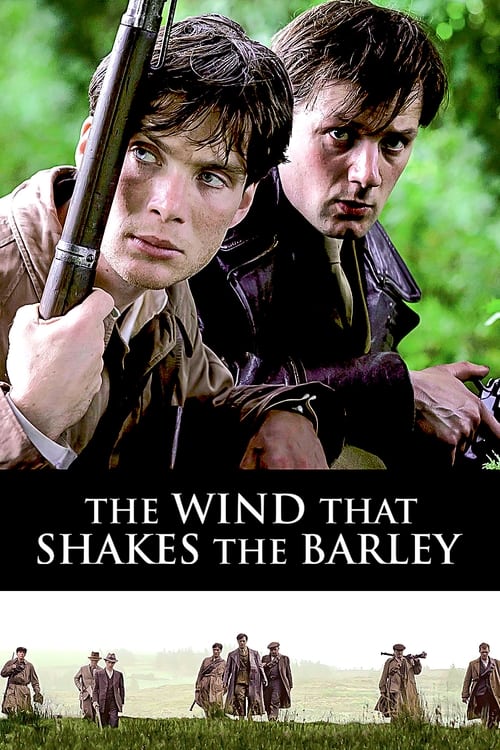
The Wind That Shakes the Barley (2006)
Directed by Ken Loach
Partly — The Wind That Shakes the Barley is somewhat woke, scoring 45 out of 100 on our wokeness meter.
Ken Loach's The Wind That Shakes the Barley arrives with the weight of a history lesson delivered by a man who has already marked the papers.
Consciousness Markers
Loach's socialist politics are explicit: Dan the union organizer demands collectivization of industry and agriculture, and the film argues that independence without economic change merely swaps 'the accents of the powerful and the colour of the flag.'
The film is openly didactic, with characters delivering political speeches about class and the nature of power, and a priest's sermon mocking the idea of nationalizing the twelve apostles.
The film deliberately reinterprets the Irish revolution as a social rather than merely nationalist struggle, offering a socialist counter-narrative to romanticized accounts like Michael Collins.
The film engages colonialism and the oppression of the Irish by the British, but frames this through class and national liberation rather than modern racial consciousness.
Sinéad Sullivan is a Cumann na mBan activist who participates in the struggle and endures brutal treatment, giving the film a modest female presence, but the narrative remains overwhelmingly male-centered.
The cast is almost entirely Irish actors playing Irish characters, which is naturalistic authenticity rather than deliberate diversity casting; no modern representation agenda is present.
There are no LGBTQ+ characters or themes anywhere in the film.
No environmental or climate themes appear in the film.
No body positivity themes are present.
No neurodivergence themes are present.
Why it received this score
Ken Loach's The Wind That Shakes the Barley arrives with the weight of a history lesson delivered by a man who has already marked the papers. The 2006 Palme d'Or winner follows two County Cork brothers, Damien and Teddy O'Donovan, from the guerrilla ambushes of the War of Independence into the fratricidal sourness of the Civil War. Loach and his writer Paul Laverty have no interest in the romance of the flying column. They are interested in the argument that begins once the shooting stops. The result is bleak, exquisitely photographed, and wholly convinced that the fight over a flag matters less than the fight over a society.
The politics are announced plainly and repeatedly. Dan, the union organizer in the cell, demands the collectivisation of industry and agriculture, and warns that any other settlement changes only the accents of the powerful. A priest at Mass sneers that the radicals will next want to nationalise the twelve apostles. Characters pause in moments of genuine danger to explain the nature of power. That these speeches land at all is a credit to the performers, who deliver ideology as though it were grief, which in this film it largely is. The sermonizing is present, unmistakable, and earned.
Sinéad Sullivan, a Cumann na mBan activist, has her head shorn by Auxiliaries and suffers greatly, yet she stands at the edge of a story built for men. The cast is Irish to the bone, which reads as authenticity more than any modern casting program. Loach's historical revisionism is real but narrow, recasting the revolution as a social upheaval with a socialist spine instead of a nationalist romance. The wider catalogue of contemporary sensibilities is simply absent. No environmental lament. No discourse of the body. No neurology as metaphor. It is a period war picture with a Marxist heart and an exceptionally long memory.
Analysis generated by our Consciousness Algorithm


Synopsis
In 1920s Ireland young doctor Damien O'Donovan prepares to depart for a new job in a London hospital. As he says his goodbyes at a friend's farm, British Black and Tans arrive, and a young man is killed. Damien joins his brother Teddy in the Irish Republican Army, but political events are soon set in motion that tear the brothers apart.
Questions about The Wind That Shakes the Barley
Is The Wind That Shakes the Barley woke?
Partly — The Wind That Shakes the Barley is somewhat woke, scoring 45 out of 100 on our wokeness meter. That earns it a verdict of Woke-Adjacent.
What makes The Wind That Shakes the Barley woke?
3 of the 10 markers register at 30 or above, led by Eat the Rich (72), Lecture Energy (48) and Revisionist History (38). On Eat the Rich: Loach's socialist politics are explicit: Dan the union organizer demands collectivization of industry and agriculture, and the film argues that independence without economic change merely swaps 'the accents of the powerful and the colour of the flag.'
How does The Wind That Shakes the Barley compare to other 2006 movies?
It ranks #8 of the 211 films from 2006 we've scored; their average is 11. The wokest is An Inconvenient Truth (92).
How is the Woke Score calculated?
An AI-assisted process researches the film and its reception, scores it 0–100 on ten markers, then combines those into one 0–100 Woke Score. It measures a specific set of 2020s cultural themes, not film quality.