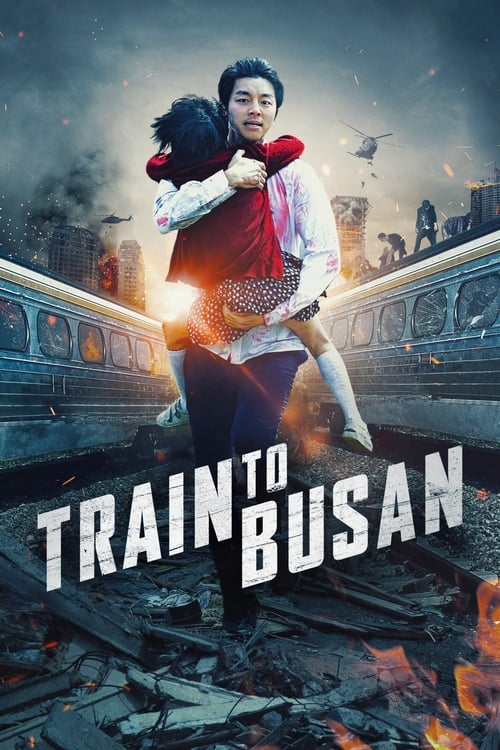
Train to Busan (2016)
Directed by Yeon Sang-ho
No — Train to Busan is not woke, scoring 16 out of 100 on our wokeness meter.
Train to Busan arrives with a reputation for brains and brawn in equal measure, and the ledger confirms it.
Consciousness Markers
Critics explicitly noted the film's class warfare: the selfish executive Yon-suk embodies corporate callousness, and Seok-woo's own fund-management firm is revealed to have been indirectly responsible for the outbreak, giving the survival horror a pointed anti-greed streak.
The social commentary on class selfishness is woven into the action rather than delivered as a sermon; the film prioritizes thrills and melodrama over preaching.
Seong-kyeong, a pregnant woman, survives to the end and is taught to drive the train, and the elderly sisters show agency, but the film is a survival thriller rather than a vehicle for a feminist thesis.
The cast is uniformly Korean, which is natural to a Korean production rather than a deliberate diversity initiative; the ensemble does span ages and classes (a child, the elderly, a homeless man, blue-collar workers) but without any representational commentary.
No LGBTQ+ characters, themes, or subtext appear anywhere in the film.
The film engages class rather than race; there is no racial consciousness or commentary of any kind.
The zombie outbreak is a viral catastrophe with no environmental or climate dimension.
No body-positivity themes or messaging are present.
No neurodivergent characters or themes are depicted.
The film is a fictional zombie apocalypse with no historical revisionism.
Why it received this score
Train to Busan arrives with a reputation for brains and brawn in equal measure, and the ledger confirms it. Yeon Sang-ho's express service from Seoul runs on familiar tracks: a viral catastrophe, a confined carriage, a cast sorted by virtue and vice. The real engine here is class. The executive Yon-suk exists to be loathed, a walking ledger of corporate cowardice, and the revelation that Seok-woo's own fund-management firm helped seed the outbreak gives the carnage a pointed anti-greed streak. That is where the film's social consciousness lives, in the marrow of the plot instead of a speech. When the surviving pair walk into a tunnel and sing to prove they are human, the sentiment is earned, not lectured.
Elsewhere the ledger is thin. The cast is uniformly Korean, which is not a diversity initiative but a Korean production doing Korean things, and the ensemble spans ages and classes without commentary. A pregnant woman survives to the final reel and is handed the controls of the train, a modest gesture toward agency that stops well short of a thesis. No LGBTQ+ characters appear. No racial consciousness, no climate dimension, no body-positivity messaging, no neurodivergent figures. The elderly sisters get a moment of terrible, satisfying agency, and the homeless man gets a noble death, and the film moves on.
The craft holds up. The zombie choreography is excellent, the melodrama is unashamed, and the sermonizing is kept to a minimum. This film wants to thrill you and then make you cry, in that order, and it succeeds at both. A sober classification: a genre picture with a conscience about money and very little interest in anything else. It earns its tears honestly.
Analysis generated by our Consciousness Algorithm


Synopsis
When a zombie virus pushes Korea into a state of emergency, those trapped on an express train to Busan must fight for their own survival.
Questions about Train to Busan
Is Train to Busan woke?
No — Train to Busan is not woke, scoring 16 out of 100 on our wokeness meter. That earns it a verdict of Ultra Based.
Does Train to Busan have any woke elements?
1 of the 10 markers register at 30 or above, led by Eat the Rich (45). On Eat the Rich: Critics explicitly noted the film's class warfare: the selfish executive Yon-suk embodies corporate callousness, and Seok-woo's own fund-management firm is revealed to have been indirectly responsible for the outbreak, giving the survival horror a pointed anti-greed streak.
How does Train to Busan compare to other 2016 movies?
It ranks #102 of the 285 films from 2016 we've scored; their average is 16. The wokest is 13th (92).
How is the Woke Score calculated?
An AI-assisted process researches the film and its reception, scores it 0–100 on ten markers, then combines those into one 0–100 Woke Score. It measures a specific set of 2020s cultural themes, not film quality.