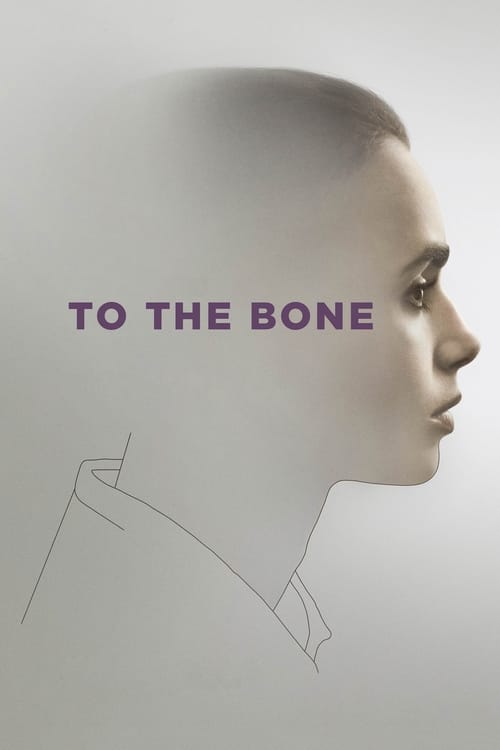
To the Bone (2017)
Directed by Marti Noxon
No — To the Bone is not woke, scoring 13 out of 100 on our wokeness meter.
Marti Noxon's feature debut arrives with the somber bearing of a film that knows it is doing good.
Consciousness Markers
The film is explicitly issue-driven and PSA-like, using therapy sessions and doctor speeches to educate about eating disorders.
The film is female-led and female-directed and centers on a young woman's body-image struggle, but it does not advance an explicit feminist political agenda.
Predominantly white cast with no significant racial or ethnic diversity; several major roles are female, but representation is limited.
A brief backstory reference to the protagonist's mother living with a lesbian partner is the only LGBTQ+ element, and it is not developed as a theme.
No racial themes, commentary, or significant non-white characters are present.
No environmental or climate-change content.
No critique of capitalism, wealth inequality, or class exploitation.
The film focuses on anorexia and extreme thinness rather than body-positive advocacy; it was criticized for potentially glamorizing eating disorders.
Mental illness and therapy are depicted, but there is no specific representation or discussion of neurodivergence such as autism or ADHD.
Not a historical film and makes no revisionist historical claims.
Why it received this score
Marti Noxon's feature debut arrives with the somber bearing of a film that knows it is doing good. Lily Collins plays Ellen, a twenty-year-old anorexic who has failed one treatment program and is deposited into another, a group house run by Keanu Reeves as a doctor with an unusually relaxed bedside manner. The setting is a house full of thin young women and one ballet dancer. The structure is a sequence of confessions. Sundance gave it a slot in the dramatic competition, Netflix gave it a worldwide release, and the eating disorder charity Beat asked the vulnerable to think carefully before pressing play.
The film's engine is instruction. Beckham delivers speeches. The group sessions deliver more speeches. A girl's death by suicide is invoked as a cautionary aside. This plays as part character study, part public service announcement, and the announcement wins most of the arguments. There is no body-positive advocacy here, since the camera lingers on collarbones and rib cages in a way that alarmed clinicians, and no engagement with neurodivergence, because the illness on display is the illness on the label. The lone LGBTQ element is a mother who left for Phoenix with a lesbian partner, mentioned once and dropped. Racial consciousness, climate, and any critique of wealth or class are absent. The film has other things on its mind.
The ledger is modest. A female director and a female lead center a young woman's body image, which earns a small measure of progressive credit without any explicit political program attached. The cast is overwhelmingly white. The film does carry, in quantity, the urge to explain. It wants to destigmatize, to start conversations, to correct misconceptions, and it says so, repeatedly, through the mouths of its therapists. Whether that helps anyone is a question the film cannot answer for itself. Noxon said her aim was not to glorify the disease but to shed light on it. The light is on. The thinspo blogs found it anyway.
Analysis generated by our Consciousness Algorithm


Synopsis
A young woman dealing with anorexia meets an unconventional doctor who challenges her to face her condition and embrace life.
Questions about To the Bone
Is To the Bone woke?
No — To the Bone is not woke, scoring 13 out of 100 on our wokeness meter. That earns it a verdict of Ultra Based.
Does To the Bone have any woke elements?
1 of the 10 markers register at 30 or above, led by Lecture Energy (55). On Lecture Energy: The film is explicitly issue-driven and PSA-like, using therapy sessions and doctor speeches to educate about eating disorders.
How does To the Bone compare to other 2017 movies?
It ranks #134 of the 309 films from 2017 we've scored; their average is 19. The wokest is I Am Not Your Negro (92).
How is the Woke Score calculated?
An AI-assisted process researches the film and its reception, scores it 0–100 on ten markers, then combines those into one 0–100 Woke Score. It measures a specific set of 2020s cultural themes, not film quality.